
Gluten-free coconut-lime pannacotta with passion fruit
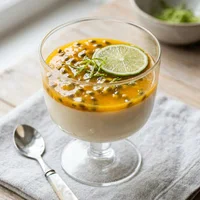
This gluten-free panna cotta pairs a gently set coconut-and-cream base with fresh lime and a tangy passion fruit coulis. Make it ahead for an elegant dessert that needs little attention just before serving.
Ingredients
- 400 mlfull-fat coconut milk
- 150 mlwhipping cream
- 60 gcaster sugar
- Zest of 1organic lime, grated
- 2 tbspfreshly squeezed lime juice
- 3gelatin sheets
- 4passion fruits
- 2 tbsppowdered sugar
- 2 tbspwater
- Extralime zest, for garnish
Instructions
- 1
Soak the gelatine
Place the gelatine sheets in cold water for 5 minutes.
- 2
Warm the base
Set the coconut milk and whipping cream over a medium heat. Add the caster sugar and grated lime zest, stirring until the sugar dissolves. Keep the mixture warm but do not let it boil.
- 3
Add the gelatine
Squeeze the soaked gelatine sheets well, then stir them into the warm coconut-and-cream mixture until dissolved. Add the lime juice and stir briefly.
- 4
Fill and chill
Divide the mixture between 4 lightly greased moulds or glasses. Leave to cool to room temperature, then refrigerate for at least 4 hours or overnight.
- 5
Make the coulis
Halve the passion fruits and scoop their pulp into a small saucepan. Add the powdered sugar and 2 tbsp water, then warm over a low heat, stirring, until slightly reduced. Strain out the seeds if you prefer a smooth coulis.
- 6
Cool the coulis
Leave the coulis to cool and keep it in the fridge until you are ready to serve.
- 7
Serve the panna cotta
Take the panna cottas out of the fridge just before serving. For moulds, loosen the edges with a knife and turn them out onto plates; serve panna cotta in glasses as they are. Spoon over the passion fruit coulis and finish with freshly grated lime zest.
What is coconut-lime panna cotta?
Panna cotta is an Italian set cream dessert, despite its frequent place on menus alongside French-inspired dishes. Gelatine gives the cream its delicate set, while the dessert is served chilled.
This version combines coconut milk, whipping cream and lime, then adds passion fruit for a bright, tart finish. The contrast between the smooth, rich base and the sharp fruit keeps each spoonful lively.
Nutrition and macros by portion
The nutrition label shows one serving as written: 417 calories, 3g protein, 25g carbs, 34g fat.
| Portion | Adjustment | kcal | Protein | Carbs | Fat |
|---|---|---|---|---|---|
| Lighter | Use less coulis | 292 kcal | 2g | 18g | 24g |
| This serving | As written | 417 kcal | 3g | 25g | 34g |
| Hungry | Serve with extra fruit | 626 kcal | 5g | 38g | 51g |
The coconut milk, whipping cream and sugars contribute most of the energy and fat, while the sugars and fruit provide most of the carbohydrates. Protein is modest and comes mainly from the cream and coconut milk. Balance the dessert with fresh fruit, or serve it after a meal with plenty of vegetables and a protein-rich main.
Choosing the coconut milk
Full-fat coconut milk: the recipe specifies a full-fat can, which gives the panna cotta its rounded flavour and creamy texture. Stir or shake the can before measuring if the contents have separated.
Whipping cream: cream softens the coconut flavour and contributes to the silky set. Keep the listed proportions so the coconut remains prominent without making the dessert feel overly dense.
Getting the gelatine right
Cold soak: allow the sheets to soften in cold water for the full 5 minutes. Squeeze them thoroughly before adding so excess soaking water does not dilute the base.
Warm mixture: dissolve the gelatine in the warm coconut-and-cream mixture, not in a boiling one. Stir until no visible pieces remain, then add the lime juice and stir briefly.
Setting and serving
Cooling: let the filled moulds or glasses come to room temperature before putting them in the fridge. This recipe needs at least 4 hours to set, and an overnight chill is an option when you want to prepare ahead.
Unmoulding: gently loosen the edge with a knife and invert each mould onto a plate. Glasses avoid this step and let you serve the dessert directly.
Balancing lime and passion fruit
Lime zest: grated zest perfumes the creamy base without adding extra liquid. Use the zest of the organic lime as listed, and reserve extra zest for the garnish.
Passion fruit: warming the pulp with powdered sugar and water slightly reduces it into a spoonable coulis. Straining is optional; leaving in the seeds keeps the sauce textured.
Make-ahead timing
Panna cotta: prepare the base and chill it for at least 4 hours, or overnight. This makes the dessert practical for a dinner party because the setting happens before serving.
Coulis: make it while the panna cotta chills, then cool it and store it in the fridge. Spoon it over only when serving so the topping stays distinct.
What to serve alongside
Fresh fruit: a few slices of mango or berries complement the tropical fruit and creamy base without adding another rich element.
Small portions: the panna cotta is rich, so serve it after a lighter main course or alongside a simple fruit plate. The passion fruit topping already brings a vivid, tart contrast.
Recipe notes & tips
- Measure the lime juice before adding it so the base retains the intended balance.
- Keep the coconut-and-cream mixture below boiling while dissolving the sugar.
- Squeeze the gelatine sheets firmly after soaking to avoid adding excess water.
- Run a thin knife gently around the mould edge before turning the panna cotta out.
- Let the coulis cool before refrigerating it and spooning it over the dessert.
- Add the lime zest garnish just before serving for its fresh aroma.
Variations
- Seeded coulis: leave the passion fruit seeds in for a little crunch.
- Smooth coulis: strain the warmed passion fruit mixture to remove the seeds.
- More lime: add a little extra grated zest to the base for a sharper citrus note.
- Fruit topping: serve with fresh mango or berries alongside the coulis.
- Glass portions: divide the mixture into glasses to skip the unmoulding step.
Common mistakes to avoid
- Boiling the base: high heat can compromise the delicate texture; warm it gently and stop before it boils.
- Undissolved gelatine: visible pieces can leave an uneven set; stir until the sheets have fully dissolved.
- Rushing the chill: the panna cotta may not set in time; allow at least 4 hours in the fridge.
- Skipping the squeeze: excess soaking water can thin the mixture; squeeze the gelatine sheets well.
- Turning out too forcefully: the set can break; loosen the edges carefully with a knife first.
How to store
Keep the panna cotta covered in the fridge and eat within 2 days for the best texture. Store the cooled coulis separately in a covered container and spoon it on just before serving. Serve chilled; reheating is not suitable for this dessert.
Frequently asked questions
Can I make the panna cotta the day before?
Yes. The recipe allows for an overnight chill, so you can prepare the panna cotta ahead and make the coulis while it sets.
How can I tell when it has set?
After at least 4 hours in the fridge, it should hold its shape when unmoulded while remaining softly wobbly. If it is still loose, chill it for longer.
Do I need to strain the passion fruit?
No. Strain the coulis only if you prefer it smooth; the seeds can be left in for texture.
Can I serve it in glasses?
Yes. Divide the mixture between glasses and serve it directly from them, without unmoulding.
Why should the mixture not boil?
The method calls for gently warming the cream and coconut milk, not boiling them. Add the squeezed gelatine to the warm mixture and stir until it dissolves.
Is this recipe gluten-free?
The listed ingredients are naturally gluten-free, but check the labels on packaged ingredients such as gelatine and powdered sugar if you need to avoid gluten.
Cook it from the original
This recipe comes from cookinglife.eu. Their page has the author’s own photos, notes and tips — the best place to cook it from.
Open the recipe on cookinglife.eu