
Langzaam gegaard varkensgebraad met rozemarijn en knoflookjus
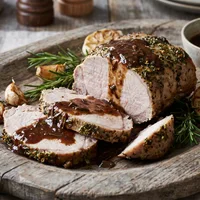
This French-classic slow-roasted pork is browned first, then gently cooked with rosemary, garlic and vegetables before being served in thin slices with a rich pan gravy. It is a good choice for a leisurely meal where a crisp sear and careful resting make all the difference.
Ingredients
- 1.2 kgpork roast (neck or shoulder)
- 2 tbsp (30 ml)olive oil
- 1 tsp (5 ml)coarse sea salt
- 1 tsp (5 ml)freshly ground black pepper
- 2 sprigs, plus extra for garnishfresh rosemary
- 1 bulbgarlic, halved
- 1 largeonion, roughly chopped
- 2carrots, roughly chopped
- 2 stalkscelery, roughly chopped
- 300 mlchicken stock
- 100 ml (optional)dry white wine
Instructions
- 1
Prepare the pork
Take the pork out of the fridge 30 minutes ahead so it can come to room temperature. Pat it dry with kitchen paper.
- 2
Heat the oven
Preheat the oven to 160°C fan or 175°C conventional.
- 3
Season the roast
Rub the pork all over with the salt, freshly ground black pepper, 1 tbsp of the olive oil and chopped rosemary, pressing the seasoning firmly onto the meat.
- 4
Brown the meat
Heat a roasting pan over a high heat with a splash of oil. Brown the pork all over, for about 2 minutes on each side, taking time to build an even crust.
- 5
Add the vegetables
Arrange the halved garlic, rosemary sprigs, chopped carrots, onion and celery around the pork in the pan. Pour in the chicken stock.
- 6
Slow-roast the pork
Cover the pan with a lid or aluminium foil and put it in the oven. Cook for 1 hour 30 minutes, until the centre reaches about 68°C.
- 7
Rest the meat
Lift the pork out of the pan and wrap it loosely in aluminium foil. Leave it to rest for 15 minutes so the juices can settle.
- 8
Reduce the gravy
Strain the cooking liquid into a saucepan. Bring it to the boil and reduce it until it is full-flavoured. Season with salt and pepper, and add a splash of dry white wine if you like.
- 9
Slice and serve
Use a long, sharp carving knife to cut the roast into thin, even slices, drawing the blade through its full length. Arrange the slices on a large serving platter, pour over the warm gravy, garnish with a rosemary sprig and serve straight away.
What is slow-roasted pork?
This French-classic-style roast pairs pork with rosemary, garlic and a gravy made from the juices in the pan. Slow cooking lets the flavours mingle while the meat cooks gently, and the final thin slices make it easy to serve at the table.
A neck or shoulder joint suits this method because it can withstand a longer cook than a very lean cut. The initial browning adds a savoury crust before the covered pan goes into the oven.
Nutrition and macros by portion
The nutrition label shows one serving as written: 820 calories, 56g protein, 9g carbs, 62g fat.
| Portion | Adjustment | kcal | Protein | Carbs | Fat |
|---|---|---|---|---|---|
| Lighter | Trim visible pork fat | 574 kcal | 39g | 6g | 43g |
| This serving | As written | 820 kcal | 56g | 9g | 62g |
| Hungry | Serve larger slices | 1230 kcal | 84g | 14g | 93g |
The pork supplies most of the protein and fat, while the olive oil adds further fat. The carrots, onion and stock contribute a modest amount of carbohydrate; serve with potatoes or another carbohydrate-rich side and plenty of vegetables to balance the plate.
Choosing the pork and aromatics
Pork joint: Neck or shoulder are the specified choices; ask your butcher for a joint that will sit comfortably in your roasting pan.
Rosemary and garlic: Use the sprigs in the pan and finely chop rosemary for the seasoning rub. The garlic is halved and cooks alongside the meat, flavouring the pan juices.
Get a good sear
Dry surface: Patting the pork dry before seasoning helps it brown rather than steam in the hot pan.
Even colour: Turn the joint so each side gets about 2 minutes against the hot pan. A good crust is the aim; the pork will finish cooking in the oven.
Check the centre
Temperature: The method gives a target of about 68°C at the centre after 1 hour 30 minutes. Check the thickest part of the joint, keeping the thermometer away from bone if the joint has one.
Resting: Loosely cover the roast and leave it for 15 minutes before carving. This also gives you time to strain and reduce the gravy.
Make the pan gravy
Strain the liquid: Pass the roasting juices into a saucepan to remove the vegetables and aromatics before reducing.
Reduce gently: Boil the strained liquid until it has a fuller flavour, then season with salt and pepper. A splash of the optional white wine can be added as it is seasoned.
Slice and serve
Carving: A long, sharp knife helps make thin, even slices. Draw the blade through the meat in one smooth movement rather than sawing back and forth.
On the plate: Serve the pork with the warm gravy and rosemary garnish. Potatoes or other vegetables make natural accompaniments and help round out the meal.
Recipe notes & tips
- Let the pork stand out of the fridge for the full 30 minutes before roasting.
- Use a pan that can go from the hob into the oven.
- Keep the lid or foil on during roasting so the cooking liquid stays in the pan.
- Measure the temperature in the thickest part of the joint.
- Rest the meat for the full 15 minutes before carving.
- Use the full length of a sharp carving knife for neater slices.
Variations
- Add the wine: Pour the optional dry white wine into the strained juices as you season the gravy.
- Use extra rosemary: Add another sprig to the pan for a more pronounced herbal note.
- Change the vegetables: Keep the onion and carrots but use extra celery if you prefer its flavour in the gravy.
- Serve with potatoes: Add boiled or roasted potatoes alongside the sliced pork for a heartier plate.
Common mistakes to avoid
- Skipping the drying step: Pat the pork dry first so the surface can brown properly.
- Rushing the sear: Give each side about 2 minutes in the hot pan to develop an even crust.
- Leaving the pan uncovered: Cover it with a lid or foil for the oven stage.
- Guessing doneness: Check the centre for about 68°C rather than relying on time alone.
- Carving too soon: Rest the roast for 15 minutes before slicing so the juices can settle.
- Using a blunt knife: Choose a long, sharp carving knife for thin, even slices.
How to store
Refrigerate leftover pork and gravy in covered containers within 2 hours, and use within 3 days. Reheat gently with a little gravy or stock until piping hot throughout; avoid prolonged reheating, which can dry out the slices.
Frequently asked questions
Can I make this without the white wine?
Yes. The wine is optional, so season and reduce the strained pan juices without it.
How long does the pork roast?
The method specifies 1 hour 30 minutes at 160°C fan or 175°C conventional, with a centre temperature of about 68°C as the cue to check.
Do I need to rest the pork?
Yes. Wrap it loosely in foil and rest it for 15 minutes before carving.
Can I prepare the vegetables ahead?
You can roughly chop the onion, carrots and celery and halve the garlic ahead of time. Keep them covered and chilled until you are ready to cook.
How should I cut the roast?
Use a long, sharp carving knife and cut slowly into thin, even slices, drawing the blade through its full length.
What can I serve with the pork?
Serve it with the pan gravy, potatoes and vegetables of your choice.
Cook it from the original
This recipe comes from cookinglife.eu. Their page has the author’s own photos, notes and tips — the best place to cook it from.
Open the recipe on cookinglife.eu