
Baked Boneless Chicken Thighs with Spicy Seasoning Recipe
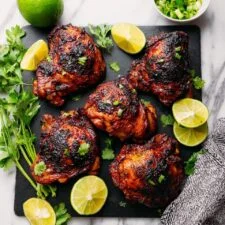
These boneless chicken thighs are coated in a smoky, spicy mix of chilli powder, cumin, garlic, paprika and balsamic vinegar, then baked and broiled until browned. They make a straightforward weeknight main, with little preparation and plenty of savoury flavour.
Ingredients
- 907 g (2 lb; about 6 thighs)boneless, skinless chicken thighs
- 40 ml (2 tablespoons plus 2 teaspoons)olive oil
- 20 ml (1 tablespoon plus 1 teaspoon)balsamic vinegar
- 2½ teaspoonschilli powder
- 1 teaspoonground cumin
- 1 teaspoongarlic powder
- 1 teaspoonpaprika
- 2 teaspoonsfine salt
- 1½ teaspoonsblack pepper
Instructions
- 1
Prepare oven
Heat the oven to 220°C (425°F) and line a large baking tray with foil. Pat the chicken thoroughly dry with kitchen paper; there is no need to trim excess fat.
- 2
Mix seasoning
Whisk the olive oil, balsamic vinegar, chilli powder, cumin, garlic powder, paprika, salt and pepper together in a small bowl.
- 3
Coat chicken
Rub or brush the mixture evenly over the thighs, coating the back and then the front of each piece.
- 4
Bake chicken
Set the thighs apart on the lined tray and bake on the centre oven rack for 15 minutes.
- 5
Broil the tops
Move the oven rack to about 20 cm (8 inches) from the broiler and switch to broil. Cook for 7–10 minutes, watching closely, until the tops are deeply browned and caramelised.
- 6
Rest and serve
Take the chicken out and loosely cover it with foil. Rest for 5–10 minutes, then brush with any juices from the tray and slice or chop to serve.
What are baked boneless chicken thighs?
Chicken thighs are a popular American-style weeknight main: dark meat pieces are seasoned and cooked until tender. This version uses a simple spice blend and a short blast under the broiler for a browned, flavourful surface.
Balsamic vinegar adds a tangy note alongside the warm cumin, chilli and paprika. The oil helps the seasoning coat the meat and encourages it to brown.
Nutrition and macros by portion
The nutrition label shows one serving as written: 560 calories, 45g protein, 4g carbs, 39g fat.
| Portion | Adjustment | kcal | Protein | Carbs | Fat |
|---|---|---|---|---|---|
| Lighter | Less oil, extra vegetables | 392 kcal | 31g | 3g | 27g |
| This serving | As written | 560 kcal | 45g | 4g | 39g |
| Hungry | Larger chicken portion | 840 kcal | 68g | 6g | 59g |
The chicken supplies most of the protein, while the olive oil and the thighs' natural fat contribute most of the fat. The spices and balsamic add a modest amount of carbohydrate, and the salt is the main source of sodium. Pair a thigh portion with plenty of vegetables and a modest serving of rice or potatoes for a balanced plate.
Why dry the chicken first?
Dry surface: patting the thighs with kitchen paper removes moisture that could otherwise slow browning. The chicken is skinless, so the goal is a well-coloured surface rather than crisp skin.
Fat: there is no need to trim every bit of excess fat; it renders as the chicken cooks and contributes to the tray juices.
Making the spice coating
Even mixture: whisk the oil, vinegar and dry seasonings until combined before coating the chicken. This distributes the spices more evenly than adding them separately to the thighs.
Full coverage: rub or brush both sides so each piece gets seasoning. Give the mixture a quick stir again if the spices settle while you work.
Baking and broiling
First stage: baking at 220°C cooks the thighs through before the surface is exposed to intense heat. Leave space between pieces so they roast rather than crowd one another.
Final colour: the broiler quickly darkens the seasoned tops. Stay nearby during the 7–10 minutes, since the spices and balsamic can go from caramelised to burnt quickly.
How to tell when they are done
Colour: look for a deeply browned, caramelised top, but do not rely on colour alone to judge doneness. If using a food thermometer, check the thickest part of a thigh.
Rest: leave the cooked chicken loosely covered for 5–10 minutes before cutting. Spoon or brush the tray juices over it to keep the serving flavourful.
What to serve with the thighs
Fresh sides: serve with a green salad, steamed vegetables or a crunchy slaw to complement the smoky seasoning. A squeeze of lemon can brighten the plate.
Hearty sides: rice, roasted potatoes or warm flatbread make the meal more substantial and can catch the juices. Keep the sides simply seasoned so the spice coating remains the focus.
Recipe notes & tips
- Pat the chicken dry just before seasoning so the surface is not damp.
- Arrange the thighs in a single layer with a little space between them.
- Mix the seasoning thoroughly so the salt and spices are evenly distributed.
- Watch the chicken closely under the broiler, especially towards the end.
- Rest the thighs before slicing to keep the juices from running straight onto the board.
Variations
- Smokier flavour: use smoked paprika in place of regular paprika.
- More heat: add a pinch of cayenne pepper to the seasoning.
- Citrus lift: serve with lemon wedges for squeezing over the chicken.
- Herb finish: scatter chopped parsley over the rested thighs.
- Milder seasoning: reduce the chilli powder to suit your preference.
Common mistakes to avoid
- Wet chicken: pat the thighs dry before seasoning so they brown more readily.
- Uneven coating: rub the mixture over both sides of every thigh.
- Crowded tray: space the pieces apart so they cook evenly.
- Unwatched broiler: keep an eye on the tops because they can burn quickly.
- Skipping the rest: allow 5–10 minutes before cutting so the juices settle.
How to store
Refrigerate leftovers in an airtight container for up to 3 days. Reheat gently in the oven or microwave until hot throughout, adding a little of the saved pan juice if available.
Frequently asked questions
Can I use bone-in chicken thighs?
This method is written for boneless thighs, which cook more quickly. Bone-in pieces need different cooking time, so check the thickest part for doneness rather than following the timing exactly.
Can I prepare the seasoning ahead?
Yes. Mix the oil, vinegar and spices shortly ahead and keep the bowl covered. Stir it again before coating the chicken, as the spices may settle.
How do I know the chicken is cooked through?
Check the thickest part of a thigh with a food thermometer, avoiding contact with the tray. The method also calls for 15 minutes of baking followed by 7–10 minutes under the broiler, with close attention to browning.
Can I skip the broiler?
Yes, though the tops will not get the same concentrated caramelisation. Bake until cooked through and well browned, checking closely as the chicken finishes.
Can I use chicken breasts instead?
You can use the same seasoning, but breasts are leaner and may cook faster than thighs. Check for doneness early to avoid drying them out.
Cook it from the original
This recipe comes from busyrecipe.com. Their page has the author’s own photos, notes and tips — the best place to cook it from.
Open the recipe on busyrecipe.com