
Pasta With Sun-dried Tomato Sauce
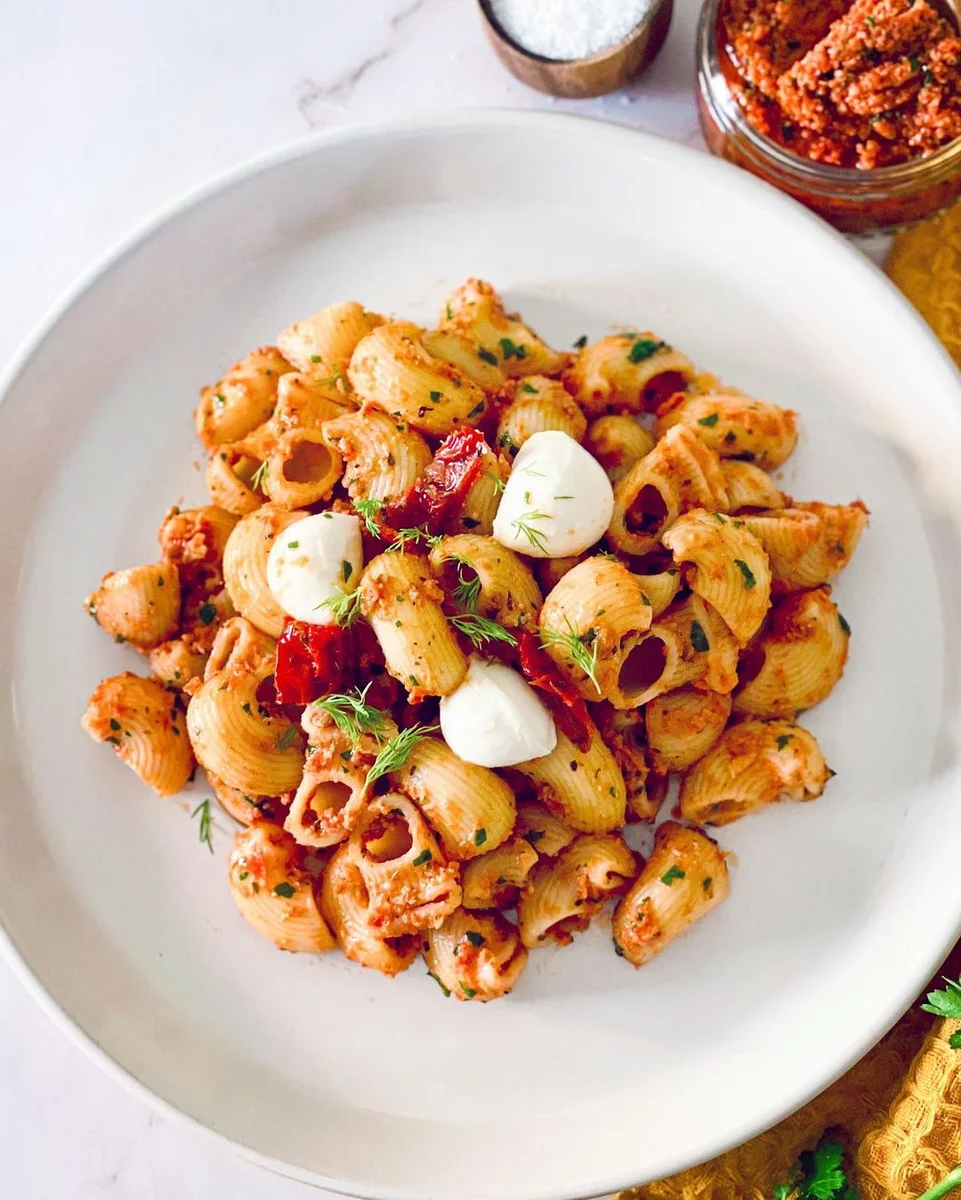
Pasta with sun-dried tomato sauce pairs pasta with a savoury blend of dried tomatoes, Parmesan, parsley and olive oil. It is a straightforward meal to make in a food processor, with mozzarella pearls and fresh herbs for a soft, fresh finish.
Ingredients
- To tastePasta of your choice
- 110 g (just under 1 cup)Dried tomatoes
- 50 g (½ cup)Parmesan
- 120 ml (½ cup)Olive oil, or oil from the jar of dried tomatoes
- Around 15 g (½ cup)Parsley
- A sprinkleDried oregano
- A sprinkleBlack pepper
- To tasteMozzarella pearls, for garnish
- To tasteDried tomatoes, cut into pieces, for garnish
- To tasteFresh herbs, for garnish
Instructions
- 1
Cook the pasta
Cook your chosen pasta according to the packet instructions. The original recipe uses pipe rigate.
- 2
Blend the sauce
Put all the ingredients except the olive oil into a food processor.
- 3
Add the oil
Switch on the processor and drizzle in the olive oil until the sauce reaches your preferred consistency. Add a little pasta water if you want to loosen it.
- 4
Mix and garnish
Toss the sauce with the pasta, garnish with mozzarella pearls and serve warm.
- 5
Store leftovers
Keep leftovers in the fridge for up to 4 days or freeze for up to 2 months.
What is pasta with sun-dried tomato sauce?
This is a pasta dish dressed with a blended sauce of dried tomatoes, Parmesan, parsley and olive oil. Sun-dried tomatoes are used in many Mediterranean-style sauces, where their concentrated savoury flavour pairs naturally with cheese and herbs.
This version keeps the method simple: the sauce is made in a food processor, then adjusted with oil or pasta water. Mozzarella pearls and fresh herbs add a mild, fresh contrast when serving.
Nutrition and macros by portion
The nutrition label shows one serving as written: 690 calories, 21g protein, 75g carbs, 34g fat.
| Portion | Adjustment | kcal | Protein | Carbs | Fat |
|---|---|---|---|---|---|
| Lighter | Use less oil and Parmesan | 483 kcal | 15g | 53g | 24g |
| This serving | As written | 690 kcal | 21g | 75g | 34g |
| Hungry | Add more pasta | 1035 kcal | 32g | 113g | 51g |
The pasta supplies most of the carbohydrates, while olive oil contributes much of the fat; Parmesan and mozzarella add some protein and fat. Pair a serving with a generous portion of salad or vegetables, and note that the estimate depends on how much pasta and garnish you use.
Choosing the ingredients
Dried tomatoes: They provide the sauce’s concentrated, tangy flavour. Tomatoes from a jar can be used, and their oil can replace some or all of the olive oil.
Parmesan: This adds saltiness and savoury depth. Grate it finely so it blends evenly into the sauce.
Parsley and seasoning: Parsley gives the blend a herbal note, while oregano and black pepper provide extra seasoning. Add the dried seasonings sparingly, then taste the sauce.
Blending the sauce
Add everything except the oil to the food processor first. Drizzle in the oil while the machine runs, stopping when the mixture looks cohesive and easy to toss through pasta.
Pasta water: If the sauce seems too thick, add a small splash of starchy cooking water. Add it gradually so the sauce loosens without becoming watery.
Getting the texture right
A good sauce should cling to the pasta rather than sit in a dense clump. If it needs loosening, use pasta water a little at a time and mix thoroughly between additions.
The blended tomatoes and Parmesan give the sauce texture, so it need not be completely smooth. For a more even result, scrape down the processor bowl and blend again briefly.
Pasta and serving
Pasta shape: Pipe rigate is the choice in the original recipe; its ridges and hollow centre help catch the sauce. Other shapes can work, too, especially those with grooves or curves.
Serve the pasta warm with mozzarella pearls, cut dried tomatoes and fresh herbs. A crisp green salad or simply dressed vegetables make a fresh accompaniment.
Timing and preparation
The method does not specify a total cooking time, so use the pasta packet as your guide. You can blend the sauce while the pasta cooks, then toss everything together once the pasta is ready.
Reserve some pasta water before draining, since it is useful for adjusting the sauce. Mix the pasta and sauce just before serving for the warmest result.
Recipe notes & tips
- Reserve pasta water before draining so you can adjust the sauce easily.
- Drizzle the oil in gradually and stop once the sauce is easy to toss.
- Taste the sauce before adding extra salt, as Parmesan and jarred tomatoes can be salty.
- Cut the garnish tomatoes into small pieces so they are easy to eat with the pasta.
- Toss the pasta and sauce while the pasta is warm for an even coating.
Variations
- Use jar oil: Replace some or all of the olive oil with oil from the dried tomato jar.
- Change the pasta: Choose a ridged or hollow shape that catches the sauce.
- Add chilli: Blend in a little chilli for a spicier sauce.
- Try another herb: Swap some parsley for fresh basil for a different herbal note.
- Make it cheesier: Add extra Parmesan to the processor, adjusting the sauce with pasta water if needed.
Common mistakes to avoid
- Adding oil too quickly: Drizzle it in gradually so you can stop at the consistency you want.
- Using too little pasta water: Keep some aside before draining and add it in small splashes if the sauce is thick.
- Over-blending: Stop when the sauce is cohesive if you want to retain a little texture.
- Forgetting to taste: Check the seasoning before tossing, especially if your tomatoes and Parmesan are salty.
- Leaving out the garnish: Add the mozzarella and herbs at the end so their fresh texture remains noticeable.
How to store
Refrigerate leftovers in a covered container for up to 4 days, or freeze for up to 2 months. Reheat gently until warm, adding a splash of water if the sauce has thickened; thaw frozen portions in the fridge before reheating.
Frequently asked questions
What pasta shape works best?
The recipe uses pipe rigate, whose ridges and hollow centre catch the sauce. Other ridged or curved shapes are suitable.
Can I use oil from the dried tomato jar?
Yes. The recipe suggests using it instead of olive oil, or you can use a mixture of the two.
How can I make the sauce thinner?
Add pasta water a little at a time while mixing. Stop once the sauce coats the pasta easily.
Can I make the sauce ahead?
You can blend it ahead and refrigerate it in a covered container. Toss it with freshly cooked pasta when you are ready to serve.
Can I freeze the leftovers?
Yes. The recipe says leftovers can be frozen for up to 2 months. Thaw them in the fridge and reheat gently.
Cook it from the original
This recipe comes from fooooods.com. Their page has the author’s own photos, notes and tips — the best place to cook it from.
Open the recipe on fooooods.com