
Basic Dairy-Free Risotto
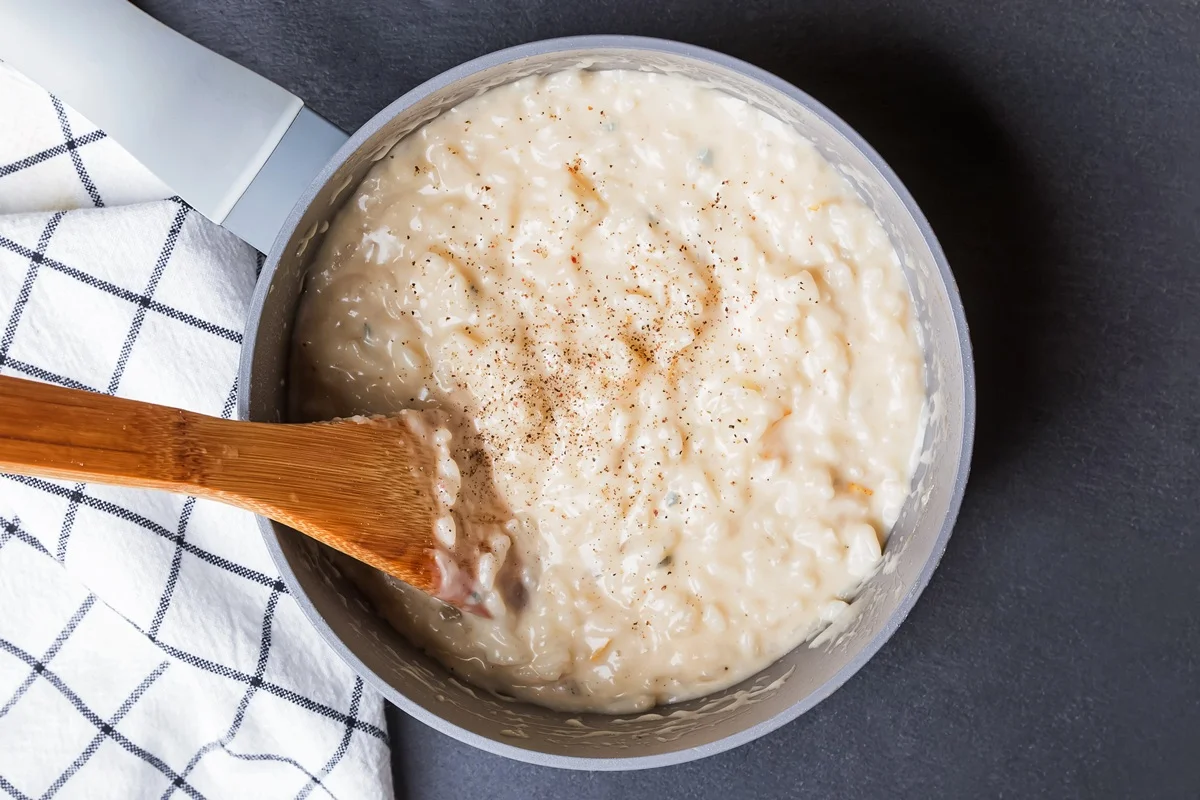
A simple Italian-style risotto made creamy with Arborio rice, warm vegetable stock and steady stirring, with no dairy needed. Keep it plain as a comforting main or use it as a base for vegetables, herbs or spices.
Ingredients
- 15 ml (1 tablespoon)olive oil
- 1shallot, diced or minced
- 2garlic cloves, minced
- 200 g (1 cup)Arborio rice, unrinsed
- 120 ml (½ cup)dry white wine, such as Sauvignon Blanc or Pinot Grigio (optional; replace with more stock if omitted)
- 950 ml (4 cups)vegetable stock
- 2.5 ml (½ teaspoon), or to tastesalt
- to tastefreshly ground black pepper
Instructions
- 1
Warm the stock
Pour the vegetable stock into a small saucepan and keep it at a gentle simmer over a low heat.
- 2
Soften the aromatics
In a separate wide-bottomed pot or Dutch oven, heat the olive oil over a medium heat. Add the shallot or onion and cook, stirring occasionally, for about 3 minutes, until soft and translucent. Stir in the minced garlic and cook for another minute, until fragrant.
- 3
Toast the rice
Add the uncooked Arborio rice and stir constantly for about 2 minutes. The grains should smell nutty, with translucent edges and opaque centres.
- 4
Add the wine
If using, pour in the white wine and stir continuously until the rice has absorbed it. The sharp smell of alcohol will cook away.
- 5
Cook with stock
Add one large ladleful of warm stock, about 120 ml (½ cup), and reduce the heat to medium-low. Stir gently but constantly until the stock is almost absorbed. Repeat, adding 120 ml (½ cup) at a time, stirring and allowing it to absorb, for about 18–25 minutes. Start tasting at around 18 minutes: the rice should be creamy and soft outside with a slight bite in the centre. The risotto should flow into a soft mound rather than sit in a stiff pile. It is fine if some stock remains; if you run out before the rice is cooked, add a little hot water.
- 6
Season and finish
When the rice is cooked, turn off the heat. Stir vigorously with salt and pepper to taste; this final mixing helps make the risotto extra creamy.
- 7
Serve straight away
Serve the risotto immediately. Add fresh parsley or basil as a garnish if desired.
What is risotto?
Risotto is an Italian rice dish cooked gradually with liquid until the grains release starch and the mixture turns creamy. This basic dairy-free version relies on Arborio rice, warm vegetable stock and stirring rather than butter or cheese.
The method is flexible: once you have the basic technique, you can build on it with vegetables, herbs or spices.
Nutrition and macros by portion
The nutrition label shows one serving as written: 265 calories, 5g protein, 45g carbs, 5g fat.
| Portion | Adjustment | kcal | Protein | Carbs | Fat |
|---|---|---|---|---|---|
| Lighter | Use less olive oil | 186 kcal | 3g | 31g | 4g |
| This serving | As written | 265 kcal | 5g | 45g | 5g |
| Hungry | Serve a larger portion | 398 kcal | 7g | 68g | 8g |
Most of the carbohydrates come from the Arborio rice, while the olive oil supplies most of the fat. The stock and rice contribute some protein, but this serving is not especially protein-rich; serve it with beans or another protein source and vegetables to balance the plate.
Choose the right rice
Arborio rice: its starchy surface helps create the characteristic creamy texture while the grains keep a little bite. Leave it unrinsed so that starch stays on the rice.
Vegetable stock: use a stock you enjoy, as its flavour carries through the finished dish. Its saltiness varies, so season cautiously at the end.
Keep the stock warm
Warm stock: hold it at a gentle simmer in a separate saucepan as you cook. Adding it warm helps keep the risotto cooking steadily.
Small additions: add roughly 120 ml (½ cup) at a time, waiting until most has been absorbed before adding more. This makes it easier to judge the rice's texture as it cooks.
Stir for a creamy texture
Steady stirring: stir gently but continuously while each addition of stock absorbs. The movement helps release starch from the rice without needing dairy.
Finish vigorously: once the rice is cooked, take the pan off the heat and stir firmly with the seasoning for an extra-creamy finish.
Judge the rice as it cooks
Timing: begin tasting at about 18 minutes, even though the full cooking stage can take 18–25 minutes. The precise time depends on the rice and how steadily the stock simmers.
Texture: aim for tender, creamy grains with a slight bite in the centre. The risotto should settle into a soft, flowing mound rather than hold a stiff shape.
Wine is optional
Dry white wine: if you use it, stir until the rice has absorbed it before adding stock. A crisp wine such as Sauvignon Blanc or Pinot Grigio suits the method.
No wine: replace it with more vegetable stock, as the recipe allows. The dish will still cook using the same gradual additions.
Serve it promptly
Risotto is at its best straight from the pan, while it still flows softly. Parsley or basil can be added as a simple fresh garnish.
For a more complete plate, pair it with vegetables or a crisp salad; keep additions separate if you want to preserve the plain base recipe.
Recipe notes & tips
- Keep the stock gently simmering in a separate saucepan while the rice cooks.
- Do not rinse the Arborio rice, as its surface starch helps make the risotto creamy.
- Stir continuously after each stock addition and let most of it absorb before adding more.
- Start tasting the rice at around 18 minutes rather than relying on the full cooking time alone.
- Season at the end, since the salt level of vegetable stock can vary.
- If the stock runs out before the rice is tender, use a little hot water to finish cooking.
Variations
- Add vegetables: stir in cooked vegetables near the end so they do not interrupt the rice-cooking process.
- Use fresh herbs: finish with chopped parsley or basil for a fresh, aromatic note.
- Try different spices: add a small amount of your preferred spice to the aromatics for a different flavour.
- Skip the wine: replace it with more vegetable stock and continue with the same method.
- Add a protein: serve with beans or another protein alongside the risotto for a more substantial meal.
Common mistakes to avoid
- Rinsing the rice: it removes surface starch; use the Arborio rice unrinsed.
- Adding cold stock: it can interrupt the steady cooking; keep the stock gently simmering.
- Pouring in too much stock: the rice cooks more evenly when you add about 120 ml (½ cup) at a time.
- Stopping too early: taste from around 18 minutes and continue until the centre has only a slight bite.
- Cooking until stiff: the finished risotto should form a soft, flowing mound; add a little hot liquid if needed.
- Over-seasoning early: stock can already be salty, so taste and adjust the salt at the end.
How to store
Risotto is best served immediately. Refrigerate leftovers in a covered container and use within 2 days; reheat gently in a saucepan with a splash of water or stock, stirring until hot throughout.
Frequently asked questions
Can I make this risotto without wine?
Yes. Omit the wine and replace it with more vegetable stock, then follow the same method.
Why should the rice not be rinsed?
The starch on the surface of the Arborio rice helps give the risotto its creamy texture.
How do I know when the risotto is done?
Taste from around 18 minutes. The rice should be soft and creamy on the outside, with a slight bite in the centre, and the risotto should flow softly on the plate.
What if I run out of stock before the rice is cooked?
Add a little hot water and continue stirring until the rice reaches the right texture.
Can I prepare risotto ahead of time?
It is best served straight away because it is creamiest and most fluid just after cooking. Leftovers can be refrigerated and gently reheated with a splash of water or stock.
Which herbs work as a garnish?
Fresh parsley or basil are suggested. Add them just before serving if you want a fresh finish.
Cook it from the original
This recipe comes from godairyfree.org. Their page has the author’s own photos, notes and tips — the best place to cook it from.
Open the recipe on godairyfree.org