
Homemade ramen noodles
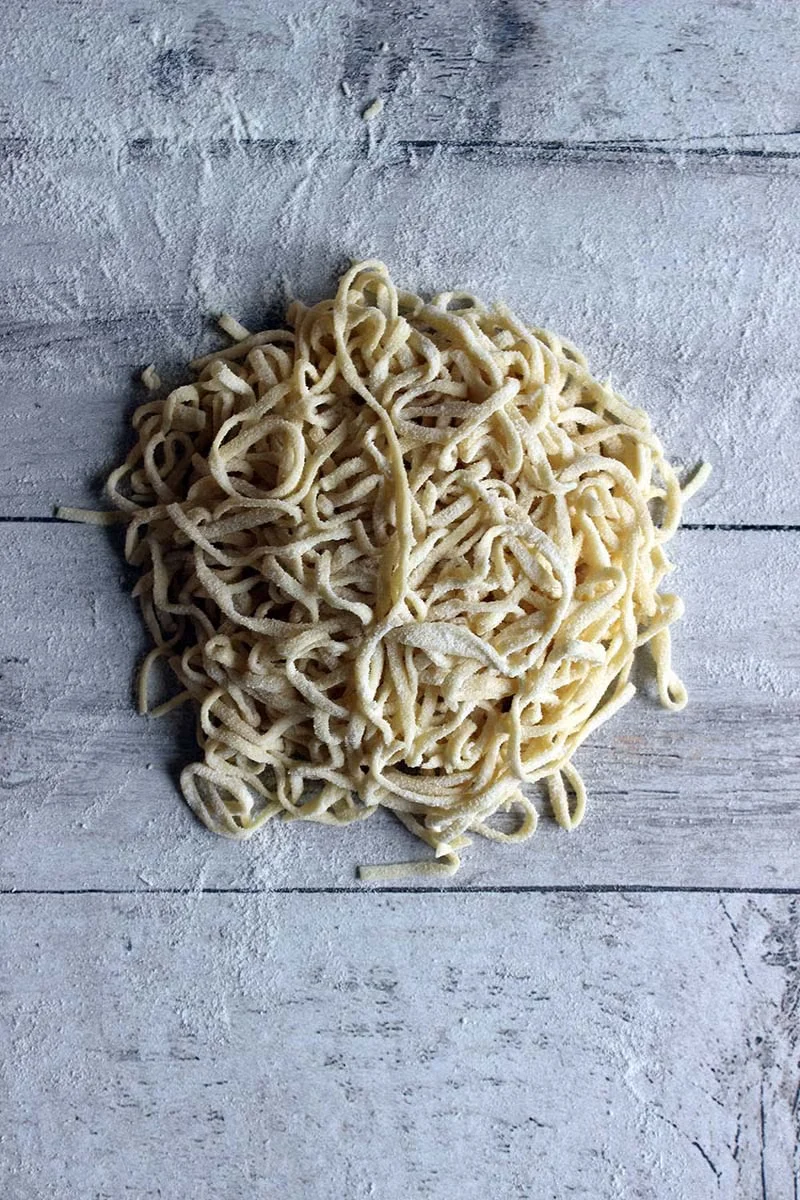
These homemade ramen noodles are made from a simple kansui-enriched dough, rolled thin and cut into springy strands. Make them when you want fresh noodles to add to a bowl of ramen broth.
Ingredients
- 200 gBread flour
- 2 gSalt
- 4 mlKansui
- 80 mlWater
- For dustingCornflour
Instructions
- 1
Mix the dough
Put the bread flour and salt in a large bowl. Mix the kansui with the water, then gradually stir it into the flour with chopsticks or a fork until the mixture is rough and crumbly.
- 2
Knead and rest
Turn the dough out onto a clean work surface lightly dusted with flour. Knead for 10 minutes, until smooth, then wrap tightly in cling film and leave to rest for 10 minutes.
- 3
Roll the dough
Roll the dough out as evenly as possible with a rolling pin, turning it regularly and dusting lightly with cornflour to prevent sticking. Aim for a thickness of 2 mm.
- 4
Cut the noodles
Fold the sheet into thirds, dusting each layer with cornflour. Cut it into thin noodles about 2 mm wide, then separate the strands.
- 5
Boil and serve
Bring a large saucepan of water to the boil. Add the noodles and cook for 4 minutes, until tender. Drain and add them to your ramen broth.
What are ramen noodles?
Ramen is a noodle soup with roots in Chinese wheat-noodle dishes that developed into a distinctive Japanese food tradition. The noodles are typically made with wheat flour and kansui, an alkaline ingredient that gives them their characteristic spring and colour.
This version keeps the dough ingredients simple and uses hand-rolling and cutting rather than special equipment. Its success depends on an even sheet and strands cut to a similar width.
Nutrition and macros by portion
The nutrition label shows one serving as written: 365 calories, 12g protein, 77g carbs, 2g fat.
| Portion | Adjustment | kcal | Protein | Carbs | Fat |
|---|---|---|---|---|---|
| Lighter | Smaller noodle portion | 255 kcal | 8g | 54g | 1g |
| This serving | As written | 365 kcal | 12g | 77g | 2g |
| Hungry | Extra noodle portion | 548 kcal | 18g | 116g | 3g |
Most of the carbohydrates and energy come from the bread flour, which also supplies the noodles’ protein; the recipe contains very little fat. Serve a portion in broth with vegetables and a protein-rich topping such as egg or tofu for a more rounded bowl.
Why use kansui?
Kansui: This alkaline ingredient helps give ramen noodles their elastic, chewy texture. Measure the 4 ml carefully and mix it with the water before adding it to the flour.
Bring the dough together
Gradual addition: The flour may look crumbly at first, which is expected. Stir until the liquid is distributed, then knead the mixture into a smooth dough.
Kneading: Work the dough for the full 10 minutes to make it more cohesive and easier to roll. The 10-minute rest gives it time to relax before shaping.
Roll and cut evenly
Thickness: Aim for a sheet about 2 mm thick, turning it as you roll so it stays even. Dust lightly with cornflour whenever it starts to stick.
Strands: Cut noodles around 2 mm wide and separate them before cooking. Keeping their width consistent helps them cook at a similar rate.
Check for doneness
Boil: Cook the noodles in a large saucepan of boiling water for 4 minutes, as directed. They should be tender when drained; if your strands are noticeably thicker or thinner, check their texture as they cook.
Serve in broth
Drain the noodles and add them to ramen broth straight away. Prepare the broth separately, since this recipe makes the noodles rather than a complete bowl of ramen.
Recipe notes & tips
- Measure the kansui and water accurately so the dough has the intended balance.
- Add the liquid gradually, scraping the bowl as needed to distribute it through the flour.
- Wrap the dough tightly during its rest so the surface does not dry out.
- Use cornflour sparingly but dust each folded layer to help the strands separate.
- Separate the cut strands before they go into the boiling water.
Variations
- Add spring onions: Scatter sliced spring onions over the noodles once they are in the broth.
- Top with egg: Add a halved boiled egg to a bowl of broth and noodles.
- Add greens: Serve with cooked leafy greens for colour and texture.
- Use a noodle cutter: Cut the rolled sheet with a pasta machine attachment if you have one.
- Make extra: Double the ingredients and freeze portions of the uncooked noodles for later.
Common mistakes to avoid
- Adding the liquid all at once: Stir it in gradually so it spreads through the flour more evenly.
- Skipping the rest: Wrap the kneaded dough and leave it for 10 minutes before rolling.
- Rolling unevenly: Turn the dough regularly and aim for a consistent 2 mm sheet.
- Using too little dusting flour: Dust the folds lightly with cornflour to help keep strands from sticking together.
- Cooking by appearance alone: Use the stated 4 minutes as a guide, then check that the noodles are tender.
How to store
Fresh noodles are best cooked straight away. If needed, keep them covered in the fridge and use within 1–2 days; separate them gently before boiling. Cooked noodles can be refrigerated in an airtight container and reheated briefly in hot broth.
Frequently asked questions
Can I make the dough without kansui?
Kansui is the ingredient that gives ramen noodles their characteristic texture. Leaving it out will produce a different kind of wheat noodle.
How thin should I roll the dough?
Aim for a sheet about 2 mm thick, as in the method. Try to keep the thickness even so the noodles cook consistently.
How wide should I cut the noodles?
Cut them around 2 mm wide. Separate the strands before cooking so they do not remain stuck together.
Can I prepare the noodles in advance?
Yes. Keep the uncooked strands covered in the fridge and use them within 1–2 days, or freeze them in portions.
Do I cook these noodles in the ramen broth?
No. Boil them in a large saucepan of water for 4 minutes, drain, then add them to the broth.
Cook it from the original
This recipe comes from finedininglovers.co.uk. Their page has the author’s own photos, notes and tips — the best place to cook it from.
Open the recipe on finedininglovers.co.uk