
Vermicelli Pudding
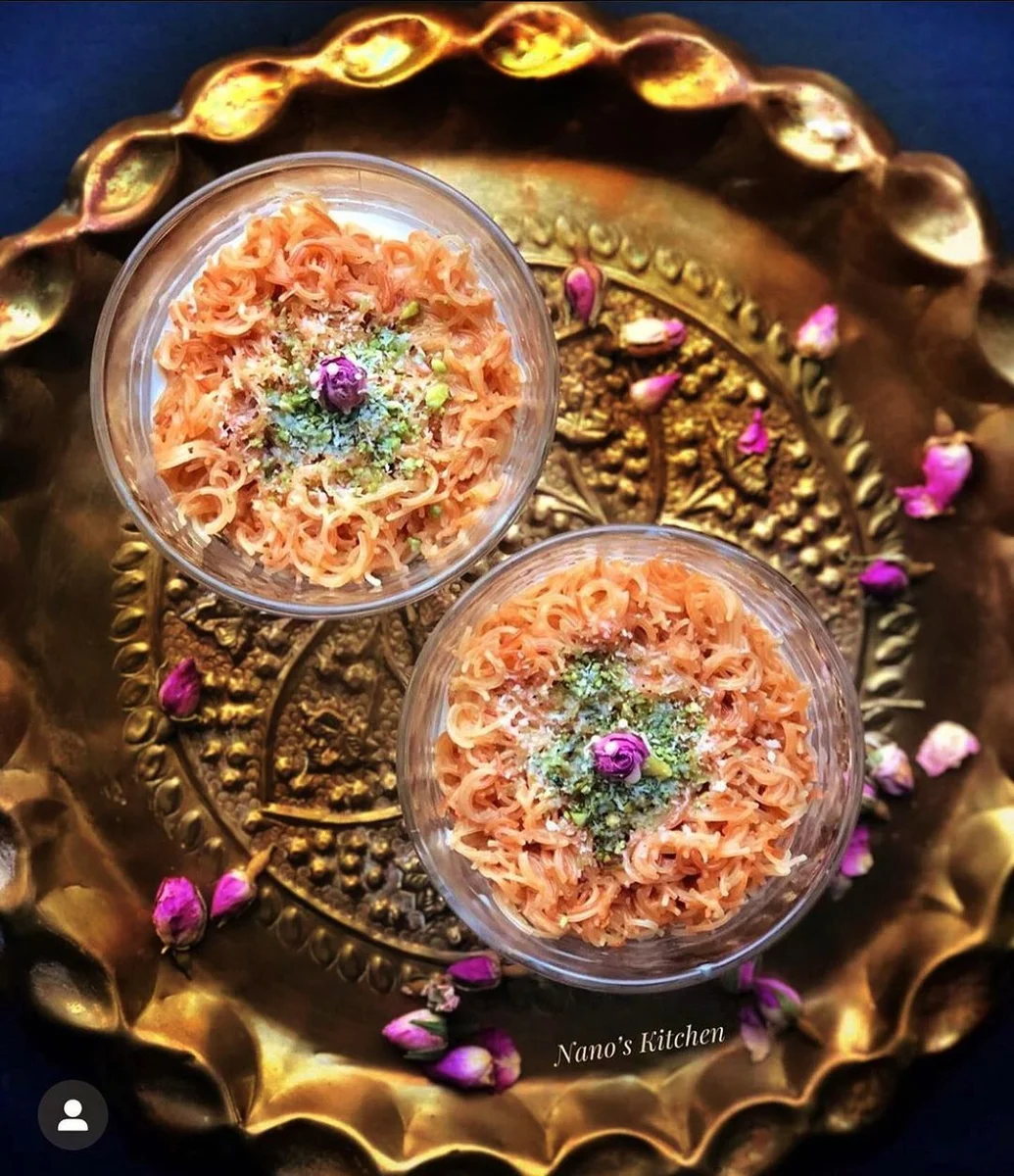
Vermicelli pudding is a creamy milk pudding with toasted wheat vermicelli, sweetened with sugar and condensed milk and scented with rose water. It makes a comforting dessert that can be served warm or chilled.
Ingredients
- 2 tablespoonsGhee or butter
- 85 g (3 oz)Wheat vermicelli
- 710 ml (3 cups)Milk
- 60–120 ml (¼–½ cup)Sugar
- 60 ml (¼ cup)Condensed milk
- 60 ml (¼ cup)Double cream
- 1 tablespoonPistachios, optional
- 4 dropsRose water
- 1 teaspoonDried rose petals
Instructions
- 1
Heat the fat
Heat the ghee or butter in a thick-bottomed pan.
- 2
Toast the vermicelli
Break the vermicelli into pieces, add it to the pan and dry-roast over low to medium heat until golden brown, about 4 minutes.
- 3
Boil the milk
Pour the milk into the same pan and bring it to the boil, stirring every few minutes. Once boiling, add the sugar.
- 4
Thicken the pudding
Stir in the condensed milk and double cream. Cook for about 7 to 8 minutes, stirring every few minutes as the mixture thickens, then add the rose water.
- 5
Check the sweetness
Taste the pudding and, if needed, add more sugar, stirring until it dissolves. Cook longer if you want a thicker pudding, or turn off the heat; it may thicken slightly as it cools.
- 6
Adjust the texture
If the pudding becomes thicker than you want, add some milk and cook it for a few minutes.
What is vermicelli pudding?
Vermicelli pudding, also known in South Asian cooking as seviyan kheer, is made by simmering fine noodles in sweetened milk. It is often served for celebrations as well as a simple home dessert.
Toasting the noodles in ghee or butter first gives this version a warm, nutty flavour, while condensed milk and cream make the finished pudding especially rich.
Nutrition and macros by portion
The nutrition label shows one serving as written: 370 calories, 11g protein, 61g carbs, 11g fat.
| Portion | Adjustment | kcal | Protein | Carbs | Fat |
|---|---|---|---|---|---|
| Lighter | Use less sugar and cream | 259 kcal | 8g | 43g | 8g |
| This serving | As written | 370 kcal | 11g | 61g | 11g |
| Hungry | Serve a larger bowl | 555 kcal | 17g | 92g | 17g |
The vermicelli and sugar provide most of the carbohydrates, while ghee or butter, double cream and condensed milk contribute much of the fat. Milk, cream and condensed milk also provide some protein. Serve a smaller bowl after a meal, or pair it with fresh fruit for a more balanced dessert plate.
Choose the right vermicelli
Wheat vermicelli: use the wheat variety specified for this recipe, rather than rice vermicelli. Break it into shorter pieces before adding it to the pan so it is easier to stir and serve.
Sugar: the amount ranges from 60 to 120 ml, so start at the lower end if you prefer a less sweet pudding. You can taste and add more towards the end.
Toast for flavour
Ghee or butter: heat it in a thick-bottomed pan before adding the noodles. The fat helps the vermicelli toast evenly and adds richness.
Colour cue: stir as the vermicelli cooks over low to medium heat. Take it off the heat when it is golden brown; keep a close eye on it, as fine noodles can darken quickly.
Watch the simmer
Milk: bring it to the boil in the same pan, stirring every few minutes to keep the mixture moving. Once the sugar is added, continue with the condensed milk and cream.
Thickening: simmer for 7 to 8 minutes, stirring every few minutes. The pudding will continue to thicken a little as it cools, so stop cooking while it is slightly looser than your preferred serving consistency.
Finish with rose
Rose water: add the four drops after the pudding has thickened, so its floral aroma stays noticeable. Taste the pudding before deciding whether it needs more sugar.
Garnish: scatter over the optional pistachios and dried rose petals when serving. Both add colour and a little contrast to the creamy texture.
Serve it warm or chilled
Warm: serve soon after cooking for a soft, flowing pudding. If it has become too thick, loosen it with milk and cook for a few minutes, as described in the method.
Chilled: let it cool before refrigerating if you prefer a firmer, cold dessert. The vermicelli will absorb more liquid as the pudding stands.
Recipe notes & tips
- Break the vermicelli into manageable lengths before toasting it.
- Stir regularly while the noodles toast so they colour evenly.
- Start with 60 ml sugar, then adjust to taste.
- Add the rose water after the pudding has thickened.
- Allow for a little extra thickening as the pudding cools.
- Use a splash of milk to loosen leftovers before reheating.
Variations
- Cardamom: add a pinch of ground cardamom for a warm, fragrant note.
- Saffron: steep a few strands in warm milk and stir them in for colour and aroma.
- Nut topping: finish with chopped almonds or cashews instead of pistachios.
- Less sweet: begin with 60 ml sugar and add only what you need after tasting.
- Citrus: add a little finely grated orange zest for a fresh aromatic twist.
Common mistakes to avoid
- Scorched vermicelli: keep the heat low to medium and stir until the noodles are just golden.
- Milk catching on the pan: use a thick-bottomed pan and stir every few minutes.
- Pudding too sweet: start with the lower amount of sugar and taste before adding more.
- Overcooking: remember that the pudding thickens as it cools, and stop while it is still slightly loose.
- Pudding too thick: add milk and cook for a few minutes to restore a softer consistency.
How to store
Cool the pudding, cover it and refrigerate for up to 3 days. Reheat gently in a pan, stirring in a little milk to loosen it as needed.
Frequently asked questions
Can I serve vermicelli pudding cold?
Yes. Cool it and refrigerate it before serving; it will become thicker as it chills.
How do I know when the vermicelli is toasted?
It should be golden brown after about 4 minutes over low to medium heat. Stir regularly so it does not burn.
Can I make the pudding less sweet?
Yes. Start with 60 ml sugar, then taste near the end and add more only if you want it sweeter.
Why has my pudding become so thick?
The vermicelli absorbs liquid as it cooks and cools. Stir in milk and cook for a few minutes to loosen it.
Can I make it without rose water?
Yes. You can omit it, or use a small pinch of cardamom for a different fragrant flavour.
Cook it from the original
This recipe comes from fooooods.com. Their page has the author’s own photos, notes and tips — the best place to cook it from.
Open the recipe on fooooods.com