
Easy Homemade Oat Milk
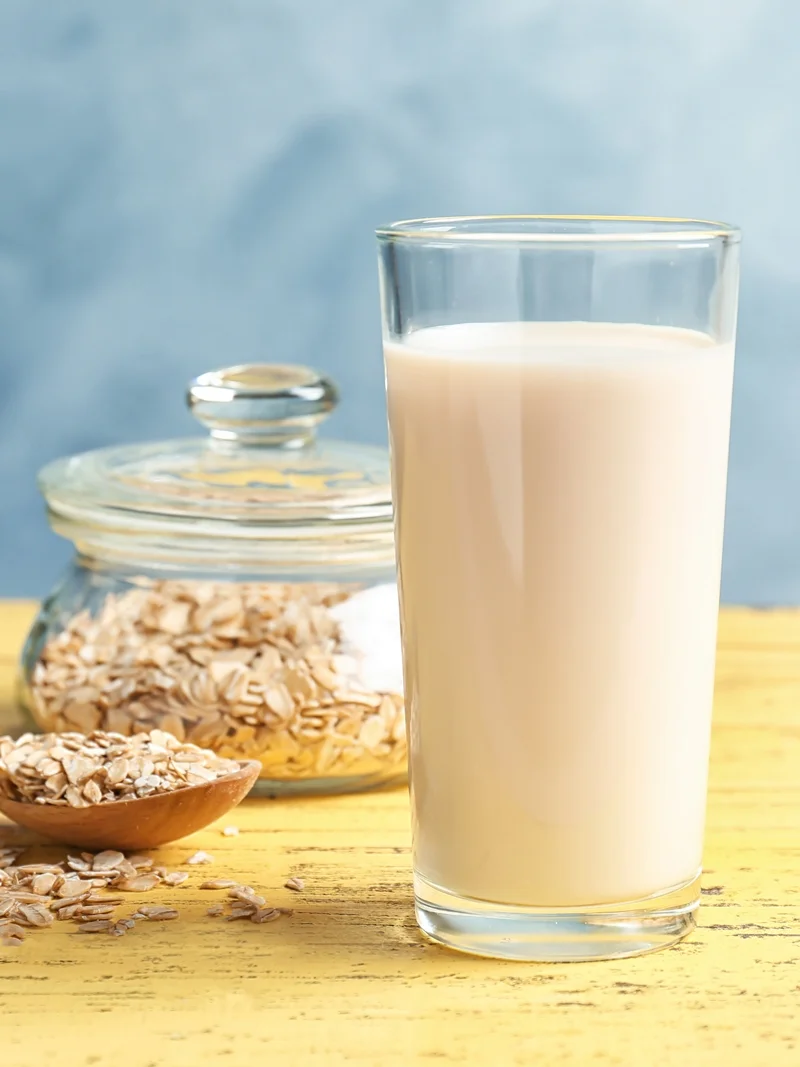
This quick homemade oat milk blends rolled oats with ice-cold water, then strains the mixture for a simple dairy-free drink. A little neutral oil helps give it a creamier feel, and the small batch is ready in minutes.
Ingredients
- 20 g (¼ cup)rolled oats (certified gluten-free, if needed)
- 207 ml (⅞ cup)ice-cold water
- 5 ml (1 teaspoon)neutral-tasting oil
- A small pinchsalt
- To taste (optional)sweetener
Instructions
- 1
Rinse the oats
Place the oats in a fine-mesh strainer and briefly rinse them under very cold water.
- 2
Blend with water
Put the wet oats and very cold water in a blender. Blend for about 20–45 seconds, until relatively smooth.
- 3
Strain gently
Line a fine-mesh sieve with a nut milk bag or a few layers of cheesecloth, then pour the blended mixture through it into a container. Let it drain naturally; do not press or squeeze the oats.
- 4
Add remaining ingredients
Return the oat milk to the blender. Add the oil, salt and sweetener, if using, and blend for 20–30 seconds, just until emulsified and relatively creamy.
- 5
Chill and store
For the best quality, use the oat milk within a day or two. It can be kept in an airtight container in the refrigerator for up to 3 days; if it separates, blend it briefly.
What is oat milk?
Oat milk is a plant-based drink made by blending oats with water and straining out the solids. This small-batch version keeps the process straightforward and uses a brief blend followed by gentle straining.
The recipe suits an American home-kitchen approach to a quick dairy-free staple: make only what you need, then use it while fresh. The cold water, careful straining and small amount of oil are the key choices for a smoother, creamier result.
Nutrition and macros by portion
The nutrition label shows one serving as written: 100 calories, 3g protein, 14g carbs, 5g fat.
| Portion | Adjustment | kcal | Protein | Carbs | Fat |
|---|---|---|---|---|---|
| Lighter | Use less neutral oil | 70 kcal | 2g | 10g | 4g |
| This serving | As written | 100 kcal | 3g | 14g | 5g |
| Hungry | Make a larger batch | 150 kcal | 4g | 21g | 8g |
The oats provide most of the carbohydrates and some of the protein, while the neutral oil contributes most of the fat. For a more balanced plate, pair a serving with a meal that includes a clear source of protein and fruit or vegetables.
Why rinse the oats?
Cold rinse: briefly washing the oats before blending removes some loose surface starch. Keep the rinse short, then use the oats while they are still wet.
Keep the water cold
Ice-cold water: the recipe relies on very cold water for both blending stages. Measure it out cold before you start so it is ready when the rinsed oats go into the blender.
Strain without squeezing
Natural draining: let the liquid pass through the nut milk bag or cheesecloth-lined sieve on its own. Pressing or squeezing the oat solids can make the drink less smooth, so resist trying to extract every last drop.
Look for a creamy finish
First blend: after 20–45 seconds, the oat-and-water mixture should look relatively smooth before straining. The exact time depends on your blender, so use the texture as a cue.
Second blend: after adding the oil, salt and optional sweetener, blend for only 20–30 seconds. Stop when the mixture looks emulsified and relatively creamy.
Make and use a small batch
Quick timing: the recipe takes about 5 minutes, with the blending and straining done in sequence. Have the sieve and container ready before blending so you can strain the mixture straight away.
Serving ideas: use the oat milk in a drink or over cereal, or add it to a recipe that calls for milk. Shake or briefly blend it if it separates during storage.
Recipe notes & tips
- Measure the water while it is very cold so it is ready for blending.
- Rinse the oats briefly rather than soaking them.
- Use a nut milk bag or several layers of cheesecloth for straining.
- Let the mixture drain naturally instead of squeezing the oat solids.
- Blend briefly after adding the oil, salt and sweetener, stopping once creamy.
- If the stored oat milk separates, give it a short blend before using.
Variations
- Add sweetness: blend in sweetener to taste during the second blending step.
- Skip the sweetener: leave it out for an unsweetened oat milk.
- Change the oil: use another neutral-tasting oil in the same measured amount.
- Make it gluten-free: choose certified gluten-free rolled oats if needed.
- Adjust the salt: keep the small pinch or omit it to suit your preference.
Common mistakes to avoid
- Warm water: it goes against the recipe's cold-blending method; use very cold water.
- Long oat rinse: a prolonged rinse is unnecessary; rinse briefly and drain.
- Squeezing the solids: this can affect the smooth finish; let the mixture drain naturally.
- Over-blending after straining: the second blend only needs 20–30 seconds; stop once emulsified.
- Expecting it to stay mixed: separation can happen in storage; briefly blend it again.
How to store
Keep the oat milk in an airtight container in the refrigerator and use it within a day or two for the best quality, or within 3 days at most. If it separates, blend it briefly before serving; this recipe does not give a reheating method.
Frequently asked questions
Why does the recipe use ice-cold water?
Very cold water is specified for both blending stages. Measure it out cold before you start.
Can I squeeze the oats to get more milk?
No. Let the mixture drain naturally through the nut milk bag or cheesecloth-lined sieve, without pressing or squeezing.
How long does homemade oat milk keep?
It is best used within a day or two and can be kept in an airtight container in the refrigerator for up to 3 days.
What should I do if it separates?
Blend it briefly to bring it back together.
Can I leave out the sweetener?
Yes. Sweetener is optional, so you can omit it or add it to taste.
Do I need gluten-free oats?
Use certified gluten-free rolled oats if you need the oat milk to be gluten-free.
Cook it from the original
This recipe comes from godairyfree.org. Their page has the author’s own photos, notes and tips — the best place to cook it from.
Open the recipe on godairyfree.org