
Beef Bistik
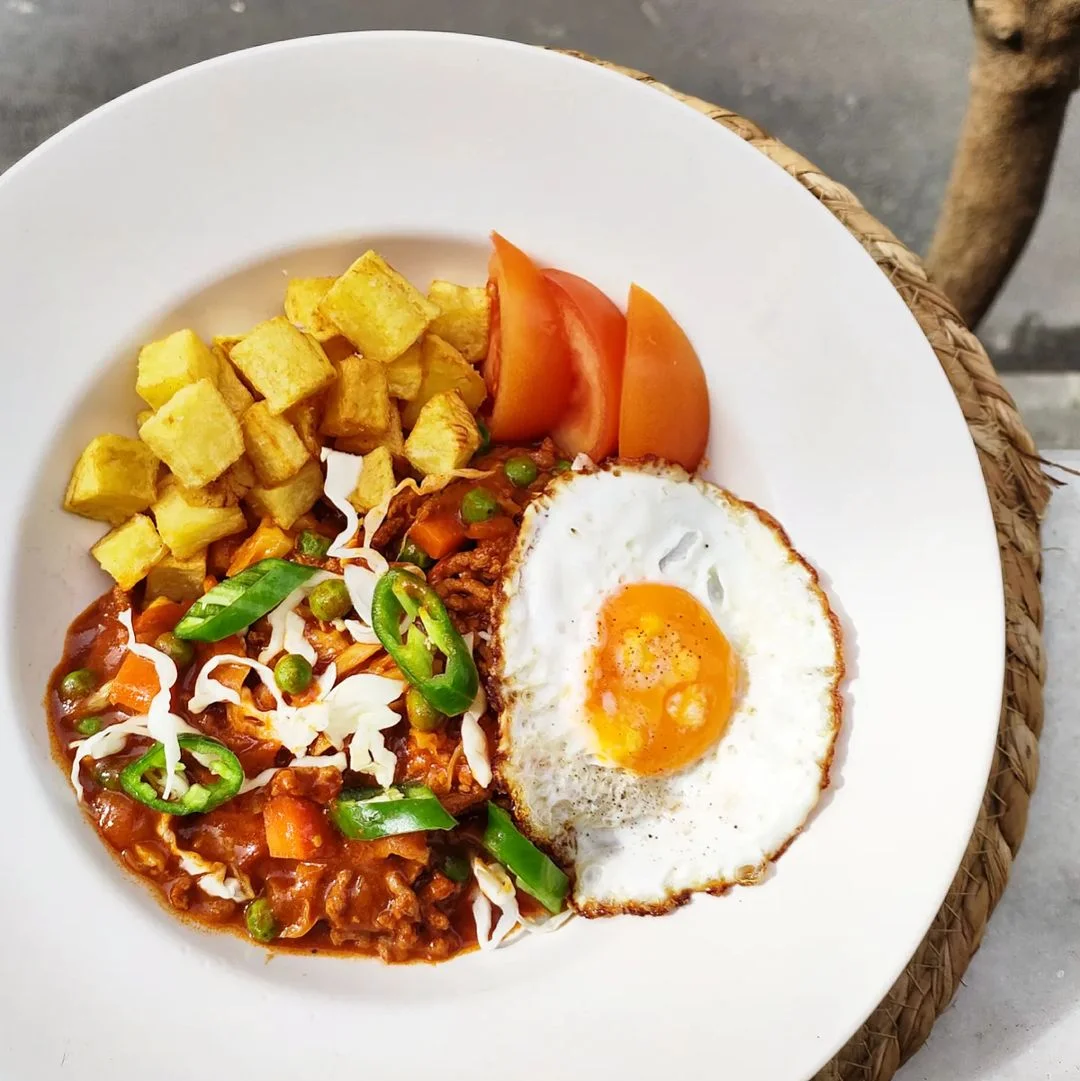
Beef Bistik is a spiced minced-beef and vegetable stew, finished with fresh garnishes and often served with rice or bread. It is a practical one-pan meal, with a gently warming sauce and plenty of vegetables.
Ingredients
- 400 gminced beef (or chicken or lamb)
- 1 tbspoil
- 1cinnamon stick
- 75 g (½ cup)onion
- 3 clovesgarlic
- 2 cmginger
- 3–4fresh or dried red chillies
- ½ tspground cumin
- ½ tspground coriander
- 1 tspcurry powder
- 3 tbsptomato purée
- 710 ml (3 cups)beef stock (or water)
- 130 g (1 cup)carrots, cubed
- 210 g (3 cups)cabbage, sliced
- 145 g (1 cup)peas
- ½ tsp, or to tastesalt
- ¼ tsp, or to tasteground black pepper
- to tastecabbage, thinly sliced
- to tastetomatoes, sliced
- to tastepotatoes, cubed and fried
- to tastegreen chillies, sliced
- 1 per serving, or to tasteegg, fried sunny side up
Instructions
- 1
Blend the aromatics
Put the onion, garlic, ginger and red chillies in a blender or food processor with a little water. Pulse until smooth and set aside.
- 2
Cook the aromatics
Heat the oil in a large pan over medium-high heat. Add the cinnamon stick and cook for 30 seconds, then stir in the blended onion mixture and cook for 1 minute.
- 3
Add the spices
Stir in the cumin, coriander and curry powder and cook for 1 minute.
- 4
Brown the mince
Add the minced meat, stirring and breaking up any lumps. Cook for 5 minutes.
- 5
Add stock and carrots
Mix in the tomato purée and cook for 2 minutes. Pour in the beef stock and add the carrots, then stir and bring to the boil.
- 6
Cook the cabbage
Add the cabbage, salt and pepper. Cook until the sauce reaches your preferred consistency.
- 7
Finish with peas
Stir in the peas, taste and adjust the seasoning, then turn off the heat.
- 8
Garnish and serve
Ladle into individual bowls or plates and add the garnishes you like. Serve immediately; it can also be eaten with rice or bread.
What is Beef Bistik?
Beef Bistik is a home-style minced-meat dish with vegetables in a savoury, spiced sauce. The name and style are associated with Indonesian cooking, where bistek dishes reflect a blend of local flavours and outside culinary influences.
This version builds flavour with blended onion, garlic, ginger and chillies, then simmers the mince with tomato, stock and vegetables. Fresh toppings add contrast to the soft, saucy base.
Nutrition and macros by portion
The nutrition label shows one serving as written: 360 calories, 23g protein, 25g carbs, 19g fat.
| Portion | Adjustment | kcal | Protein | Carbs | Fat |
|---|---|---|---|---|---|
| Lighter | More cabbage, fewer potatoes | 252 kcal | 16g | 18g | 13g |
| This serving | As written | 360 kcal | 23g | 25g | 19g |
| Hungry | Add rice and an egg | 540 kcal | 35g | 38g | 29g |
The minced meat contributes most of the protein and a substantial share of the fat, while the peas, carrots and tomato purée supply some of the carbohydrates. For a more balanced plate, serve a moderate portion with extra fresh cabbage or tomatoes; rice, bread, fried potatoes and egg will add further energy and nutrients.
Build flavour in stages
Aromatics: blending the onion, garlic, ginger and chillies makes a smooth base that spreads evenly through the sauce.
Spices: briefly cooking the cinnamon and ground spices in the pan helps their aromas mingle with the oil and onion mixture. Keep stirring so the mixture does not catch.
Choose your mince
Beef: minced beef gives the dish a robust, savoury flavour. Chicken or lamb mince can be used in its place, as indicated in the ingredient list.
Break up: stir and break the mince into small pieces as it cooks so it mixes evenly with the aromatics and sauce.
Get the sauce texture right
Consistency: the method leaves the sauce to cook until it reaches your preferred thickness. Let it simmer longer for a more concentrated sauce, or stop while it is looser.
Vegetables: the cabbage softens as it cooks, while the peas go in near the end. This keeps the peas from spending the whole cooking time in the simmering sauce.
Season to taste
Salt and pepper: add the listed amounts with the cabbage, then taste again after the peas are stirred in. Stock can vary in saltiness, so adjust at the end rather than adding extra salt automatically.
Heat: the red chillies are blended into the base, so their strength is present throughout. Use fewer or milder chillies if you prefer a gentler result.
Finish with contrasting toppings
Fresh toppings: thinly sliced cabbage, tomatoes and green chillies bring crispness and freshness to each serving.
Potatoes and egg: cubed fried potatoes add a substantial, crisp-edged topping, while a sunny-side-up egg makes the bowl richer. Rice or bread are also suggested accompaniments.
Recipe notes & tips
- Blend the aromatics with only a little water so the mixture is smooth without being overly thin.
- Stir the spices constantly during their short cooking time to help prevent them catching on the pan.
- Break the mince up thoroughly as it cooks for an even texture.
- Let the sauce simmer until it is as thick or loose as you prefer.
- Taste the sauce before serving, especially if your stock is already salty.
- Add only the garnishes you plan to eat straight away, so their textures stay distinct.
Variations
- Use chicken mince: swap it for the beef for a milder-tasting version.
- Use lamb mince: choose lamb for a fuller, richer flavour.
- Adjust the chilli: use fewer red chillies for less heat, or add sliced green chilli at the table.
- Serve with rice: spoon the stew over cooked rice for a more filling meal.
- Add fried potatoes: top each portion with cubed fried potatoes for extra texture.
- Finish with an egg: serve with a sunny-side-up egg on top.
Common mistakes to avoid
- Adding too much blending water: the sauce may start thin; use just a little water to help the aromatics blend.
- Leaving the spices unstirred: they can catch in the pan; stir continuously during their 1-minute cooking time.
- Leaving mince in large lumps: it cooks unevenly; break it apart while stirring.
- Cooking by the clock alone: sauce thickness varies; cook the cabbage until the consistency suits you.
- Over-salting early: stock can be salty; taste and adjust after the peas are added.
- Adding all the garnishes to the pan: they lose their fresh contrast; arrange them on the portions just before serving.
How to store
Refrigerate leftover stew in a covered container and use within 3 days. Reheat it in a pan until steaming hot throughout, adding a splash of water if the sauce has thickened; store fresh garnishes separately and add them when serving.
Frequently asked questions
Can I use chicken or lamb instead of beef?
Yes. The ingredient list gives chicken and lamb as alternatives to minced beef; cook the mince in the same way, breaking it up as it cooks.
How spicy is Beef Bistik?
The heat depends on the number and type of red chillies used. Use fewer chillies for a milder sauce, and add sliced green chilli only if you want extra heat at the table.
How thick should the sauce be?
Cook it until it reaches the consistency you prefer. The recipe does not specify a fixed simmering time for this stage.
What can I serve with Beef Bistik?
The recipe suggests rice or bread. Fried potatoes, sliced cabbage, tomatoes, green chillies and a sunny-side-up egg are listed as possible garnishes.
Can I prepare the dish ahead?
You can make the stew ahead and refrigerate it, then reheat it thoroughly. Add fresh garnishes when serving rather than reheating them with the stew.
Cook it from the original
This recipe comes from fooooods.com. Their page has the author’s own photos, notes and tips — the best place to cook it from.
Open the recipe on fooooods.com