
Basque Burnt Cheesecake
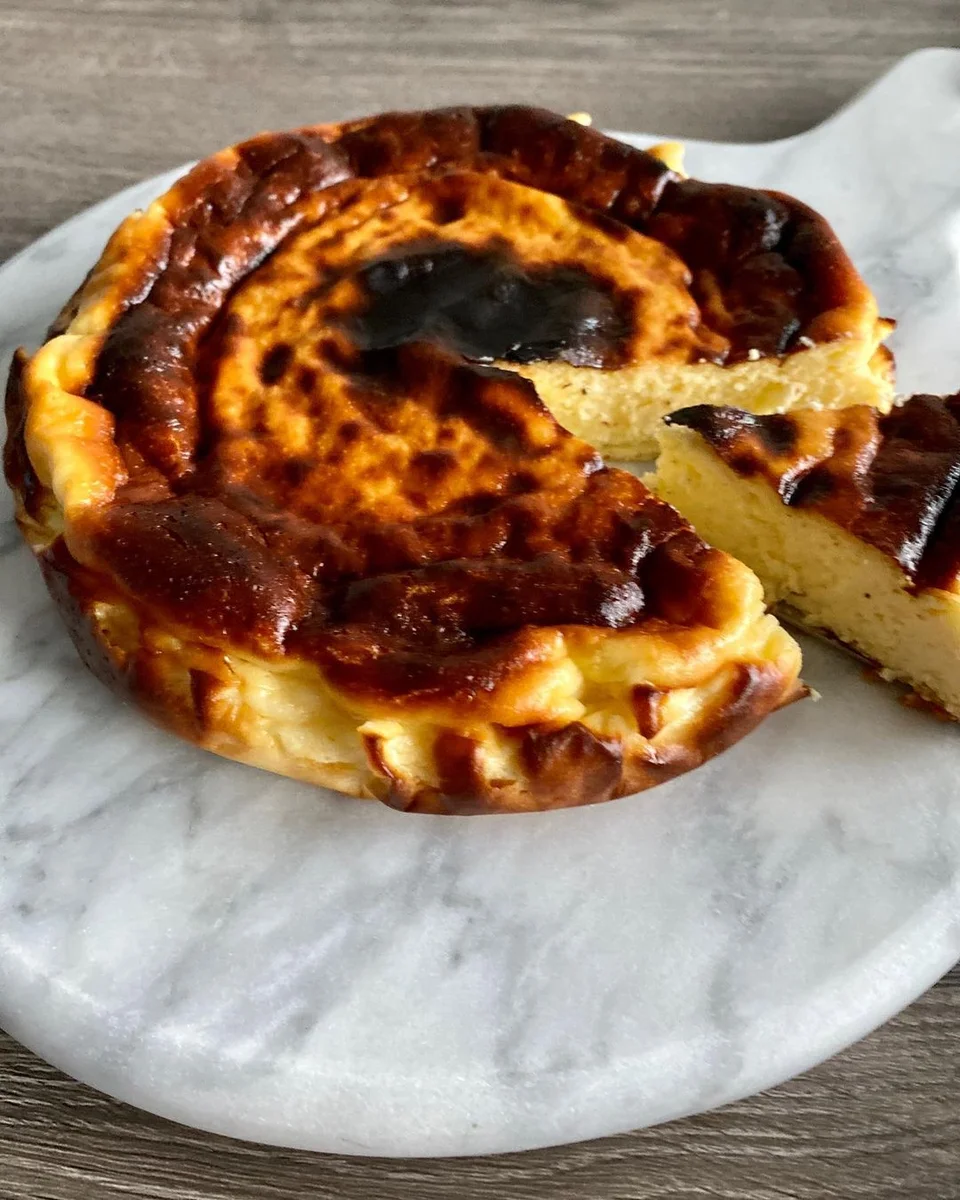
Basque burnt cheesecake is a crustless cheesecake baked until its top is deeply browned while the centre stays soft and creamy. This small-batch version uses a short ingredient list and is best made ahead so it can chill before serving.
Ingredients
- 250 gcream cheese
- 40 g (adjust to taste)sugar
- 125 mlcream
- 2eggs
- 10 gcake flour
Instructions
- 1
Preheat the oven
Heat the oven to 200°C.
- 2
Mix the cheese
Blend the cream cheese until smooth, then add the sugar and mix well.
- 3
Add the eggs
Beat the eggs, then add them to the cream cheese mixture a little at a time, mixing as you go.
- 4
Add flour and cream
Add the cake flour and cream to the mixture and mix until combined.
- 5
Bake the cheesecake
Pour the mixture into a baking tin and bake for 30 minutes.
- 6
Brown the top
If the top is not brown enough, move the tin to the upper part of the oven for a further 3–5 minutes.
- 7
Cool and chill
Leave the cheesecake to cool for 3 hours, then refrigerate it for at least 4 hours before serving.
What is Basque burnt cheesecake?
This crustless cheesecake is associated with San Sebastián in the Basque Country of Spain. Its defining feature is a boldly browned top, with a soft, creamy centre beneath.
Here, cream cheese, eggs, cream and a little flour make a compact cake for four. A brief extra spell near the top of the oven helps deepen the colour if needed.
Nutrition and macros by portion
The nutrition label shows one serving as written: 404 calories, 14g protein, 15g carbs, 37g fat.
| Portion | Adjustment | kcal | Protein | Carbs | Fat |
|---|---|---|---|---|---|
| Lighter | Use less sugar | 283 kcal | 9g | 10g | 26g |
| This serving | As written | 404 kcal | 14g | 15g | 37g |
| Hungry | Serve a larger slice | 606 kcal | 20g | 22g | 55g |
Cream cheese and cream provide much of the fat, while the eggs add protein and some fat. Sugar and flour supply most of the carbohydrates; serve a slice with fresh fruit for a simple contrast and a more balanced plate.
Why the ingredients matter
Cream cheese: Blend it until smooth before adding the other ingredients so the finished mixture has fewer lumps.
Eggs and cream: The eggs help the cake set, while the cream contributes to its rich, tender texture. Add the beaten eggs gradually to incorporate them evenly.
Cake flour: Only a small amount is used, helping the mixture hold together without turning the cheesecake into a firm cake.
Getting a smooth mixture
Start with the cream cheese on its own and work it smooth before mixing in the sugar. Add the eggs in several additions rather than all at once, mixing between each one.
Once the flour and cream go in, mix just until combined. This keeps the batter uniform without unnecessary mixing.
Colour and doneness
The recipe bakes the cheesecake at 200°C for 30 minutes, then allows another 3–5 minutes in the upper part of the oven if the top needs more colour.
The top should be noticeably browned, while the centre may still look soft. The long cooling and chilling period helps it settle before you cut it.
Cooling takes time
After baking, leave the cheesecake to cool for 3 hours before putting it in the fridge. This gives it time to lose heat gradually.
Chill it for at least 4 hours before serving. Since the full cooling and chilling period is several hours, make it well ahead of the meal.
Serving the cheesecake
Serve it chilled or let it stand briefly at room temperature if you prefer a softer texture. Use a clean knife for neater slices.
Its rich texture pairs well with fresh berries or sliced fruit. Keep any accompaniments simple so they do not overpower the browned, creamy cheesecake.
Recipe notes & tips
- Mix the cream cheese until smooth before adding the sugar.
- Add the beaten eggs in several additions for an evenly mixed batter.
- Check the top after the initial 30 minutes before giving it extra oven time.
- Allow the full cooling and chilling time so the cheesecake can set.
- Use a clean knife between cuts for tidier slices.
Variations
- Citrus note: Mix finely grated lemon zest into the batter for a fresh aroma.
- Vanilla: Stir vanilla extract into the cream cheese mixture for a gentle vanilla flavour.
- Berry topping: Serve each slice with fresh berries for a fruity contrast.
- Less sweet: Reduce the sugar to suit your taste, keeping in mind that it will change the sweetness.
- Coffee pairing: Serve the cheesecake with espresso or strong coffee for a classic, simple match.
Common mistakes to avoid
- Lumpy cream cheese: Blend it smooth before adding the sugar and other ingredients.
- Adding all the eggs at once: Beat them in gradually so they incorporate more evenly.
- Overmixing after adding flour: Mix only until the flour and cream are combined.
- Expecting a deeply browned top too early: Bake for the stated 30 minutes, then use the extra 3–5 minutes if needed.
- Skipping the chill: Refrigerate for at least 4 hours after the 3-hour cooling period before serving.
How to store
Keep the cheesecake covered in the fridge and eat it within 3 days. Serve chilled, or let a slice stand briefly at room temperature to soften slightly.
Frequently asked questions
Can I make this cheesecake ahead?
Yes. It needs 3 hours to cool and at least 4 hours in the fridge, so making it the day before is convenient.
How do I know when the top is brown enough?
Check it after the 30-minute bake. If it needs more colour, move it to the upper part of the oven for 3–5 minutes.
Should the centre look completely firm when it comes out?
It may still look soft when the baking time is up. The cooling and chilling stages help it settle.
Can I adjust the sugar?
Yes. The recipe allows for adjusting the 40 g to your taste, though using less will make the cheesecake less sweet.
Why does it need to chill for so long?
The recipe calls for at least 4 hours in the fridge after cooling so the cheesecake can set before slicing.
Cook it from the original
This recipe comes from fooooods.com. Their page has the author’s own photos, notes and tips — the best place to cook it from.
Open the recipe on fooooods.com