
Loaded Scalloped Potatoes with Bacon, Cheddar, Gruyère, and Smoked Gouda Recipe
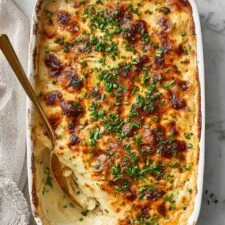
This American-style scalloped potato casserole layers tender potatoes with a creamy sauce, crispy bacon and three melted cheeses. It is a rich, hearty side for a holiday table or special meal, with a golden, savoury top.
Ingredients
- 1.36 kggold or red potatoes, peeled and sliced 6–3 mm thick
- 8 stripsbacon
- 45 mlsalted butter
- 1 mediumonion, finely diced
- 5 clovesgarlic, minced
- 45 mlplain flour
- 710 mlwhole milk
- 240 mldouble cream
- 15 mlroasted garlic base by Better Than Bouillon
- 57 gcream cheese, softened
- 113 gsharp Cheddar, grated (habanero Cheddar recommended for a kick)
- 113 gGruyère, grated
- 113 gsmoked Gouda, grated
- 80 mlchives, finely chopped
- 15 mlfresh thyme leaves
- 10 mlItalian seasoning
- 5 mlsmoked paprika
- 5 mldry mustard powder
- 5 mlfreshly cracked black pepper
- 2.5 mlsalt (adjust carefully because the bacon and cheese are salty)
Instructions
- 1
Heat the oven
Preheat the oven to 190°C (375°F).
- 2
Cook the bacon
In a large Dutch oven or 5-quart braiser, cook the bacon over medium heat until crisp. Lift it out and crumble it, then drain off most of the fat, leaving about 30 ml in the pan.
- 3
Soften the aromatics
Melt the butter in the same pan over medium heat. Add the onion and garlic and cook for about 5 minutes, until softened and fragrant.
- 4
Make the sauce
Sprinkle the flour over the onion and garlic and stir for 1 minute. Gradually pour in the milk and cream in additions, stirring continuously to avoid lumps. Stir in the roasted garlic base, thyme, Italian seasoning, smoked paprika, mustard powder, pepper and salt.
- 5
Whisk in cream cheese
Add the softened cream cheese and whisk continuously until it has melted and the sauce is smooth.
- 6
Melt in cheese
Bring the sauce to a gentle boil, then take it off the heat. Stir in half of each grated cheese until melted and combined.
- 7
Layer the potatoes
Lightly grease a 3-quart casserole dish and spread a thin layer of sauce across the bottom. Arrange the potato slices upright in stacks or rows, then pour the remaining sauce over them, gently separating the stacks so sauce reaches between the slices.
- 8
Bake the potatoes
Bake the uncovered casserole for 40 minutes, or until the potatoes are nearly fork-tender.
- 9
Add the toppings
Take the casserole out of the oven and scatter the remaining cheese and crumbled bacon over the top. Bake for another 20 minutes, until the potatoes are fully tender and the top is golden brown.
- 10
Finish and garnish
Gently dab the surface with a folded paper towel to absorb excess oil. Sprinkle the chopped chives evenly over the casserole.
- 11
Let it rest
Leave the casserole to stand for 10 minutes before serving so the sauce can thicken and set.
What are scalloped potatoes?
Scalloped potatoes are a baked dish of thinly sliced potatoes cooked in a creamy sauce. The name is associated with the scalloped, layered slices; the style is a familiar comfort-food casserole in American home cooking.
This loaded version builds flavour with bacon, garlic, herbs and a trio of Cheddar, Gruyère and smoked Gouda. Cooking the sauce before layering helps it coat the potatoes and carry the cheese through the dish.
Nutrition and macros by portion
The nutrition label shows one serving as written: 430 calories, 17g protein, 31g carbs, 28g fat.
| Portion | Adjustment | kcal | Protein | Carbs | Fat |
|---|---|---|---|---|---|
| Lighter | Smaller potato portion | 301 kcal | 12g | 22g | 20g |
| This serving | As written | 430 kcal | 17g | 31g | 28g |
| Hungry | Larger casserole serving | 645 kcal | 26g | 47g | 42g |
The potatoes provide most of the carbohydrates, while the cream, butter, bacon and three cheeses contribute much of the fat. The bacon, dairy and cheeses also supply protein, and the cheese and bacon make the dish salty. Pair a serving with green vegetables and a lean main to round out the plate.
Choosing the potatoes
Gold potatoes: their creamy texture works well in a rich sauce, while red potatoes are a suitable alternative and tend to hold their shape.
Even slices: cut the potatoes to a consistent 3–6 mm thickness so they cook at a similar pace. A mandoline can help, but use care and keep the slices arranged in the same direction.
Building a smooth sauce
Roux: stirring the flour into the butter and aromatics for a minute helps it blend into the sauce rather than taste raw.
Dairy: add the milk and cream gradually while stirring, which makes it easier to keep the sauce smooth. Whisk in the softened cream cheese before adding the grated cheeses.
Getting the cheese balance
Sharp Cheddar: gives the sauce a pronounced savoury cheese flavour; habanero Cheddar adds a little heat if that is the version you choose.
Gruyère and smoked Gouda: Gruyère brings a rich, nutty note, while smoked Gouda adds smoky depth. Save half of each cheese for the topping so it browns over the bacon.
Checking the bake
First bake: after 40 minutes, the potatoes should be close to tender when pierced with a fork, but not quite finished.
Final bake: the extra 20 minutes with the cheese and bacon on top finishes the potatoes and browns the surface. If a fork still meets firm resistance, continue baking until the slices are fully tender.
Serving the casserole
Resting: give the casserole 10 minutes out of the oven before serving. This allows the sauce to settle and makes portions easier to lift.
Pairings: serve it alongside roast chicken, ham or another simple main, with a green salad or steamed green vegetables to bring freshness to the plate.
Recipe notes & tips
- Grate the cheeses before starting so they are ready when the sauce is hot.
- Taste the sauce before adding all the salt, since the bacon and cheeses already bring saltiness.
- Keep the potatoes in neat rows or stacks so the sauce can flow between the slices.
- Use a baking dish with enough room for the sauce to bubble without spilling over.
- Let the casserole rest before cutting into it for neater servings.
Variations
- Add a kick: use habanero Cheddar as suggested for a spicier cheese layer.
- Change the herbs: use extra fresh thyme in place of some of the Italian seasoning.
- Make it smoky: add a little extra smoked paprika to the sauce.
- Swap the potatoes: use gold potatoes or red potatoes, as both are listed options.
- Freshen the top: add the chives just before serving so their flavour stays bright.
Common mistakes to avoid
- Uneven slices: thick pieces may stay firm while thin ones soften; aim for consistent 3–6 mm slices.
- Lumpy sauce: adding the milk and cream all at once can make lumps; pour them in gradually while stirring.
- Over-salting: bacon and cheese are already salty; season carefully and taste the sauce before adding the full amount.
- Skipping the first bake: adding the topping too soon can leave the potatoes undercooked; bake them for 40 minutes first.
- Serving straight away: the sauce may be loose; rest the casserole for 10 minutes before portioning.
How to store
Cool leftovers and refrigerate them in a covered container for up to 3 days. Reheat portions in the oven or microwave until hot throughout; add a small splash of milk if the sauce has thickened.
Frequently asked questions
Can I use red potatoes instead of gold potatoes?
Yes. The recipe allows either gold or red potatoes; slice them evenly so they cook at a similar rate.
Can I prepare the casserole ahead?
For the best texture, bake it as directed and serve fresh. You can prepare the sauce and slice the potatoes ahead, but keep the potatoes covered and chilled until assembling.
How do I know when the potatoes are done?
A fork should pass through the slices easily. Check after the additional 20-minute bake, and continue baking if the centre is still firm.
Why does the recipe bake the potatoes in two stages?
The first 40 minutes gives the potatoes time to soften in the sauce. The final 20 minutes melts and browns the topping while the potatoes finish cooking.
Can I leave out the bacon?
Yes, though it will no longer have the bacon’s savoury topping. The recipe does not specify a substitute, so simply omit it if preferred.
Cook it from the original
This recipe comes from busyrecipe.com. Their page has the author’s own photos, notes and tips — the best place to cook it from.
Open the recipe on busyrecipe.com