
Vegetable Massaman Curry
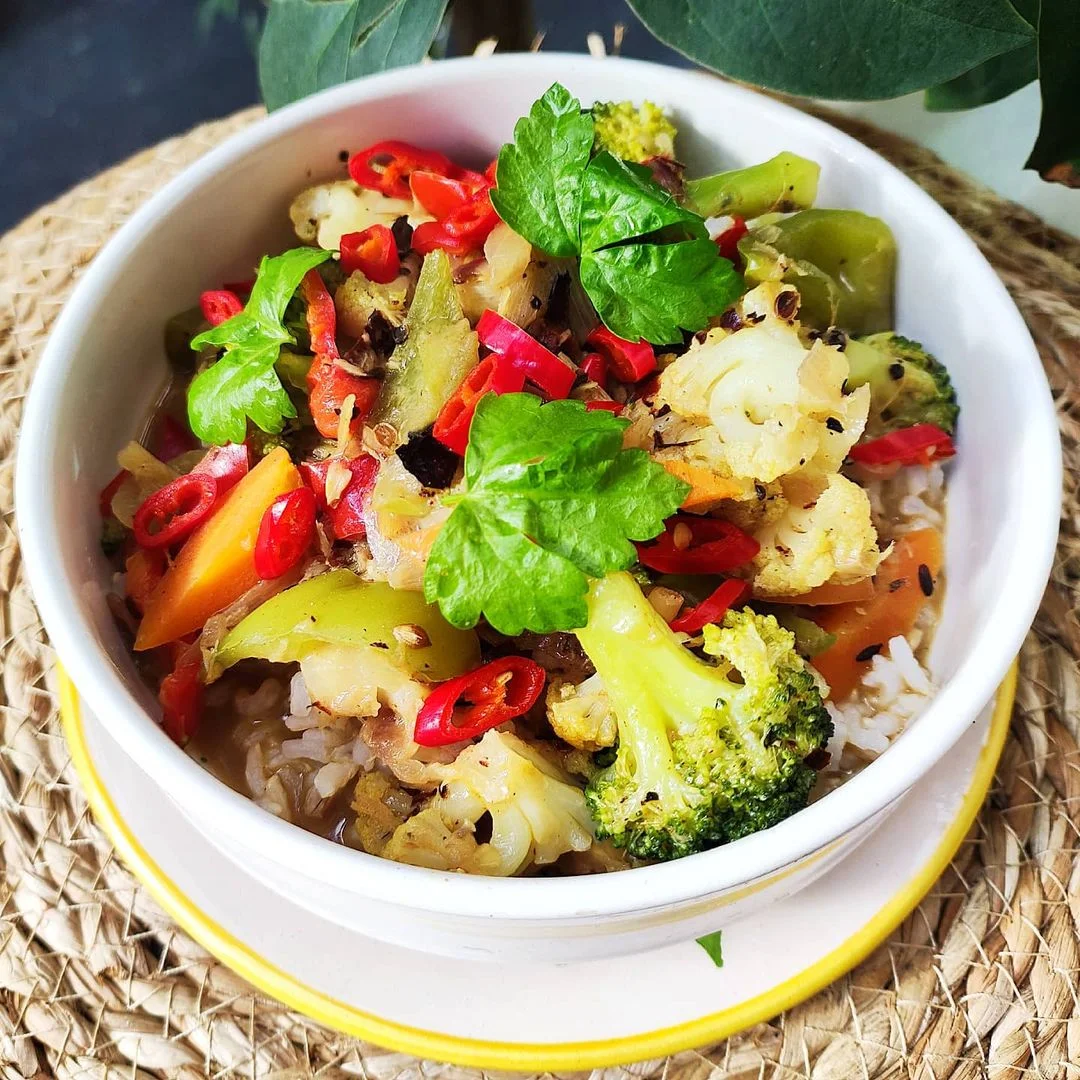
Vegetable Massaman curry pairs a fragrant spice paste with coconut milk and mixed vegetables for a gently spiced, creamy meal. The method makes the paste from scratch and finishes the curry with broccoli, herbs and rice.
Ingredients
- 2cardamom
- 1-inch piececinnamon stick
- 3cloves
- 1/2 tbspcoriander seeds
- 1 tspcumin seeds
- 3dried chillies
- 1 cmgalangal (or ginger with 1/8 tsp lemon juice)
- 7 clovesgarlic
- 1 tbsplemongrass, white parts only
- 1/2 tspwhite peppercorns
- 1/2 tbspsalt
- 2shallots (or 1/2 medium onion)
- 1/2 tspshrimp paste
- 1/2nutmeg, grated
- unspecifiedoil
- unspecifiedcoconut milk
- unspecifiedmixed vegetables, excluding broccoli
- unspecifiedbroccoli
- unspecifiedfish sauce
- optional, to tastefresh herbs, chopped
- optional, to tastechillies, sliced
- unspecifiedrice, to serve
Instructions
- 1
Roast aromatics
Dry-roast the garlic and shallots with their skins on over a low flame for 5 minutes. Add the dried chillies and lemongrass and roast for a further 2 minutes.
- 2
Blend the paste
Leave the roasted ingredients to cool, then remove their skins. Combine them with the remaining curry-paste ingredients and blend, or grind with a mortar and pestle, until smooth.
- 3
Heat the oil
Heat oil in a wok or pan over a medium-high heat.
- 4
Fry the paste
Add the curry paste and sauté for 1 minute.
- 5
Add coconut milk
Pour in the coconut milk and mix it thoroughly with the paste.
- 6
Cook vegetables
Add the vegetables except the broccoli, along with the salt. Bring to the boil, reduce the heat to medium and cook for 10 minutes.
- 7
Finish the curry
Add the broccoli and fish sauce, then cook for 5 minutes.
- 8
Season and serve
Taste and adjust the seasoning. Garnish with chopped fresh herbs and sliced chillies if using, then serve with rice.
What is Massaman curry?
Massaman is a Thai curry known for combining fragrant spices with a rich coconut base. Its spice profile includes ingredients such as cardamom, cinnamon, cloves and cumin, alongside aromatics like lemongrass and galangal.
This version builds flavour with a homemade paste and uses vegetables instead of meat. The recipe does not specify which vegetables or their quantities, so choose a mixture that will cook evenly.
Nutrition and macros by portion
The nutrition label shows one serving as written: 450 calories, 9g protein, 66g carbs, 17g fat.
| Portion | Adjustment | kcal | Protein | Carbs | Fat |
|---|---|---|---|---|---|
| Lighter | More vegetables, less rice | 315 kcal | 6g | 46g | 12g |
| This serving | As written | 450 kcal | 9g | 66g | 17g |
| Hungry | Larger rice portion | 675 kcal | 14g | 99g | 26g |
Rice is the main source of carbohydrate, while coconut milk and cooking oil provide most of the fat; the vegetables contribute fibre and a smaller share of the protein. Serve with a generous amount of vegetables and a measured portion of rice to balance the plate. The recipe does not give quantities for the vegetables, coconut milk, oil or rice, so the nutrition estimate is approximate.
Building the curry paste
Whole spices: cardamom, cinnamon, cloves, coriander and cumin give the paste its warm, rounded character. Grinding them with the roasted aromatics helps distribute their flavour throughout the curry.
Roasted aromatics: charring the garlic and shallots in their skins softens them before they go into the paste. Let them cool before peeling, as directed.
Getting a smooth paste
Blender: process the cooled, peeled aromatics with the other paste ingredients until smooth. A small blender may need the ingredients scraped down between pulses.
Mortar and pestle: grind the ingredients thoroughly in batches if needed. Aim for an even paste so the spices and aromatics cook consistently.
Cooking the vegetables
First batch: add the vegetables other than broccoli to the coconut milk, then simmer them for 10 minutes at medium heat. Cut them into similar-sized pieces so they cook at a similar rate.
Broccoli: add it for the final 5 minutes, as the method specifies. Check that the pieces are tender but still hold their shape before serving.
Balancing the flavour
Salt and fish sauce: salt goes in with the first vegetables, while fish sauce is added with the broccoli. Taste at the end before adding more seasoning, as both ingredients contribute saltiness.
Heat: dried chillies are part of the paste, and sliced fresh chillies are an optional garnish. Leave off the garnish or adjust the dried chillies to suit your preference.
Serving the curry
Rice: serve the curry with rice, as suggested, to soak up the coconut sauce and make it a more filling meal.
Fresh finish: chopped herbs and sliced chillies bring freshness and extra heat at the table. The recipe does not name a particular herb, so use one you enjoy with curry.
Recipe notes & tips
- Keep the garlic and shallots over a low flame during roasting so their skins do not burn before the insides soften.
- Let the roasted aromatics cool before peeling and grinding them into the paste.
- Cut the mixed vegetables into similar-sized pieces for more even cooking.
- Add the broccoli only for the final 5 minutes to help it keep its shape.
- Taste the curry after adding the fish sauce before adjusting the salt.
- Serve the curry soon after cooking, while the vegetables are tender and the sauce is hot.
Variations
- Change the vegetables: use a mix of vegetables that can be cut to similar sizes and cooked together.
- Adjust the chilli: reduce the dried chillies in the paste for a milder curry.
- Choose the aromatic: use ginger and the stated 1/8 tsp lemon juice instead of galangal.
- Skip the garnish: leave out the optional sliced chillies for less heat at the table.
- Use onion: replace the shallots with 1/2 medium onion, as offered in the ingredient list.
Common mistakes to avoid
- Roasting over high heat: the skins can burn before the aromatics soften; keep the flame low.
- Peeling while hot: the roasted ingredients are harder to handle; allow them to cool first.
- Adding broccoli too early: it may become overly soft; add it only for the final 5 minutes.
- Over-seasoning at the start: fish sauce adds saltiness later; taste before making a final adjustment.
- Uneven vegetable pieces: they cook at different speeds; cut them into similar-sized pieces.
How to store
Refrigerate leftover curry in a covered container and use within 3 days. Reheat gently in a pan until piping hot, stirring occasionally; add a small splash of water if the sauce has thickened. Store cooked rice separately and refrigerate it promptly.
Frequently asked questions
Can I use ginger instead of galangal?
Yes. The ingredient list offers ginger with 1/8 tsp lemon juice as an alternative to 1 cm galangal.
Which vegetables should I use?
The recipe does not specify a vegetable mix. Choose vegetables that suit curry and cut them into similarly sized pieces; add broccoli separately for the final 5 minutes.
Can I make the curry paste ahead?
Yes. Blend the paste and refrigerate it in a covered container, then use it in the curry. The recipe does not provide a specific make-ahead storage time.
How can I make it less spicy?
Use fewer dried chillies in the paste and omit the optional sliced chilli garnish.
What should I serve with vegetable Massaman curry?
Serve it with rice, as the method recommends. Chopped fresh herbs and sliced chillies are optional garnishes.
How do I know when the vegetables are ready?
After the specified cooking times, check that the vegetables are tender but not falling apart. The broccoli is added for the final 5 minutes.
Cook it from the original
This recipe comes from fooooods.com. Their page has the author’s own photos, notes and tips — the best place to cook it from.
Open the recipe on fooooods.com