
One-pot peperonata with Taggiasca olives, no stirring
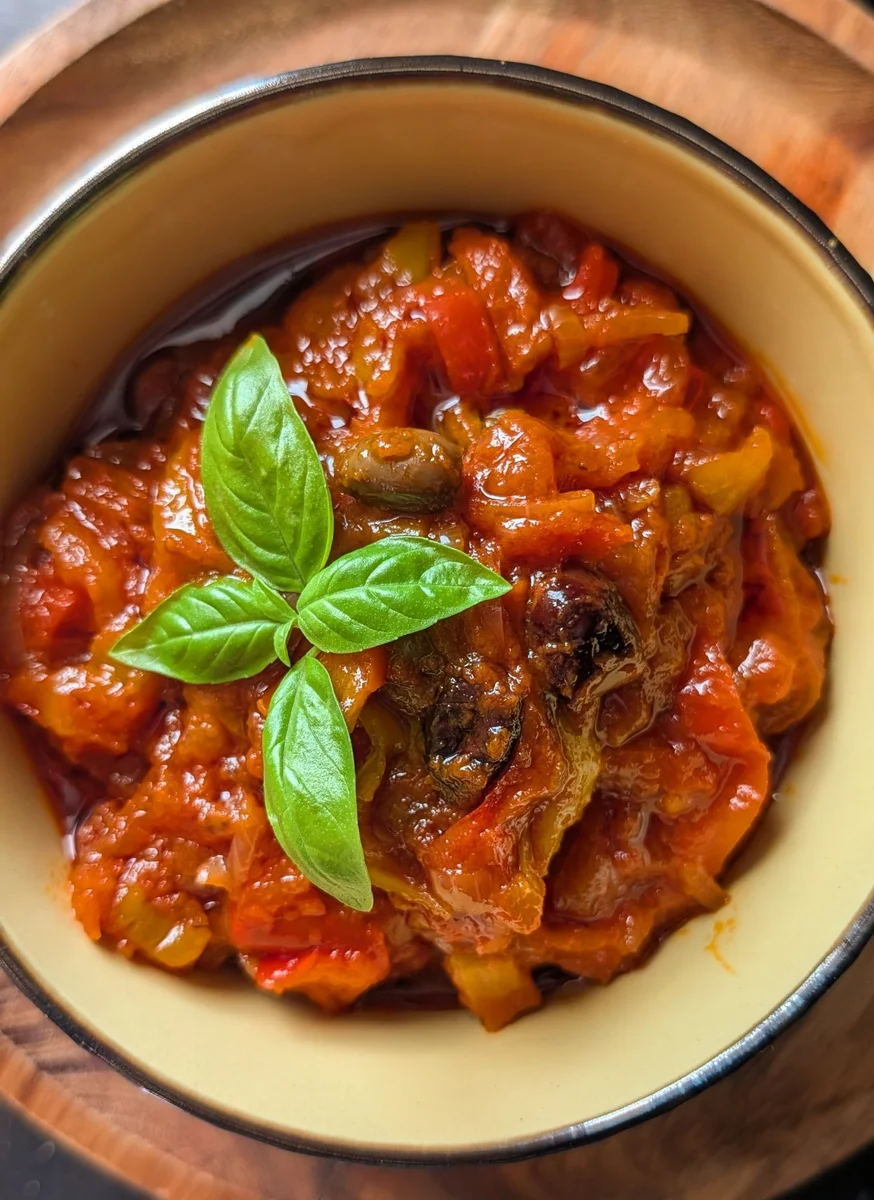
This slow-cooked peperonata combines sweet peppers and onion with tomato, butter and Taggiasca olives. It is a hands-off way to make a soft, savoury Italian side dish or a simple topping for bread.
Ingredients
- 2 tablespoonsTaggiasca olives in oil, drained
- 1onion
- 1red pepper
- 1yellow pepper
- 1vegetable stock cube
- 40 gbutter
- 600 mlwater
- 200 mlpassata
- 1 tablespoontomato purée
- to tastefine salt
- to tastefresh basil leaves
Instructions
- 1
Drain the olives
Drain the Taggiasca olives to remove excess oil.
- 2
Slice the vegetables
Clean the onion and peppers, then slice them finely.
- 3
Cook gently
Put all the ingredients in a large saucepan and cover with a lid. Cook over a low heat for about two hours without stirring. Check as it cooks and add more water if needed.
What is peperonata?
Peperonata is an Italian home-style dish of peppers cooked slowly until tender, usually with onion and tomato. Versions vary from kitchen to kitchen, and it can be served as a side, a topping or part of a simple meal.
Here, Taggiasca olives bring a briny note, while butter rounds out the tomato and peppers. The covered, no-stir method keeps the preparation simple and lets the vegetables soften together.
Nutrition and macros by portion
The nutrition label shows one serving as written: 155 calories, 3g protein, 16g carbs, 9g fat.
| Portion | Adjustment | kcal | Protein | Carbs | Fat |
|---|---|---|---|---|---|
| Lighter | Use less butter | 109 kcal | 2g | 11g | 6g |
| This serving | As written | 155 kcal | 3g | 16g | 9g |
| Hungry | Serve with bread | 233 kcal | 5g | 24g | 14g |
The peppers, onion and passata provide most of the carbohydrates, while the butter and olives contribute much of the fat. There is only a modest amount of protein in the listed ingredients; serve it with beans, fish or another protein-rich dish to make a more balanced plate.
The ingredients that shape the flavour
Peppers and onion: finely slicing them helps them become soft during the long, gentle cook. Red and yellow peppers give the dish a sweet, colourful base.
Tomato and stock: passata and tomato purée give the cooking liquid a tomato-rich flavour, while the stock cube seasons it. Add fine salt carefully, as the cube and olives are already savoury.
Olives and butter: drain the olives well so excess oil does not collect in the pan. Butter adds richness; basil gives a fresh finish.
Why the no-stir method works
A large saucepan gives the ingredients room to sit in an even layer, and the lid holds in heat and moisture. Keep the heat low so the vegetables cook gradually rather than catching on the bottom.
The recipe does not call for stirring, but it does call for checking the pan. If the liquid is running low before the vegetables are tender, add a little more water.
Look for soft vegetables
The peppers and onion should be very tender after cooking, with the tomato liquid reduced and their flavours blended. The exact finish depends on the pan and how gently the hob heats.
If the vegetables are still firm, continue cooking gently and check again. If the mixture looks dry, add water as needed rather than turning up the heat.
Plan for a slow cook
Allow about two hours on a low heat, as stated in the method, and check the pan periodically while it cooks. The hands-off approach still benefits from occasional checks on the liquid level.
Have the vegetables sliced and the olives drained before you start. Once everything is in the saucepan, the cooking itself needs little attention.
Serving ideas
Serve the peperonata warm as a side with grilled vegetables, fish or chicken, or spoon it over toasted bread for a light meal. It also works alongside beans or a grain to make the plate more substantial.
Add the fresh basil leaves to taste when serving. A simple bread or grain accompaniment can help catch the tomato-rich juices.
Recipe notes & tips
- Use a wide, heavy-based saucepan so the vegetables cook evenly.
- Keep the heat low throughout the long cooking time.
- Drain the olives thoroughly before adding them.
- Check the liquid level during cooking and add water if the pan is drying out.
- Taste before adding much salt, since the stock cube and olives add savouriness.
- Add basil leaves to taste when serving for a fresh herbal note.
Variations
- Add garlic: include a finely sliced clove with the onion and peppers.
- Use extra herbs: add a little oregano for a more herb-forward flavour.
- Make it richer: finish with a small drizzle of olive oil at the table.
- Add capers: use a few rinsed capers alongside the olives for extra brininess.
- Serve over grains: spoon the peperonata over cooked rice or another grain for a more filling meal.
Common mistakes to avoid
- High heat: the bottom can catch before the vegetables soften; keep the hob low.
- Too little liquid: the mixture can dry out during the long cook; check it and add water when needed.
- Too much salt: the stock cube and olives are already savoury; taste before seasoning.
- A small pan: crowded ingredients may cook unevenly; choose a large saucepan.
- Excess olive oil: it can make the finished dish greasy; drain the olives well.
How to store
Cool leftovers promptly and refrigerate in a covered container for up to 3 days. Reheat gently in a saucepan, adding a splash of water if needed, or microwave until hot throughout.
Frequently asked questions
Do I really need to avoid stirring?
The method says stirring is not necessary, so you can leave the pan covered and cook gently. Still check the liquid level as it cooks and add water if needed.
Can I use another type of olive?
Yes. Use another pitted olive if Taggiasca olives are unavailable; the flavour may be more or less briny depending on the variety.
How do I know when the peperonata is ready?
The peppers and onion should be very soft, and the tomato liquid should have reduced. If the vegetables are still firm, continue cooking gently.
Can I make it ahead?
Yes. Refrigerate it once cooled and reheat gently before serving. Add a little water if it has thickened too much.
What can I serve with peperonata?
Serve it as a vegetable side, on toasted bread, or alongside beans, fish or chicken. A grain or bread also pairs well with the cooking juices.
Cook it from the original
This recipe comes from funandfood.it. Their page has the author’s own photos, notes and tips — the best place to cook it from.
Open the recipe on funandfood.it