
Tropical Gin Fizz
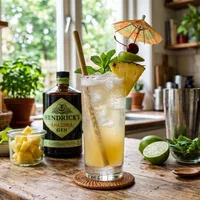
A bright, fruit-forward gin fizz made with fresh mango, lime and sparkling water. It is quick to mix and makes a refreshing drink for a warm afternoon or a summery gathering.
Ingredients
- 100 g (approx. 1/2 mango)fresh mango cubes
- 60 mlgin
- 30 ml (approx. 2 limes)fresh lime juice
- 20 mlsimple syrup
- 120 mlcold sparkling water
- As neededice cubes
- 2lime slices
- 2 sprigsfresh mint
Instructions
- 1
Muddle the mango
Add the mango cubes, lime juice and simple syrup to a cocktail shaker. Muddle with a muddler or the back of a spoon until the mango forms a smooth purée.
- 2
Shake with gin
Pour in the gin and add a generous handful of ice. Seal the shaker and shake vigorously for 15 seconds.
- 3
Strain the mixture
Pour the shaken mixture through a fine strainer into a measuring jug, leaving the mango pulp behind.
- 4
Build the drinks
Fill the cocktail glasses with fresh ice, then divide the gin and mango mixture between them.
- 5
Top and garnish
Top each glass with sparkling water and stir gently to help preserve the bubbles. Garnish with a lime slice and a sprig of mint, and serve immediately.
What is a Tropical Gin Fizz?
A fizz is a mixed drink built around a spirit, citrus and a fizzy top. This tropical variation pairs gin and lime with fresh mango for a fruity take on that bubbly style.
Muddling the mango releases its juice and flavour, while fine-straining keeps the finished drink smoother. Sparkling water lightens the mixture and adds a lively finish.
Nutrition and macros by portion
The nutrition label shows one serving as written: 113 calories, 0g protein, 12g carbs, 0g fat.
| Portion | Adjustment | kcal | Protein | Carbs | Fat |
|---|---|---|---|---|---|
| Lighter | Use less simple syrup | 79 kcal | 0g | 8g | 0g |
| This serving | As written | 113 kcal | 0g | 12g | 0g |
| Hungry | Serve with savoury snacks | 170 kcal | 1g | 18g | 0g |
Most of the drink’s carbohydrates and sugars come from the mango and simple syrup; the gin contributes energy, while the lime adds a smaller amount. Protein and fat are minimal. Pair it with a savoury snack or food that provides protein to make a more balanced serving.
Choosing the fruit
Ripe mango: Choose fruit that gives slightly when pressed and smells fragrant. It will muddle more readily and bring natural sweetness to the drink.
Fresh lime: Squeeze the juice shortly before mixing for a bright citrus note. The recipe also uses lime slices as a simple garnish.
Muddling and straining
Muddling: Press and work the mango until it becomes a smooth purée rather than leaving large chunks. A muddler or the back of a spoon will do the job.
Fine strainer: Pour the shaken mixture through a fine strainer into a jug to catch the pulp. This makes it easier to divide between the glasses without transferring the thicker fruit solids.
Keeping the fizz
Cold sparkling water: Add it after the mango, lime and gin mixture has been shaken and poured over fresh ice. Stir gently so the drink keeps as much of its carbonation as possible.
Serve promptly: The bubbles are at their liveliest just after topping up. Add the garnish at the end and serve straight away.
Balancing the flavour
Sweetness: Mango and simple syrup bring sweetness, while lime juice gives the drink its sharp edge. Keep to the listed quantities for the intended balance.
Gin: Its botanical notes give the fruit and citrus a spirit base. Shake it with the mango mixture and ice before adding the sparkling water.
Serving ideas
Glass and garnish: Divide the drink between two ice-filled cocktail glasses and finish each with a lime slice and mint sprig. The garnish adds a fresh aroma as you sip.
Pairing: Serve alongside lightly salted snacks or a simple fruit platter. Their restrained flavours leave the mango, lime and mint in focus.
Recipe notes & tips
- Use ripe mango so it breaks down easily during muddling.
- Chill the sparkling water before mixing for a colder drink.
- Shake the mango mixture with ice for the full 15 seconds.
- Use a fine strainer to catch the mango pulp.
- Stir gently after topping up to keep the drink fizzy.
- Add the mint and lime garnish just before serving.
Variations
- More citrus: Add a little extra fresh lime juice for a sharper finish.
- Less sweet: Reduce the simple syrup to suit your taste.
- Mint-forward: Gently clap the mint sprig between your hands before garnishing to release its aroma.
- Frozen mango: Thaw the cubes before muddling so they can form a smooth purée.
- Extra fizz: Add a little more cold sparkling water to each glass.
Common mistakes to avoid
- Underripe mango: It may be firm and less fragrant; choose ripe fruit that gives slightly when pressed.
- Large mango pieces: They can be hard to strain out; muddle until the mixture is smooth.
- Skipping the strainer: Pulp can make the drink thick; pour through a fine strainer into a jug.
- Shaking with sparkling water: It can lose its bubbles; add the water only after straining.
- Vigorous stirring: This can flatten the fizz; stir gently after topping up.
- Making it too far ahead: The carbonation fades; mix and serve the drinks promptly.
How to store
This drink is best made and served immediately, while the sparkling water is still fizzy. If needed, refrigerate the strained mango, lime and gin mixture briefly without ice or sparkling water, then shake with ice and finish each glass just before serving.
Frequently asked questions
Can I make the mango mixture ahead?
You can prepare the strained mango, lime and gin mixture shortly ahead and keep it chilled. Add ice and sparkling water when you are ready to serve.
Do I have to strain the mango?
Straining removes most of the pulp and gives the drink a smoother texture. Use a fine strainer for the clearest result.
Can I use frozen mango?
Yes. Thaw it first so it can be muddled into a smooth purée.
Can I make this without a cocktail shaker?
Use a sturdy jar with a tight-fitting lid to shake the gin mixture with ice. Strain it carefully into a jug before pouring over fresh ice.
When should I add the sparkling water?
Add it after straining and pouring the gin mixture over fresh ice. Stir gently and serve straight away.
Cook it from the original
This recipe comes from cookinglife.eu. Their page has the author’s own photos, notes and tips — the best place to cook it from.
Open the recipe on cookinglife.eu