
Japanese Chicken Yakitori Recipe
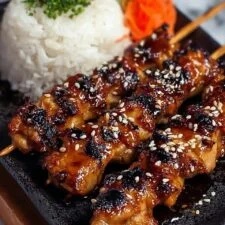
These Japanese-inspired chicken yakitori skewers are coated in a sweet-savoury soy, mirin and ginger glaze that caramelises as they grill. Make them as a starter to share or serve with rice and vegetables for a main meal.
Ingredients
- 5–6 piecesboneless chicken breast or 6–8 pieces boneless chicken thighs
- 2 clovesgarlic, minced
- 15 ml fresh ginger, minced (1 tbsp) or 5 ml ginger powder (1 tsp)fresh ginger or ginger powder
- 5 mlground black pepper
- 80 ml (⅓ cup)soy sauce
- 80 ml (⅓ cup)water
- 45 ml (3 tbsp)red wine or mirin (Japanese rice wine)
- 75 g (¼ cup + 2 tbsp)brown sugar
- 15 mldistilled vinegar or rice vinegar
- 8 g (1 tbsp)cornflour (for thickening)
- 6–7wooden skewers, soaked in water for 10–20 minutes
Instructions
- 1
Soak skewers
Soak the wooden skewers in water for 10–20 minutes before grilling, which helps prevent them from burning.
- 2
Mix the sauce
In a bowl, stir together the soy sauce, water, red wine or mirin, brown sugar and vinegar until the sugar dissolves.
- 3
Cut the chicken
Trim excess fat or cartilage from the chicken, then cut it into 2.5–5 cm (1–2 inch) chunks. Lightly pound the pieces to tenderise them.
- 4
Marinate the chicken
In a large bowl, combine the garlic, ginger, black pepper and 60 ml (¼ cup) of the prepared sauce. Add the chicken and toss to coat, then leave to marinate for at least 10 minutes.
- 5
Thicken the glaze
Pour the remaining sauce into a saucepan and bring it to the boil over medium heat. Mix the cornflour with 30 ml (2 tbsp) of the sauce to make a slurry, then stir it into the boiling sauce. Simmer until syrupy, then take the pan off the heat.
- 6
Grill the skewers
Thread the marinated chicken onto the soaked skewers. Grill or broil over medium-high heat for 8–12 minutes, turning occasionally and basting frequently with the thickened sauce. Cook until the chicken reaches an internal temperature of 74°C (165°F).
What is chicken yakitori?
Yakitori is a Japanese style of grilled chicken served on skewers, often seasoned or glazed as it cooks. This version uses a homemade soy-based sauce with mirin or red wine, brown sugar, garlic and ginger.
Small chicken pieces cook quickly and offer plenty of surface for the glaze to cling to. Turning and basting them as they grill builds a savoury-sweet, caramelised coating.
Nutrition and macros by portion
The nutrition label shows one serving as written: 330 calories, 38g protein, 26g carbs, 7g fat.
| Portion | Adjustment | kcal | Protein | Carbs | Fat |
|---|---|---|---|---|---|
| Lighter | Choose chicken breast | 231 kcal | 27g | 18g | 5g |
| This serving | As written | 330 kcal | 38g | 26g | 7g |
| Hungry | Add another skewer | 495 kcal | 57g | 39g | 11g |
Chicken provides most of the protein, while the brown sugar supplies most of the carbohydrates. The chicken and soy sauce contribute fat and sodium, with the amount of fat depending on whether you choose breast or thighs. Serve a moderate number of skewers with rice and vegetables to round out the plate.
Choosing the chicken
Breast: Chicken breast gives a leaner, firmer skewer, but can dry out if overcooked. Cut the pieces evenly so they cook at the same pace.
Thighs: Boneless thighs are a juicier alternative with a little more fat. Trim excess fat or cartilage before cutting them into chunks.
Getting the glaze right
Sugar and soy: Brown sugar brings sweetness and helps the sauce caramelise, while soy sauce supplies its savoury base. Stir until the sugar has dissolved before using the sauce.
Cornflour: Mix it with a little sauce first to make a smooth slurry, then stir that into the boiling remainder. Simmer until the glaze is syrupy enough to coat the chicken.
Marinating and threading
Marinating: The chicken needs at least 10 minutes in the garlic, ginger, pepper and reserved sauce mixture. Keep the unused glaze separate for cooking and basting.
Spacing: Thread the chunks onto the soaked skewers without packing them tightly together. This lets heat reach the sides and makes the pieces easier to turn.
Grilling to doneness
Heat: Grill or broil the skewers over medium-high heat for 8–12 minutes, turning them occasionally. The precise time depends on the size of the pieces and the strength of the grill.
Check: The chicken is ready when its centre reaches 74°C (165°F). Use a food thermometer on a larger piece rather than relying only on the glaze’s colour.
Serving ideas
Rice: Serve the skewers with steamed rice to make a filling main course and catch any extra glaze.
Vegetables: Add grilled or steamed vegetables for freshness and contrast. The skewers also work well on their own as a shareable starter.
Recipe notes & tips
- Soak the wooden skewers for the full 10–20 minutes before grilling.
- Cut the chicken into similarly sized chunks so they cook evenly.
- Keep the sauce used to marinate the raw chicken separate from the remaining glaze.
- Stir the cornflour into cool or room-temperature sauce before adding it to the boiling pan.
- Turn the skewers occasionally and baste frequently for an even coating.
- Check the temperature in the centre of a larger chicken piece.
Variations
- Use mirin: Choose mirin in place of red wine for the Japanese rice-wine option in the recipe.
- Try chicken thighs: Swap in boneless thighs for a juicier skewer.
- Use ginger powder: Replace the minced fresh ginger with 1 tsp ginger powder.
- Choose rice vinegar: Use rice vinegar instead of distilled vinegar for a different tang.
- Make smaller pieces: Cut the chicken into evenly sized chunks for more compact skewers.
Common mistakes to avoid
- Skipping the soak: Dry wooden skewers can burn on the grill; soak them in water for 10–20 minutes first.
- Crowding the skewers: Tightly packed chunks are harder to turn; leave a little space between pieces.
- Using the marinade to baste: Sauce that touched raw chicken should not be used as the finishing glaze; reserve the remaining sauce for that job.
- Adding dry cornflour: It can clump in the sauce; mix it with 2 tbsp sauce to make a slurry first.
- Relying on colour: A browned glaze does not confirm the chicken is cooked; check for 74°C (165°F) at the centre.
How to store
Refrigerate cooked chicken skewers in a covered container within 2 hours and eat within 3–4 days. Reheat until steaming hot throughout, removing the chicken from the skewers if that makes reheating easier.
Frequently asked questions
Can I use chicken breast or thighs?
Either works: the recipe lists boneless breast or boneless thighs. Cut your chosen chicken into evenly sized chunks and check that it reaches 74°C (165°F).
Can I use red wine instead of mirin?
Yes. The recipe gives red wine and mirin as alternatives, so use the same amount of either.
How long should I marinate the chicken?
Marinate it for at least 10 minutes, as directed. Keep the remaining sauce separate for thickening and basting.
Can I cook these without an outdoor grill?
Yes. The method allows you to grill or broil the skewers over medium-high heat. Turn them occasionally and cook for 8–12 minutes, checking the chicken’s internal temperature.
How do I know when the chicken is done?
Check the centre of a larger piece with a food thermometer; it should read 74°C (165°F).
Cook it from the original
This recipe comes from busyrecipe.com. Their page has the author’s own photos, notes and tips — the best place to cook it from.
Open the recipe on busyrecipe.com