
Lasagna soup
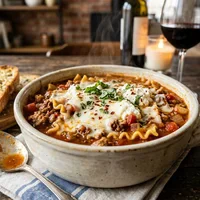
Lasagna soup brings the tomato, beef and herb flavours of lasagna to a pot of comforting soup, finished with creamy ricotta and Parmesan. It’s a straightforward one-pot dinner for a weeknight or a relaxed meal with friends.
Ingredients
- 2 tbspolive oil
- 1onion, finely chopped
- 3 clovesgarlic, finely chopped
- 500 gminced beef
- 2 tbsptomato paste
- 1 can (400 g)peeled tomatoes
- 1.5 litresbeef stock
- 200 glasagne sheets, broken into pieces
- 1 tspdried oregano
- 1 tspdried basil
- to tastesalt and pepper
- 250 gricotta
- 1 pinchnutmeg
- 50 gfreshly grated Parmesan
- 1 handfulfresh basil leaves
Instructions
- 1
Soften the aromatics
Heat the olive oil in a large soup pot over medium heat. Add the onion and garlic and cook for about 3 minutes, until softened and translucent.
- 2
Brown the beef
Add the minced beef and break it up as it cooks. Season with salt, pepper, dried oregano and dried basil.
- 3
Build the tomato base
Stir in the tomato paste and cook for 1 minute. Add the peeled tomatoes and roughly crush them with a spoon.
- 4
Add the stock
Pour in the beef stock and bring the soup to the boil. Taste and adjust the salt and pepper as needed.
- 5
Cook the pasta
Break the lasagne sheets into pieces about 4–5 cm long and add them to the soup. Cook until tender, following the packet instructions; this should take about 8–10 minutes. Stir regularly to stop the pieces sticking together.
- 6
Season the ricotta
While the pasta cooks, mix the ricotta in a small bowl with a pinch of salt and pepper. Grate a little nutmeg over it and stir to combine.
- 7
Finish and serve
Ladle the soup into deep plates or bowls. Top each serving with a generous spoonful of the ricotta mixture, then add the freshly grated Parmesan and fresh basil leaves. Serve immediately.
What is lasagna soup?
Lasagna soup takes familiar lasagna flavours—tomato, beef, herbs, pasta and cheese—and serves them in a bowl. It is an Italian-inspired twist on the baked pasta dish rather than a traditional lasagna format.
Here, the pasta cooks directly in the beef and tomato stock, while seasoned ricotta, Parmesan and fresh basil provide a creamy, savoury finish.
Nutrition and macros by portion
The nutrition label shows one serving as written: 765 calories, 39g protein, 45g carbs, 43g fat.
| Portion | Adjustment | kcal | Protein | Carbs | Fat |
|---|---|---|---|---|---|
| Lighter | Use leaner beef | 536 kcal | 27g | 31g | 30g |
| This serving | As written | 765 kcal | 39g | 45g | 43g |
| Hungry | Add more lasagne sheets | 1148 kcal | 59g | 68g | 65g |
The lasagne sheets and tomatoes provide most of the carbohydrates, while the beef contributes much of the protein and fat. Olive oil, ricotta and Parmesan also add fat, with the cheeses contributing protein as well. For a more balanced plate, serve a bowl with a generous side salad or other vegetables.
Build a savoury base
Aromatics: Give the onion and garlic their full 3 minutes over medium heat so they soften before the beef goes in.
Tomato paste: Cooking it for 1 minute after stirring it through the beef deepens its flavour before the stock is added.
Beef: Break up the mince as it cooks so it distributes evenly through the soup.
Get the pasta right
Piece size: Break the sheets into pieces around 4–5 cm long. This makes them easier to spoon up while keeping the lasagna-like feel.
Stirring: Stir regularly as the pasta simmers, paying attention to the bottom of the pot where pieces can stick.
Doneness: Start checking around the 8-minute mark and use the packet instructions as a guide; the pasta should be tender, not falling apart.
Finish with seasoned ricotta
Ricotta: Mix it separately with salt, pepper and a little grated nutmeg rather than adding it to the pot. That keeps the topping creamy and distinct from the broth.
Toppings: Add the ricotta, Parmesan and basil to each bowl just before serving, so their textures and fresh aromas stand out.
Make the timing work
The pasta takes about 8–10 minutes to cook once it goes into the boiling soup. Use that time to season the ricotta and prepare the Parmesan and basil.
Serve as soon as the pasta is tender. Leftover pasta can continue to absorb broth, so the soup is at its best freshly assembled.
What to serve alongside
A green salad with a simple dressing adds a fresh contrast to the rich, cheesy soup. Crusty bread is also useful for soaking up the tomato broth.
Because the soup already includes beef, pasta and cheese, keep any sides simple rather than adding another substantial dish.
Recipe notes & tips
- Use a large pot so there is room to stir the pasta as it cooks.
- Break the lasagne sheets into similarly sized pieces for more even cooking.
- Taste the broth after adding the stock before adding extra salt, as stock can already be salty.
- Keep the soup at a gentle boil while the pasta cooks and stir it regularly.
- Grate the nutmeg lightly into the ricotta so it seasons the topping without overpowering it.
- Have the Parmesan and basil ready before ladling, as the soup is best served immediately.
Variations
- Add chilli: Stir a pinch of chilli flakes into the beef for a little heat.
- Use pork: Replace some or all of the beef with minced pork for a different flavour.
- Add greens: Stir in a handful of spinach near the end and cook until wilted.
- Change the herbs: Use fresh oregano in place of dried oregano, adjusting to taste.
- Make it meat-free: Use a plant-based mince and vegetable stock instead of beef and beef stock.
Common mistakes to avoid
- Adding pasta too early: It can turn soft if left simmering; add it once the soup base is boiling.
- Skipping the stirring: Pasta pieces may stick together or catch on the pot; stir regularly while they cook.
- Overcooking the pasta: Check it from about 8 minutes and stop when tender.
- Salting before tasting: Stock can be salty; taste the broth first, then adjust.
- Mixing ricotta into the pot: It loses its distinct creamy texture; spoon the seasoned mixture onto each bowl instead.
How to store
Store leftover soup in an airtight container in the fridge for up to 3 days. The pasta will absorb broth as it sits, so add a splash of stock or water when reheating gently on the hob. If possible, store extra ricotta separately and add it when serving.
Frequently asked questions
Can I make lasagna soup ahead?
You can prepare the beef and tomato soup base ahead, then bring it back to a boil and cook the pasta shortly before serving. This helps keep the pasta from becoming too soft in storage.
Can I use a different pasta?
Yes. Use a short pasta shape and cook it according to its packet instructions. The texture and appearance will differ from broken lasagne sheets.
How do I stop the pasta sticking?
Add it to the boiling soup and stir regularly, including along the bottom of the pot. A roomy pot also makes stirring easier.
Can I freeze this soup?
It can be frozen, though the pasta may soften after thawing. For the best texture, freeze the soup base before adding the pasta, then cook fresh pasta when reheating.
What can I use instead of ricotta?
Cottage cheese can work as a topping, though its texture is less smooth. Season it with salt, pepper and a little nutmeg as you would the ricotta.
Cook it from the original
This recipe comes from cookinglife.eu. Their page has the author’s own photos, notes and tips — the best place to cook it from.
Open the recipe on cookinglife.eu