
Lemon-ricotta quiche with spinach and pine nuts
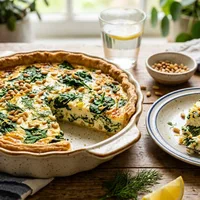
This French-inspired quiche pairs a crisp, buttery pastry case with a soft ricotta, spinach and lemon filling. It makes a relaxed centrepiece for lunch or dinner, finished with toasted pine nuts for crunch.
Ingredients
- 200 gplain flour
- 100 gcold butter, cubed
- 1 pinchsalt
- 3–4 tbspice-cold water
- 250 gricotta
- 3eggs
- 100 mldouble cream
- 150 gfresh spinach
- zest and juice of 1organic lemon
- 2 tbsppine nuts
- a small drizzleolive oil
- to tastesalt and pepper
Instructions
- 1
Make the pastry
Heat the oven to 180°C using conventional heat. Mix the flour, cold butter, a pinch of salt and 3–4 tbsp ice-cold water, kneading briefly until the dough comes together. Shape it into a disc, wrap it and chill in the fridge for 30 minutes.
- 2
Line the tin
On a lightly floured surface, roll the pastry into a circle about 26 cm across. Fit it into a tart tin, pressing it against the edges, then prick the base with a fork.
- 3
Blind-bake pastry
Cover the pastry with baking parchment and fill with baking beans or dry rice. Bake for 15 minutes, then remove the parchment and weights and bake for a further 5 minutes, until the base feels dry.
- 4
Wilt the spinach
Warm a small drizzle of olive oil in a frying pan over a medium heat. Add the spinach and cook for 2 minutes, until wilted. Leave it to cool slightly, then squeeze out the excess moisture.
- 5
Mix the filling
In a bowl, combine the ricotta, eggs, double cream, lemon zest, 1 tbsp lemon juice, salt and pepper to taste. Stir in the squeezed spinach.
- 6
Fill the pastry
Pour the filling into the pre-baked pastry case and spread it evenly with a spatula.
- 7
Bake the quiche
Bake at 180°C for 30–35 minutes, until the filling is set and lightly golden on top. Check halfway through; if the pastry edge is browning too quickly, cover it with a piece of aluminium foil.
- 8
Toast the nuts
While the quiche bakes, toast the pine nuts in a dry frying pan over a low heat, watching them closely as they can burn quickly.
- 9
Rest and serve
Take the quiche out of the oven and leave it to rest for 10 minutes before slicing. Scatter over the toasted pine nuts and, if you like, grate on extra lemon zest. Serve lukewarm or at room temperature.
What is a lemon-ricotta quiche?
Quiche is a savoury French tart, usually made with a pastry shell and an egg-based filling. This version takes that familiar format in a fresh direction with ricotta, spinach and lemon.
Ricotta gives the filling a soft, airy quality, while lemon lifts its creamy flavour. Toasted pine nuts add a crisp finish.
Nutrition and macros by portion
The nutrition label shows one serving as written: 660 calories, 20g protein, 41g carbs, 45g fat.
| Portion | Adjustment | kcal | Protein | Carbs | Fat |
|---|---|---|---|---|---|
| Lighter | Smaller slice, more salad | 462 kcal | 14g | 29g | 31g |
| This serving | As written | 660 kcal | 20g | 41g | 45g |
| Hungry | Larger slice | 990 kcal | 30g | 62g | 68g |
The pastry flour supplies most of the carbohydrates, while butter, cream, ricotta and pine nuts contribute much of the fat. Ricotta and eggs provide most of the protein. Balance a slice with a generous green salad or other non-starchy vegetables.
The pastry case
Cold butter: keeping it cold helps the pastry bake up tender rather than greasy. Work it into the flour briefly, stopping as soon as the dough holds together.
Blind-baking: baking the base before adding the filling helps it stay crisp beneath the moist ricotta mixture. The second, uncovered bake dries the surface further.
Managing the spinach
Wilted leaves: two minutes in the pan is enough to soften fresh spinach. Let it cool a little before handling.
Removing water: squeeze the spinach well after it cools. Excess moisture can loosen the filling and make the pastry base soggy.
Balancing the filling
Lemon: the recipe uses the zest of one lemon and 1 tbsp of its juice, giving the filling a fragrant, tart edge. Add the measured juice to the ricotta mixture along with the eggs and cream.
Ricotta and eggs: ricotta makes the filling creamy, while the eggs help it set as it bakes. Stir in the spinach once it has been squeezed dry.
How to tell when it is done
Set centre: bake for 30–35 minutes at 180°C, looking for a filling that has set and a lightly golden surface. The centre should no longer look liquid.
Darkening edge: check the quiche halfway through baking. If the pastry edge is colouring too quickly, shield it with a piece of foil.
A crisp finishing touch
Pine nuts: toast them in a dry pan over a low heat, keeping them moving and watching carefully because they brown quickly. Scatter them over the quiche after baking so they retain their crunch.
Serving temperature: leave the quiche to rest for 10 minutes, then serve lukewarm or at room temperature. The short rest makes it easier to slice neatly.
What to serve alongside
A green salad dressed with a sharp vinaigrette makes a fresh counterpoint to the rich pastry and creamy filling. For a more substantial meal, serve with boiled new potatoes or a bowl of soup.
Recipe notes & tips
- Measure out the lemon juice as 1 tbsp so the filling stays balanced.
- Chill the pastry for the full 30 minutes before rolling it out.
- Squeeze the wilted spinach thoroughly before stirring it into the filling.
- Use a tart tin that is large enough to fit the pastry circle, about 26 cm across.
- Toast the pine nuts over low heat and take them off the pan as soon as they are golden.
- Let the quiche rest for 10 minutes before cutting so the filling can settle.
Variations
- Add herbs: stir chopped chives into the ricotta filling for a savoury note.
- Use goat’s cheese: replace some of the ricotta with soft goat’s cheese for a tangier filling.
- Swap the greens: use wilted chard instead of spinach and squeeze it dry before adding.
- Add mushrooms: cook sliced mushrooms until their moisture has evaporated, then mix them into the filling.
- Change the nuts: scatter toasted chopped hazelnuts over the quiche instead of pine nuts.
Common mistakes to avoid
- Warm pastry: handle it briefly and chill it for 30 minutes so it is easier to roll and shape.
- Wet spinach: squeeze the leaves thoroughly after wilting to prevent a watery filling.
- Skipping the blind bake: bake the empty case for the full 20 minutes before adding the filling.
- Overbaking: begin checking at 30 minutes and take the quiche out when the filling is set and lightly golden.
- Burnt pine nuts: toast them over a low heat and keep them under close watch.
- Cutting too soon: rest the quiche for 10 minutes before slicing.
How to store
Once cooled, cover and refrigerate leftovers for up to 3 days. Reheat slices in a low oven until warmed through, or serve them at room temperature; add fresh toasted pine nuts just before serving if you want them crisp.
Frequently asked questions
Can I make the pastry ahead?
Yes. Make and wrap the dough, then chill it until you are ready to roll it out. Allow it to soften slightly if it is too firm to roll.
Why is my quiche filling watery?
Spinach can release a lot of water, so squeeze it thoroughly after wilting. Also check that the quiche is baked until the filling is set.
Can I use frozen spinach?
Yes, thaw it fully and squeeze out as much moisture as possible before stirring it into the filling. The recipe specifies 150 g fresh spinach, so frozen spinach may need to be weighed after thawing and draining.
How do I know the quiche is cooked?
The filling should be set rather than liquid, and the top should be lightly golden. The stated baking time is 30–35 minutes at 180°C.
Can I serve it cold?
Yes. After resting for 10 minutes, serve it lukewarm or at room temperature; it can also be enjoyed chilled.
Can I freeze the quiche?
The recipe does not specify freezing. For the best pastry texture, refrigerate leftovers and eat them within 3 days.
Cook it from the original
This recipe comes from cookinglife.eu. Their page has the author’s own photos, notes and tips — the best place to cook it from.
Open the recipe on cookinglife.eu