
Rice Pudding
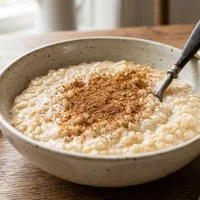
This Dutch-style rice pudding gently simmers short-grain rice in milk until thick and creamy, with vanilla sugar for sweetness and cinnamon to finish. It is a simple, comforting dessert to serve warm straight from the pan.
Ingredients
- 200 gshort-grain rice (pudding or dessert rice)
- 400 mlwater
- 1 litrewhole milk
- 60 gwhite sugar
- 2 packetsvanilla sugar
- 1 pinchsalt
- to tastecinnamon
Instructions
- 1
Start the rice
Put the rice and water in a braising pan. Bring to the boil over medium-high heat, stirring occasionally to stop the rice sticking. When almost all the water has been absorbed, add the milk in two or three additions so the temperature does not fall too quickly.
- 2
Simmer gently
Turn the heat down low and let the mixture simmer gently. Stir well every few minutes to prevent the milk scorching on the bottom of the pan.
- 3
Add the sugar
After about 20 minutes, stir in the white sugar and vanilla sugar. Simmer for another 10–15 minutes, until the pudding is as thick as you like; it will continue to thicken as it stands.
- 4
Season the pudding
Taste the pudding and add a pinch of salt to bring out the sweetness. Take the pan off the heat.
- 5
Serve with cinnamon
Spoon the pudding into deep bowls and sprinkle generously with cinnamon. Add a little extra sugar if you like, and serve straight away, as it thickens quickly.
What is Dutch rice pudding?
Known in the Netherlands as rijstepap, this is a gently cooked rice-and-milk pudding served as a sweet, filling dish. Its appeal comes from a short ingredient list and a slow simmer that lets the rice soften and release starch.
This version builds flavour with vanilla sugar and finishes with cinnamon. Adding the milk gradually after the rice has absorbed most of the water helps the mixture keep a steady simmer.
Nutrition and macros by portion
The nutrition label shows one serving as written: 370 calories, 12g protein, 83g carbs, 9g fat.
| Portion | Adjustment | kcal | Protein | Carbs | Fat |
|---|---|---|---|---|---|
| Lighter | Smaller bowl, less sugar | 259 kcal | 8g | 58g | 6g |
| This serving | As written | 370 kcal | 12g | 83g | 9g |
| Hungry | Larger bowl | 555 kcal | 18g | 125g | 14g |
Most of the carbohydrates come from the rice and the white and vanilla sugars; whole milk contributes much of the fat and some of the protein. Serve a moderate bowl with fresh fruit alongside for a contrasting flavour and texture.
Choosing the rice
Short-grain rice: pudding or dessert rice is a good fit because it softens into a creamy mixture as it cooks. Keep the rice as listed rather than rinsing away its surface starch, which helps thicken the pudding.
Managing the milk
Additions: pour in the milk in two or three stages once the water is nearly absorbed. This avoids cooling the pan too abruptly and gives the rice time to return to a gentle simmer.
Heat: keep the pan over a low flame after adding the milk. Stir every few minutes, reaching along the bottom of the pan so a layer of milk does not catch.
Getting the thickness right
Texture: after the first 20 minutes, the rice should be well on its way to tender. Continue simmering for 10–15 minutes after adding the sugars, then judge the consistency to your preference.
Resting: the pudding thickens as it sits, so take it off the heat while it is a little looser than the final texture you want. Serve promptly for a softer, spoonable result.
Sweetness and seasoning
Vanilla sugar: it provides both sweetness and vanilla flavour, while the white sugar adds the remaining sweetness. Stir both in after the rice has already simmered for about 20 minutes.
Salt and cinnamon: a pinch of salt rounds out the sweet flavour. Cinnamon goes on at the end, so each bowl gets a fragrant finish without changing the cooking time.
Serving the pudding
Serve the pudding warm in deep bowls, with a generous dusting of cinnamon. A little extra sugar is optional, so diners can adjust the sweetness to taste.
For a more balanced plate, pair a smaller bowl with fresh fruit. The pudding is also satisfying on its own as a simple dessert or snack.
Recipe notes & tips
- Use a heavy-based pan to help the milk heat evenly.
- Keep the simmer gentle rather than letting the milk boil hard.
- Stir down to the bottom of the pan every few minutes.
- Add the milk in two or three pours after the water is nearly absorbed.
- Check the thickness before serving, remembering it will firm up as it stands.
- Serve soon after cooking for the loosest texture.
Variations
- Extra vanilla: add a little more vanilla sugar for a stronger vanilla note.
- Citrus zest: stir in finely grated lemon zest near the end for a fresh aroma.
- Raisin addition: add a handful of raisins during the final simmer so they soften.
- Fruit topping: serve with sliced apple or berries for a fruity contrast.
- Spiced finish: dust with a little ground nutmeg alongside the cinnamon.
Common mistakes to avoid
- High heat: the milk can catch on the bottom; keep the pudding at a gentle simmer.
- Infrequent stirring: rice and milk may stick or scorch; stir well every few minutes.
- Adding all the milk at once: the temperature can drop sharply; pour it in two or three additions.
- Cooking until very thick in the pan: it firms as it stands; stop when it is slightly looser than your desired serving texture.
- Leaving it too long before serving: the pudding thickens quickly; spoon it into bowls promptly.
How to store
Cool leftovers, transfer them to a covered container and refrigerate for up to 3 days. Reheat gently in a pan or microwave, stirring in a splash of milk to loosen the pudding as it thickens.
Frequently asked questions
Can I make rice pudding ahead?
Yes. Refrigerate it in a covered container and reheat gently when ready to serve. Stir in a little milk if it has become too thick.
Why is my rice pudding too thick?
Rice pudding thickens as it cools and stands. Stir in a splash of milk over low heat until it reaches a looser consistency.
How do I stop the milk from scorching?
Use low heat and stir well every few minutes, making sure to scrape across the bottom of the pan. A heavy-based pan can also help distribute the heat.
Can I use another type of rice?
Short-grain pudding or dessert rice is specified for its soft, creamy result. Other rice may cook to a different texture or take a different amount of time.
When should I add the cinnamon?
Sprinkle it over the pudding when serving. This keeps its aroma fresh and lets you season each bowl to taste.
Cook it from the original
This recipe comes from cookinglife.eu. Their page has the author’s own photos, notes and tips — the best place to cook it from.
Open the recipe on cookinglife.eu