
Semmelknödel
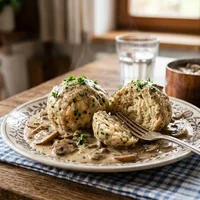
Semmelknödel are soft German bread dumplings made with stale white bread, milk, eggs and parsley. They make a comforting side for mushroom sauce, braised meat or roasted vegetables, and are a useful way to turn day-old bread into a satisfying meal.
Ingredients
- 400 gstale white bread or white rolls (from the day before)
- 200 mlwhole milk
- 2eggs
- 1 mediumonion, finely chopped
- 1 bunchfresh parsley, roughly chopped
- 1 tbspbutter
- to tastesalt and pepper
- 1 pinchnutmeg
- 1 to 2 tbspbreadcrumbs (if needed)
Instructions
- 1
Soak the bread
Cut the stale bread or rolls into cubes about 1 cm across and put them in a large bowl. Heat the milk until just below boiling, pour it over the bread, stir briefly and leave to soak for 15 minutes.
- 2
Cook the onion
Melt the butter in a frying pan over a medium heat. Cook the finely chopped onion for 4 to 5 minutes, until translucent, then stir in the parsley briefly and take the pan off the heat.
- 3
Mix the dough
Beat the eggs and add them to the soaked bread with the onion and parsley mixture. Season with salt, pepper and a pinch of nutmeg, then mix by hand until cohesive and slightly sticky. If it seems too wet, mix in a tablespoon of breadcrumbs.
- 4
Heat the water
Bring a large pot of well-salted water to the boil, then lower the heat to maintain a gentle simmer.
- 5
Shape the dumplings
Wet your hands and shape the mixture into 8 equal balls. Press each one firmly so it holds together during cooking.
- 6
Simmer the dumplings
Carefully lower the dumplings into the gently simmering water. Cook uncovered for 20 minutes, until they float to the surface and feel firm.
- 7
Lift and serve
Remove the dumplings with a slotted spoon and serve straight away with mushroom sauce, braised meat or roasted vegetables.
What are Semmelknödel?
Semmelknödel are German bread dumplings, traditionally made from stale bread or rolls softened with milk and bound with eggs. They are especially associated with southern German and Alpine cooking, where they are served alongside rich sauces and braised dishes.
This version gets its savoury flavour from softened onion, parsley and nutmeg. A gentle simmer helps the dumplings cook through while keeping their crumb tender.
Nutrition and macros by portion
The nutrition label shows one serving as written: 370 calories, 13g protein, 60g carbs, 9g fat.
| Portion | Adjustment | kcal | Protein | Carbs | Fat |
|---|---|---|---|---|---|
| Lighter | Smaller dumpling portion | 259 kcal | 9g | 42g | 6g |
| This serving | As written | 370 kcal | 13g | 60g | 9g |
| Hungry | Extra dumpling | 555 kcal | 20g | 90g | 14g |
Most of the carbohydrates come from the white bread, while the eggs and milk provide some protein and the butter, eggs and whole milk contribute fat. Serve a dumpling portion with roasted vegetables or another vegetable-rich side to round out the plate.
Choose the right bread
Day-old bread: slightly dry cubes absorb the warm milk without immediately turning to paste. Cut the pieces to about 1 cm so they soften evenly.
Fresh bread: if that is what you have, it may need less milk or a little extra time to dry out. The mixture should hold its shape rather than feel runny.
Build a cohesive mixture
Milk and eggs: the milk softens the bread, while the eggs help bind the dumplings as they cook. Add the eggs only after the bread has soaked.
Breadcrumbs: use them only if the mixture feels too wet to shape. Add a tablespoon at a time so the dough stays tender rather than becoming dense.
Cook the aromatics gently
Onion: cook it until translucent over a medium heat, without letting it brown. This softens its sharpness and gives the dumplings a mellow savoury base.
Parsley: stir it into the warm onion briefly, then take the pan off the heat. This keeps the herb's fresh flavour in the mixture.
Shape and simmer carefully
Firm balls: wet hands help prevent the mixture sticking as you form 8 equal dumplings. Press each one together firmly, but avoid compressing it into a hard ball.
Gentle water: once the pot boils, reduce the heat so the water simmers rather than bubbles vigorously. Strong boiling can knock the dumplings apart.
Check for doneness
Timing: cook the dumplings uncovered for 20 minutes. They should rise to the surface and feel firm when lifted carefully.
Serving: use a slotted spoon to drain them and serve immediately. Their mild, herby flavour pairs well with mushroom sauce, braised meat or roasted vegetables.
Recipe notes & tips
- Keep the bread cubes close to 1 cm so they soak evenly.
- Heat the milk until just below boiling, rather than letting it boil over.
- Use wet hands when shaping to keep the sticky mixture manageable.
- Shape all 8 dumplings before adding them to the water.
- Keep the cooking water at a gentle simmer throughout the 20 minutes.
Variations
- More herbs: add extra parsley for a greener, more pronounced flavour.
- Richer dough: use a little more butter when cooking the onion for a fuller taste.
- Finer texture: break the soaked bread up more thoroughly before adding the eggs.
- With mushrooms: serve the dumplings with mushroom sauce for a classic pairing.
- With vegetables: serve alongside roasted vegetables for a meat-free plate.
Common mistakes to avoid
- Using very fresh bread: it can turn gummy; use day-old bread or let fresh bread dry before soaking.
- Adding too much milk: the mixture may be hard to shape; add breadcrumbs a tablespoon at a time if needed.
- Skipping the firm shaping: loose balls can fall apart; press each dumpling together well.
- Boiling vigorously: the dumplings may break up; reduce the heat to a gentle simmer.
- Cooking with the lid on: the method calls for uncovered cooking; leave the pot uncovered for the full 20 minutes.
How to store
Refrigerate leftover dumplings in a covered container for up to 3 days. Reheat gently in simmering water or warm them in a pan until heated through.
Frequently asked questions
Can I use bread rolls instead of a loaf?
Yes. The recipe works with stale white bread or white rolls from the day before; cut either into cubes about 1 cm across.
How do I know if the mixture is too wet?
It should be cohesive and slightly sticky, but still hold a ball shape. If it feels too wet to shape, mix in a tablespoon of breadcrumbs.
Why should the water only simmer gently?
A vigorous boil can knock the dumplings apart. Lower the heat after bringing the pot to the boil and cook them at a gentle simmer.
How many dumplings does this recipe make?
Shape the mixture into 8 equal balls, which serves 4.
Can I make the dumplings ahead?
You can shape them in advance and keep them covered in the refrigerator for a short time before cooking. Cook them in gently simmering water and check they are firm and floating before serving.
What should I serve with Semmelknödel?
They are a good match for mushroom sauce, braised meat or roasted vegetables, as their soft texture soaks up sauces well.
Cook it from the original
This recipe comes from cookinglife.eu. Their page has the author’s own photos, notes and tips — the best place to cook it from.
Open the recipe on cookinglife.eu