
Cavolo nero and tarragon Caesar salad with pangratatto by Alana Laverty
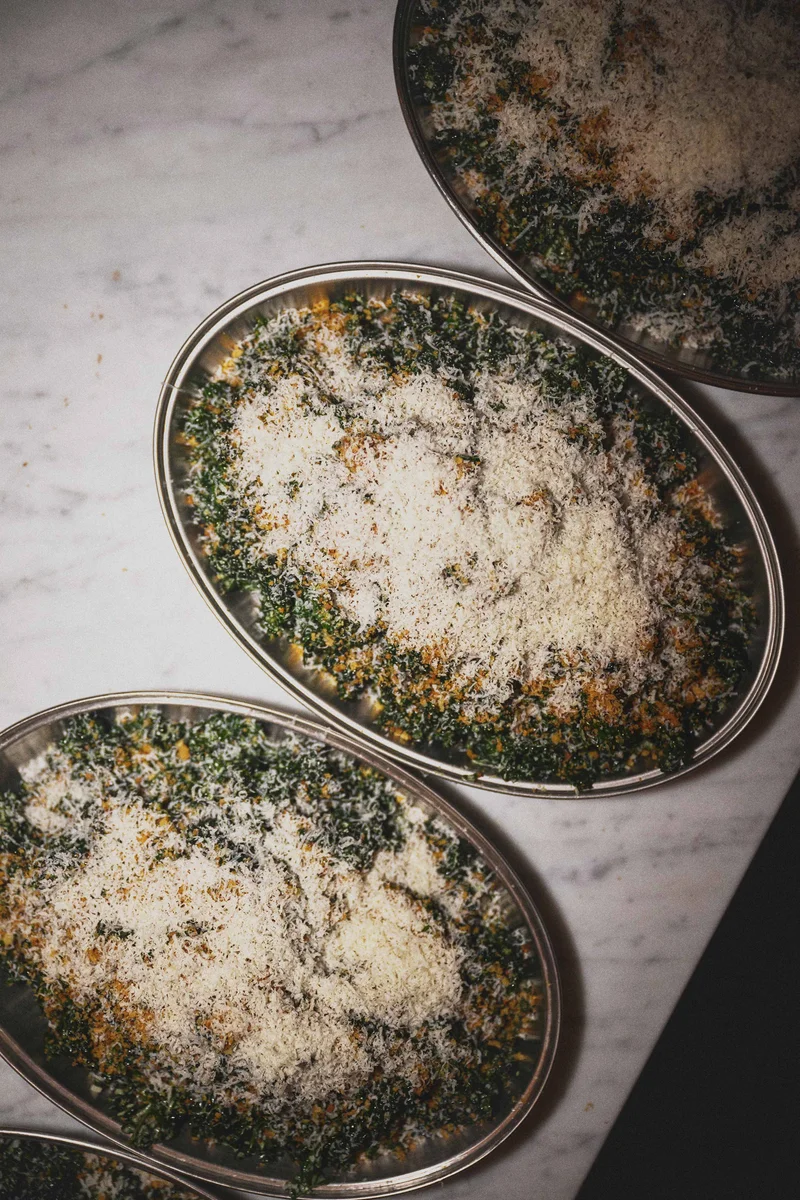
A winter Caesar salad made with tenderised cavolo nero, a creamy tarragon and anchovy dressing, and crunchy pangrattato. It makes a generous one-person meal, with plenty of savoury flavour and contrasting textures.
Ingredients
- 200 gcavolo nero
- al gustoaceite de oliva virgen extra
- al gustosal marina en escamas
- 1yema de huevo (o 15 ml de mayonesa si prefieres no usar huevo crudo)
- 1 cucharaditamostaza de Dijon
- 1 diente, finamente ralladoajo
- 2 filetes, picados, o 10 ml de pasta de anchoas de buena calidadanchoas
- 15 mlzumo de limón recién exprimido
- 22,5 mlvinagre de vino blanco
- 30 ml, finamente picadashojas de estragón fresco
- 100 ml (o una mezcla de aceite de oliva y aceite neutro)aceite de oliva suave
- 20 g, ralladoParmigiano Reggiano
- al gustosal y pimienta negra recién molida
- 50 gpan rallado panko
- 30 mlaceite de oliva virgen extra
- ½ diente, picadoajo
- al gustosal y pimienta
- 7,5 ml, picadoperejil
- al gusto, rallado para terminarqueso Parmigiano
Instructions
- 1
Prepara el aliño
Pon las anchoas en un bol grande y aplástalas con un tenedor, o usa pasta de anchoas. Añade la yema, el ajo y la mostaza de Dijon, y bate hasta que quede homogéneo. Incorpora el zumo de limón y el vinagre; después, vierte poco a poco el aceite mientras bates sin parar, hasta obtener una emulsión espesa y cremosa. Si usas una batidora o un procesador, añade el aceite lentamente mientras el aparato está en marcha. Agrega el Parmigiano Reggiano, sal, pimienta y estragón picado; prueba y ajusta el punto, añadiendo más acidez si hace falta. Si está demasiado espeso, bate una o dos cucharaditas de agua fría. El aliño sobrante se conserva en la nevera de 3 a 5 días.
- 2
Tuesta el pan
Tritura brevemente el panko en una batidora o procesador para que quede más fino. Calienta el aceite a fuego medio, añade el ajo y cocínalo unos 30 segundos, hasta que desprenda aroma, sin dejar que se dore. Incorpora el panko y remueve para cubrirlo de aceite; sazona con una buena pizca de sal y algo de pimienta. Tuéstalo entre 8 y 12 minutos, removiendo con frecuencia, hasta que esté bien dorado y crujiente. Retira del fuego, deja enfriar y añade el perejil picado. Guarda el sobrante sobre papel de cocina, en un recipiente hermético, hasta dos semanas.
- 3
Monta la ensalada
Lava el cavolo nero, quítale los tallos y desgarra las hojas en trozos de bocado dentro de una ensaladera. Masajéalas con aceite de oliva y sal durante 2 o 3 minutos, hasta que se ablanden ligeramente. Añade la mitad del aliño de estragón y mezcla; prueba y agrega más al gusto. Sirve la ensalada con una capa de pangrattato en el centro y más por encima. Termina con abundante Parmigiano Reggiano recién rallado, sal y pimienta.
What is cavolo nero Caesar salad?
Cavolo nero is a dark, sturdy Italian kale, and here it takes the place of romaine in a winter take on Caesar salad. Caesar salad is commonly associated with a dressing of egg, oil, Parmesan and anchovy, while this version adds fresh tarragon for a fragrant lift.
Massaging the leaves softens their texture, and pangrattato—seasoned toasted breadcrumbs—brings a crisp contrast. The recipe comes from Alana Laverty’s festive Italian supper club in London.
Nutrition and macros by portion
The nutrition label shows one serving as written: 1500 calories, 31g protein, 65g carbs, 126g fat.
| Portion | Adjustment | kcal | Protein | Carbs | Fat |
|---|---|---|---|---|---|
| Lighter | Use less dressing and pangrattato | 1050 kcal | 22g | 46g | 88g |
| This serving | As written | 1500 kcal | 31g | 65g | 126g |
| Hungry | Serve with crusty bread | 2250 kcal | 47g | 98g | 189g |
The cavolo nero and panko provide most of the carbohydrates, while the olive oils carry much of the fat. Egg yolk, anchovies and Parmigiano contribute protein, though the oils make the full batch of dressing and crumbs energy-dense; use only as much dressing and pangrattato as you need. Balance the plate with extra greens or a vegetable soup.
Build a creamy dressing
Emulsion: Whisk in the oil gradually and keep whisking as you pour. This helps the egg yolk, mustard and acidic ingredients form a smooth, thick dressing rather than separating.
Flavour: Anchovies, garlic and Parmigiano give the dressing savoury depth, while lemon juice, vinegar and tarragon keep it lively. Taste before adding extra salt, as the anchovies and cheese already bring saltiness.
Prepare the leaves
Remove the stems: The method calls for taking out the cavolo nero stems before tearing the leaves into bite-sized pieces. Wash the leaves and dry them so the oil and dressing can cling rather than becoming diluted.
Massage gently: Rub the leaves with olive oil and salt for 2–3 minutes, just until they soften slightly. They should still have some structure; stop before they become limp.
Get crunchy pangrattato
Low, steady heat: Cook the garlic for about 30 seconds over medium heat, just until fragrant. Keeping it pale helps avoid a bitter, burnt flavour.
Even browning: Stir the panko often as it toasts for 8–12 minutes. Take it off the heat when deeply golden and crunchy, then let it cool before adding parsley.
Dress and serve in stages
Start with half the dressing and toss it through the leaves, then taste before adding more. This gives you control over how coated the salad is and leaves any unused dressing for another meal.
For the best crunch, add the pangrattato just before serving. Finish with freshly grated Parmigiano, which adds a savoury edge to the crisp crumbs and tender greens.
What to serve alongside
This is a substantial salad for one, but it can also be served as a side with roast vegetables, grilled chicken or warm crusty bread. A simple soup makes a cosy winter meal without competing with the tarragon and anchovy flavours.
If serving it as part of a larger spread, keep the pangrattato separate until the last moment so it stays crisp.
Recipe notes & tips
- Dry the washed cavolo nero well before massaging it.
- Add the oil to the dressing in a slow, steady stream while whisking.
- Use a teaspoon or two of cold water to loosen dressing that is too thick.
- Stir the panko frequently so it browns evenly rather than scorching.
- Add the pangrattato just before serving to preserve its crunch.
- Taste the dressed leaves before adding extra salt, since the anchovies and cheese are salty.
Variations
- Use mayonnaise: Replace the raw egg yolk with 15 ml mayonnaise, as suggested in the ingredient list.
- Try another herb: Swap the tarragon for finely chopped parsley for a milder herbal note.
- Make it vegetarian: Leave out the anchovies and season the dressing to taste with salt.
- Change the crumbs: Use another coarse breadcrumb in place of panko, watching the pan as it toasts.
- Add more greens: Toss in a handful of rocket just before serving for a peppery finish.
Common mistakes to avoid
- Adding the oil too quickly: The dressing may split; drizzle it in slowly while whisking continuously.
- Overcooking the garlic: It can turn bitter; remove it from the heat as soon as it smells fragrant.
- Leaving the crumbs unattended: Panko can burn before it is evenly toasted; stir frequently for 8–12 minutes.
- Skipping the leaf massage: The cavolo nero stays tougher; rub it with oil and salt for 2–3 minutes.
- Using all the dressing at once: The salad may be over-coated; begin with half and add more after tasting.
- Topping the salad too early: The crumbs lose their crunch; scatter them over the salad just before serving.
How to store
Keep leftover dressing in a sealed container in the fridge for 3–5 days, and store leftover pangrattato in an airtight container on kitchen paper for up to two weeks. The dressed salad is best eaten straight away; store any undressed leaves separately and dress them just before serving.
Frequently asked questions
Can I make the dressing without raw egg?
Yes. The recipe suggests using 15 ml mayonnaise instead of the egg yolk.
How much dressing should I use?
Start with half, toss the leaves and taste. Add more gradually until the salad is coated to your liking.
How do I know when the pangrattato is ready?
It should be deep golden and crunchy after 8–12 minutes of toasting, with frequent stirring.
Can I prepare any part in advance?
Yes. The dressing can be kept in the fridge for 3–5 days, and the pangrattato can be stored in a sealed container for up to two weeks.
Do I need to remove the cavolo nero stems?
Yes, the method says to remove them before tearing the leaves into bite-sized pieces.
What if the dressing is too thick?
Whisk in a teaspoon or two of cold water until it reaches the consistency you want.
Cook it from the original
This recipe comes from finedininglovers.co.uk. Their page has the author’s own photos, notes and tips — the best place to cook it from.
Open the recipe on finedininglovers.co.uk