
Berliner bun
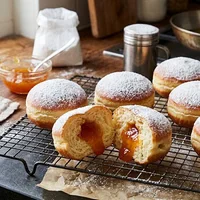
Berliner buns are soft, yeasted doughnuts filled with apricot jam and finished with powdered sugar. Make them for a leisurely baking session when you want a fresh, golden treat with a sweet centre.
Ingredients
- 500 gall-purpose flour
- 7 g (1 packet)active dry yeast
- 50 ggranulated sugar
- 1 tspsalt
- 250 mlwhole milk, lukewarm
- 1egg, at room temperature
- 60 gunsalted butter, softened
- 1.5 litressunflower oil, for frying
- 200 gapricot jam, smooth or sieved
- 50 gpowdered sugar, for dusting
Instructions
- 1
Mix and knead
Combine the flour, yeast, granulated sugar and salt in a large bowl. Add the lukewarm milk, egg and softened butter, then knead for about 10 minutes until the dough is smooth and elastic.
- 2
First rise
Cover the bowl with a clean tea towel and leave the dough in a warm place for 1 hour, until it has doubled in volume.
- 3
Shape the buns
Briefly knock back the dough and divide it into 10 equal pieces of about 60 g each. Shape them into neat balls and space them out on a baking sheet lined with parchment paper.
- 4
Second rise
Cover the buns and leave them to proof for another 45 minutes, until they have puffed up.
- 5
Fry in batches
Heat the sunflower oil in a wide, deep pan to 175°C. Fry 2–3 buns at a time for about 2 minutes per side, until golden brown all over.
- 6
Cool briefly
Lift the buns from the oil with a slotted spoon and transfer them straight to a cooling rack. Leave them to cool for 10 minutes.
- 7
Fill with jam
Put the apricot jam in a piping bag fitted with a long nozzle. Insert the nozzle sideways into each bun and pipe in about 1 tablespoon of jam.
- 8
Dust and serve
Dust the buns generously with powdered sugar and serve as soon as possible; they are best freshly baked.
What is a Berliner bun?
Berliner is a name used for a filled, fried yeast doughnut, with regional versions found across central and northern Europe. This recipe gives the buns a Dutch framing and fills them with apricot jam.
The dough is enriched with milk, egg and butter, making it tender, while two rises help it become airy. A coating of powdered sugar finishes the warm bakery-style treat.
Nutrition and macros by portion
The nutrition label shows one serving as written: 440 calories, 7g protein, 62g carbs, 18g fat.
| Portion | Adjustment | kcal | Protein | Carbs | Fat |
|---|---|---|---|---|---|
| Lighter | Use less jam and sugar | 308 kcal | 5g | 43g | 13g |
| This serving | As written | 440 kcal | 7g | 62g | 18g |
| Hungry | Serve two buns | 660 kcal | 11g | 93g | 27g |
The flour and sugar provide most of the carbohydrates, while the butter and oil used for frying contribute much of the fat. Milk, egg and flour supply some protein, and the apricot jam and powdered sugar add sweetness. Pair a bun with fresh fruit or unsweetened yoghurt for a more balanced plate.
Building a soft dough
Lukewarm milk: it should feel gently warm rather than hot, so it can be incorporated without overheating the yeast.
Softened butter: adding it with the other wet ingredients helps it mix evenly into the dough. Knead for the full 10 minutes, until the dough feels smooth and elastic.
Letting the dough rise
First rise: give the covered dough 1 hour in a warm place, checking that it has doubled rather than relying only on the clock.
Shaped proof: after dividing the dough into 10 pieces and forming balls, leave them covered for 45 minutes. Space them out so they have room to puff without touching.
Frying for an even finish
Oil temperature: aim for 175°C before adding the buns. If the oil is too cool, they can absorb more oil; if it is too hot, the outside can brown before the centres cook through.
Small batches: fry 2–3 buns at a time for about 2 minutes per side. Keep an eye on their colour and avoid crowding the pan.
Filling without splitting
Brief cooling: transfer the buns to a rack and wait 10 minutes before filling. This gives them a chance to settle while they are still easy to handle.
Side entry: insert the long piping nozzle into the side of each bun and add about 1 tablespoon of jam. Smooth or sieved jam is easiest to pipe.
When to serve them
Finish: dust the buns generously with powdered sugar after filling, then serve them as soon as possible for the freshest texture.
Pairing: coffee or tea makes a simple accompaniment. For a less sweet spread, serve them alongside fresh fruit.
Recipe notes & tips
- Weigh the dough portions to help make all 10 buns cook at a similar rate.
- Use a thermometer to check that the oil reaches 175°C before frying.
- Fry only 2–3 buns at a time so the pan does not become crowded.
- Let the buns cool on a rack rather than leaving them in a pool of oil.
- Use smooth or sieved jam if you want it to pass easily through the piping nozzle.
- Dust with powdered sugar just before serving for a fresh-looking finish.
Variations
- Try another jam: use a smooth berry or plum jam instead of apricot.
- Add citrus: stir a little finely grated lemon zest into the dough.
- Use a different finish: replace the powdered sugar with a light granulated sugar coating.
- Make a vanilla filling: use smooth vanilla pastry cream instead of jam.
- Add spice: mix a pinch of ground cinnamon into the powdered sugar.
Common mistakes to avoid
- Overheating the milk: very hot milk can harm the yeast; use it lukewarm.
- Rushing the first rise: wait until the dough has doubled in volume before shaping.
- Crowding the pan: too many buns at once can make frying uneven; stick to 2–3 per batch.
- Guessing the oil temperature: check for 175°C so the buns brown at a controlled rate.
- Filling too soon: very hot buns are awkward to handle; let them cool on the rack for 10 minutes.
- Using lumpy jam: pieces can block the nozzle; choose smooth jam or sieve it first.
How to store
These buns are best freshly made. Store any leftovers in an airtight container at room temperature and eat within 1–2 days; warm briefly in a low oven if you would like to soften them, then dust with a little fresh powdered sugar.
Frequently asked questions
Can I make the dough ahead?
The method is written for two rises at room temperature. For advance preparation, cover and chill the dough after kneading, then allow it to warm and rise before shaping.
How can I tell when the oil is ready?
A cooking thermometer gives the most reliable check: the oil should be at 175°C. Let it return to temperature between batches if it cools.
Can I use another type of jam?
Yes. Choose a smooth jam that can pass through the piping nozzle, or sieve it first if it contains pieces.
Why are my buns browning too quickly?
The oil may be hotter than 175°C. Lower the heat and check the temperature before frying the next batch.
Can I bake these instead of frying them?
This method is designed for frying, so baking would give a different texture and finish. The recipe does not provide oven instructions.
When should I add the powdered sugar?
Dust the buns after filling, just before serving, so the sugar stays light and visible.
Cook it from the original
This recipe comes from cookinglife.eu. Their page has the author’s own photos, notes and tips — the best place to cook it from.
Open the recipe on cookinglife.eu