
Homemade Spätzle with brown butter and sage
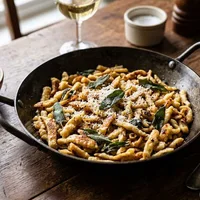
Homemade Spätzle are soft, irregular German egg noodles with crisp edges from a quick fry in nutty brown butter and sage. They make a comforting side for braised meat or a simple main with a green salad.
Ingredients
- 300 gflour
- 3eggs
- 120 mlwhole milk
- 1 tspsalt
- a pinchnutmeg
- 60 gunsalted butter
- 8fresh sage leaves
- to tastesalt and freshly ground black pepper
- Optional: 40 gfreshly grated Parmesan or Emmentaler
Instructions
- 1
Mix the batter
Put the flour, eggs, 1 tsp salt and nutmeg in a large bowl. Add the milk gradually, stirring until the batter is smooth and slightly sticky; it should fall from a spoon like thick yoghurt. Leave it to rest for 10 minutes.
- 2
Prepare the water
Bring a large pan of salted water to the boil. Set out a Spätzle rasp, a colander with large holes or a slotted cutting board.
- 3
Cook the Spätzle
In batches, press the batter through the rasp or colander over the boiling water. Cook each batch for about 2 to 3 minutes, until the pieces float to the surface. Lift them out with a slotted spoon and place in a bowl.
- 4
Brown the butter
Warm a frying pan over medium heat and add the butter. Watch closely; when it smells nutty and small brown specks appear, add the sage leaves. Let them sizzle briefly, then add the Spätzle.
- 5
Fry until crisp
Fry the Spätzle for 3 to 4 minutes, stirring as little as possible so they can crisp on the bottom before you turn them. Season with salt and pepper.
- 6
Serve straight away
Serve immediately, with freshly grated Parmesan or Emmentaler on top if you like. Enjoy as a side with braised meat or as a main with a simple green salad.
What are Spätzle?
Spätzle are small, irregular egg noodles associated with Germany and neighbouring parts of Central Europe. Their name refers to their little, uneven shape, which comes from pressing or scraping a loose dough into boiling water.
This version uses a simple flour, egg and milk batter, then finishes the cooked noodles in brown butter with sage. The boil makes them tender, while the pan-fry adds browned edges and a nutty, aromatic coating.
Nutrition and macros by portion
The nutrition label shows one serving as written: 453 calories, 14g protein, 59g carbs, 17g fat.
| Portion | Adjustment | kcal | Protein | Carbs | Fat |
|---|---|---|---|---|---|
| Lighter | Less butter, more salad | 317 kcal | 10g | 41g | 12g |
| This serving | As written | 453 kcal | 14g | 59g | 17g |
| Hungry | Larger noodle portion | 680 kcal | 21g | 89g | 26g |
Most of the carbohydrates come from the flour, while eggs contribute protein and the butter supplies much of the fat. For a more balanced plate, serve a portion with a generous green salad or vegetables; the optional cheese adds extra protein and fat.
Getting the batter right
Flour and eggs: these form the noodle base, while milk loosens the mixture enough to push it through the chosen tool. Add the milk gradually so you can judge the consistency as you stir.
Consistency: aim for a smooth, slightly sticky batter that falls from a spoon like thick yoghurt. A 10-minute rest gives the flour time to absorb moisture before shaping.
Choosing a shaping tool
Spätzle rasp: press portions of batter through it directly over the boiling water for evenly sized pieces.
Colander or board: a colander with large holes or a slotted cutting board also works. Keep the portions manageable and work over the pan carefully to avoid splashes.
Reading the cooking cues
Boiling: the pieces are ready when they float to the surface, usually after about 2 to 3 minutes. Scoop them out with a slotted spoon and cook the batter in batches.
Frying: let the Spätzle sit against the pan long enough to develop crisp patches before turning. Stirring constantly prevents those browned edges from forming.
Brown butter and sage
Butter: keep an eye on it as it melts over medium heat. Its nutty smell and the appearance of small brown specks are the cues to move on quickly.
Sage: add the leaves when the butter is browned and let them sizzle briefly before adding the noodles. The butter can darken quickly, so have the sage and cooked Spätzle ready.
Serving the noodles
As a side: serve the Spätzle alongside braised meat, where their buttery surface works well with the savoury juices.
As a main: pair them with a simple green salad for freshness. Parmesan or Emmentaler is an optional finishing touch rather than a required part of the dish.
Recipe notes & tips
- Add the milk gradually to avoid making the batter thinner than the thick-yoghurt consistency described.
- Use a large pan of salted water so you have room to cook the Spätzle in batches.
- Have the shaping tool ready before you begin pressing the batter.
- Lift each batch out as soon as the pieces float, rather than leaving them in the water.
- Prepare the cooked Spätzle before browning the butter, so you can add them promptly when the sage has sizzled.
- Serve straight from the pan while the edges are still crisp.
Variations
- Add cheese: finish with freshly grated Parmesan or Emmentaler as suggested.
- Use Emmentaler: choose the optional cheese for a mild, savoury topping.
- Use Parmesan: add the other optional grated cheese for a more pronounced savoury finish.
- Serve as a side: pair the noodles with braised meat.
- Make it a main: serve with a simple green salad.
Common mistakes to avoid
- Batter too runny: add the milk gradually and stop when it falls from a spoon like thick yoghurt.
- Skipping the rest: leave the batter for 10 minutes before shaping so the flour can absorb the liquid.
- Crowding the pan: press and boil the batter in several batches rather than trying to cook it all at once.
- Overcooking in water: scoop the pieces out when they float, usually after 2 to 3 minutes.
- Stirring too much: give the Spätzle time to crisp on the bottom before turning them.
- Burning the butter: add the sage as soon as the butter smells nutty and brown specks appear.
How to store
For the best texture, serve the Spätzle immediately. If needed, refrigerate leftovers in a covered container for up to 3 days, then reheat them in a frying pan until hot; the edges may be less crisp than when freshly made.
Frequently asked questions
What consistency should the batter have?
It should be smooth and slightly sticky, flowing off a spoon like thick yoghurt. Add the milk gradually to reach that texture.
How do I know when the Spätzle are cooked?
They are ready when they float to the surface, which takes about 2 to 3 minutes. Remove them with a slotted spoon.
Can I make Spätzle without a rasp?
Yes. The method also gives a colander with large holes or a slotted cutting board as alternatives for pressing the batter into the water.
Can I prepare the batter ahead?
The method specifies a 10-minute rest. It does not give a longer make-ahead time, so for the best result follow that rest and then cook the batter.
Can I leave out the cheese?
Yes. Parmesan or Emmentaler is optional, and the Spätzle can be served without it.
What should I serve with Spätzle?
They work as a side with braised meat or as a main with a simple green salad.
Cook it from the original
This recipe comes from cookinglife.eu. Their page has the author’s own photos, notes and tips — the best place to cook it from.
Open the recipe on cookinglife.eu