
Fischbrötchen
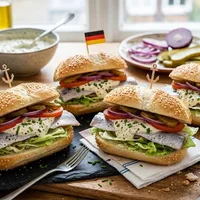
A German fish-market favourite, Fischbrötchen pairs soft rolls with tangy pickled herring, crisp vegetables and a quick homemade remoulade. It makes a brisk, satisfying lunch that needs no cooking beyond optional toasting.
Ingredients
- 4small soft round rolls (or pointed rolls)
- 8pickled herring fillets (Matjes or Bismarck herring)
- 1red onion
- 4pickles
- 1tomato
- A fewlettuce leaves, such as iceberg
- 60 ml (4 tbsp)mayonnaise
- 5 ml (1 tsp)Dijon mustard
- 15 ml (1 tbsp)capers, finely chopped
- 15 ml (1 tbsp)pickle, finely chopped (extra)
- 5 ml (1 tsp)pickle juice
- Juice of ½lemon
- To tastesalt and pepper
Instructions
- 1
Mix the remoulade
Stir the mayonnaise with the mustard, finely chopped pickle, capers, pickle juice and a little lemon juice. Season with salt and pepper, then chill until needed.
- 2
Prepare the herring
Let the herring fillets drain well on kitchen paper. Cut them into manageable pieces if needed; allow about 1–2 fillets for each roll.
- 3
Slice the vegetables
Cut the red onion into thin rings, slice the pickles thinly, and halve and thinly slice the tomato. Arrange them on a plate.
- 4
Prepare the rolls
Carefully cut each roll horizontally with a sharp bread knife. For an extra-crispy crust, toast them briefly in a dry frying pan or under the grill if you like.
- 5
Add the herring
Spread the bottom half of each roll generously with remoulade, then place the herring fillets on top.
- 6
Finish the filling
Arrange the onion rings, pickle slices and tomato slices over the herring. Add a few lettuce leaves.
- 7
Serve straight away
Put the tops on the rolls, press lightly and serve immediately.
What is a Fischbrötchen?
A Fischbrötchen is a German fish sandwich, especially associated with the ports and fish markets of northern Germany, including Hamburg. It is commonly made with seafood in a bread roll and bright, savoury toppings.
This version uses pickled herring with a creamy, sharp remoulade, crunchy onion and fresh salad vegetables. The contrast between soft bread, tangy fish and crisp toppings gives it its appeal.
Nutrition and macros by portion
The nutrition label shows one serving as written: 490 calories, 22g protein, 43g carbs, 25g fat.
| Portion | Adjustment | kcal | Protein | Carbs | Fat |
|---|---|---|---|---|---|
| Lighter | Less remoulade, more lettuce | 343 kcal | 15g | 30g | 18g |
| This serving | As written | 490 kcal | 22g | 43g | 25g |
| Hungry | Add another herring fillet | 735 kcal | 33g | 65g | 38g |
The rolls provide most of the carbohydrate, while mayonnaise contributes much of the fat and the herring supplies most of the protein. Pickled fish and other preserved ingredients can also make the sandwich salty, so balance it with a generous salad or fresh vegetables on the side.
The herring and its tangy dressing
Pickled herring: Matjes is typically tender and mild, while Bismarck herring has a more pronounced vinegar tang; either works here. Drain the fillets well so their pickling liquid does not make the roll soggy.
Remoulade: Mayonnaise gives the sauce its body, while mustard, capers, pickle and lemon bring sharpness and savouriness. Add the lemon juice gradually so the dressing stays creamy rather than becoming too loose.
Slice for an even filling
Onion rings: Cut them thinly so they add crunch without overwhelming the fish. Separating the rings also makes it easier to distribute them across the rolls.
Pickles and tomato: Thin slices sit neatly in the bread and make each bite easier to manage. Keep the vegetables ready on a plate before assembling.
Keep the bread crisp
Rolls: A soft round or pointed roll is easy to fill and keeps the sandwich traditional in spirit. Slice horizontally with a sharp bread knife to avoid crushing the crumb.
Optional toasting: A brief toast in a dry frying pan or under the grill adds a crisp surface. Let the rolls remain warm rather than over-toasting them, so they are still easy to bite.
Layering and texture
Spread the remoulade on the bottom half first, then set the herring on it. The sauce helps the fish stay in place as you add the toppings.
Finish with the onion, pickle, tomato and lettuce. Press the top lightly into place; too much pressure can squeeze the filling out.
Serve while freshly assembled
Build the rolls just before eating, once the herring has drained and the vegetables are sliced. This keeps the bread from soaking up too much moisture from the filling.
Serve them on their own for a quick lunch, or alongside a simple green salad or boiled potatoes for a more substantial meal.
Recipe notes & tips
- Drain the herring thoroughly on kitchen paper before assembling the rolls.
- Chop the capers and extra pickle finely so they mix evenly into the remoulade.
- Taste the dressing before adding salt, as the capers and pickles are already savoury.
- Slice the vegetables while the remoulade chills to make assembly quick.
- Keep the lettuce leaves dry so they stay crisp in the sandwich.
- Assemble the rolls just before serving to protect the bread from the filling.
Variations
- Choose Matjes: Use its milder, tender flavour for a less sharply tangy sandwich.
- Choose Bismarck herring: Use it for a more pronounced pickled flavour.
- Add extra lettuce: Increase the crisp, fresh element in each roll.
- Toast the rolls: Briefly toast the cut sides in a dry frying pan or under the grill.
- Adjust the remoulade: Add lemon juice gradually for a sharper sauce that stays thick.
Common mistakes to avoid
- Wet herring: Drain it well on kitchen paper so excess pickling liquid does not soak the bread.
- Thick onion slices: Cut the onion into thin rings so it is easier to bite through.
- Loose remoulade: Add the lemon juice a little at a time to keep the sauce spreadable.
- Over-toasting: Toast briefly so the rolls gain a crisp crust but remain easy to eat.
- Soggy assembled rolls: Add the filling shortly before serving rather than letting the sandwiches stand.
How to store
Store the remoulade, drained herring and prepared vegetables separately in covered containers in the fridge, and assemble the rolls just before serving. Once assembled, the rolls are best eaten immediately rather than stored.
Frequently asked questions
Can I use either Matjes or Bismarck herring?
Yes. Both are suitable: Matjes is generally milder and tender, while Bismarck herring has a sharper pickled flavour.
Do I have to toast the rolls?
No. Toasting is optional; it adds a crisp crust, while untoasted rolls keep the sandwich soft.
Can I make the remoulade ahead?
Yes. Mix it in advance and keep it chilled until needed. Stir it before spreading if it has settled.
How much herring goes in each roll?
The recipe allows about 1–2 fillets per roll. Use pieces that fit comfortably across the bread.
How do I stop the bread getting soggy?
Drain the herring well, keep the lettuce dry and assemble the sandwiches just before eating.
What can I serve with Fischbrötchen?
A simple green salad or boiled potatoes makes a suitable side without competing with the tangy fish and remoulade.
Cook it from the original
This recipe comes from cookinglife.eu. Their page has the author’s own photos, notes and tips — the best place to cook it from.
Open the recipe on cookinglife.eu