
Vegan Karnıyarık (Turkish Stuffed Eggplants)
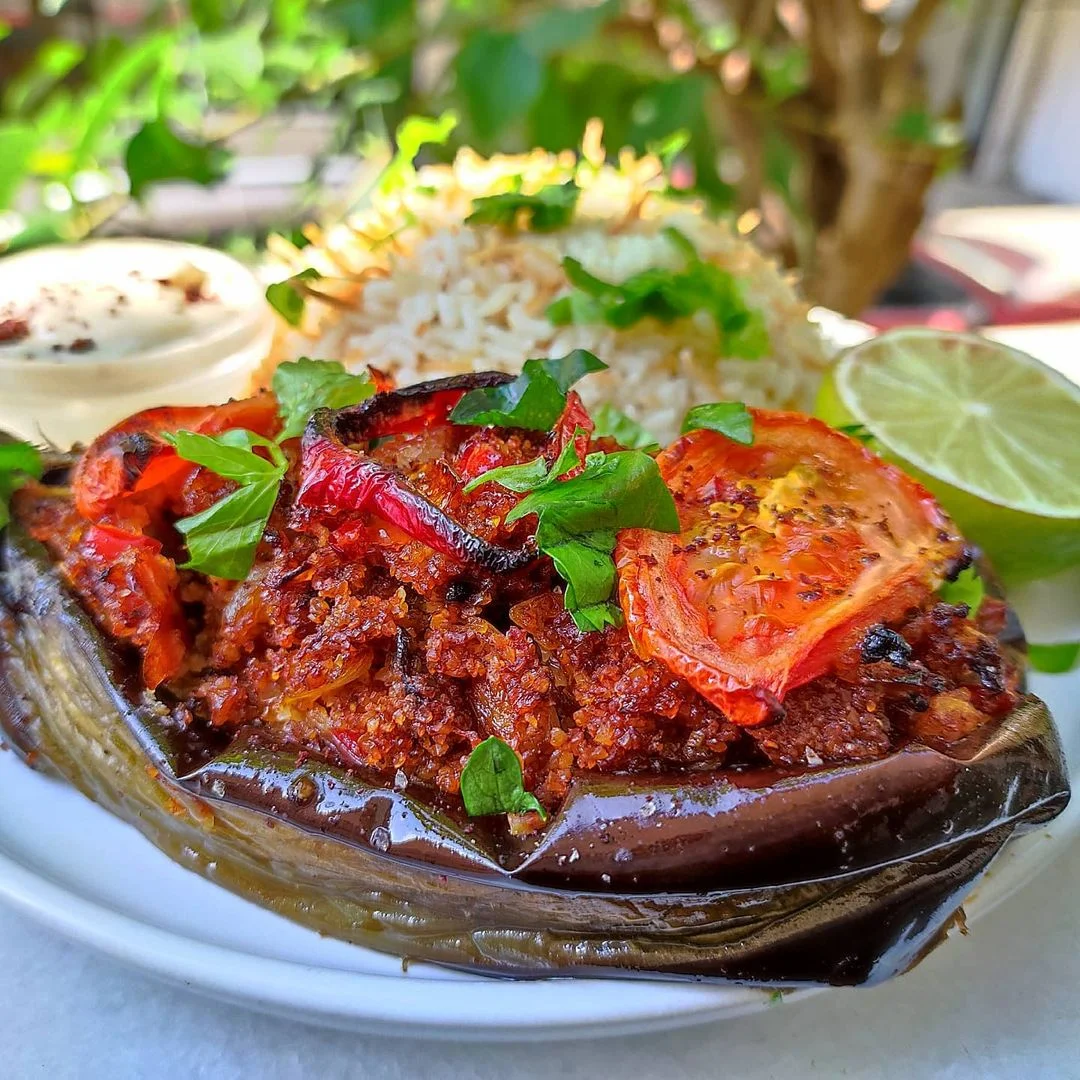
Vegan karnıyarık is a Turkish-style dish of roasted aubergine filled with a warmly spiced grain and vegetable mixture. This version makes a generous, colourful centrepiece with grains, herbs and a tomato topping.
Ingredients
- 4long, slim aubergines
- 180 g (1 cup)grain of choice, such as fine bulgur or quinoa
- 720 ml (3 cups), dividedwater
- 75 ml (5 tbsp), dividedolive oil
- 1 largeonion, finely diced
- 6 clovesgarlic, minced
- 1 largered or bell pepper, finely diced
- 3 tbsptomato purée
- 1 tbspground cumin
- 3 tspground coriander
- ½ tspallspice
- 2 tspsmoked paprika
- 1 tspred chilli flakes
- 1 tbspdried oregano
- 2 tbspsoy sauce
- 1 tbsplemon juice
- 15 g (1 cup), chopped; reserve some for garnishcoriander or parsley
- ½red or green pepper, sliced, for garnish
- 1 largetomato, sliced, for garnish
- 1 tspsumac, for garnish
Instructions
- 1
Salt the aubergines
Halve the aubergines lengthways and sprinkle salt over the cut surfaces. Leave for 20 minutes, then pat dry, drizzle with 1 tbsp olive oil and bake on a lined tray in an oven preheated to 160°C for 30 minutes.
- 2
Cook the grains
Put the grain and 2 cups of water in a pan. Bring to the boil, then cover and simmer over low heat for 10 minutes, or until tender and all the water has been absorbed.
- 3
Heat the oil
Warm 1 tbsp olive oil in a pan over a medium-high heat.
- 4
Soften the vegetables
Add the garlic and onion and fry until the onion is translucent. Add the diced pepper and cook for 2 minutes.
- 5
Fry the spices
Stir in the tomato purée, ground cumin and ground coriander, then fry for 5 minutes.
- 6
Make the filling
Add the cooked grains, 1 cup of water and all the remaining ingredients except the lemon juice, fresh herbs and garnishes. Mix well and fry for 5 minutes.
- 7
Finish the filling
Take the pan off the heat, add the lemon juice and herbs, and mix well.
- 8
Fill the aubergines
Use a spoon to make a small trench down the centre of each aubergine half and divide the filling evenly among them. Drizzle with 2 tbsp olive oil and bake at 180°C for 20 minutes.
- 9
Add the topping
Arrange the sliced pepper and tomato over the aubergines, drizzle with 1 tbsp olive oil and bake for a further 20 minutes.
- 10
Garnish and serve
Take the tray out of the oven, sprinkle the aubergines with sumac and the reserved chopped herbs, and serve.
What is karnıyarık?
Karnıyarık is a Turkish dish whose name is commonly translated as “split belly”: aubergines are opened along the middle and filled. Traditional versions often use a minced-meat filling, while this plant-based take uses grains, vegetables and herbs.
The aubergines are first roasted, then filled and baked again. That two-stage cooking gives them time to soften while the filling takes on the flavour of the spiced tomato mixture.
Nutrition and macros by portion
The nutrition label shows one serving as written: 475 calories, 13g protein, 68g carbs, 19g fat.
| Portion | Adjustment | kcal | Protein | Carbs | Fat |
|---|---|---|---|---|---|
| Lighter | Use less olive oil | 333 kcal | 9g | 48g | 13g |
| This serving | As written | 475 kcal | 13g | 68g | 19g |
| Hungry | Add a larger portion | 713 kcal | 20g | 102g | 29g |
The grains provide most of the carbohydrates, while the olive oil contributes much of the fat; the grains and vegetables provide some protein. For a balanced plate, serve an aubergine portion with a fresh salad or greens.
Choosing the grain
Bulgur: Fine bulgur cooks quickly and gives the filling a tender, slightly fluffy texture.
Quinoa: This is another option listed for the recipe; cook it until tender and the water has been absorbed before adding it to the filling.
Building the flavour
Aubergines: Long, slim ones are convenient to halve and fill. Salting the cut sides for 20 minutes, then patting them dry, prepares them for the first bake.
Spices: Cumin, coriander, allspice, smoked paprika, chilli and oregano give the filling its savoury, warming character. Frying the tomato purée and spices for 5 minutes helps bring them together before the grains go in.
Getting the texture right
The first bake should soften the aubergine enough to make a shallow trench without the halves collapsing. If they still feel firm, handle them gently when making room for the filling.
Once filled, the aubergines bake for 20 minutes before the sliced pepper and tomato are added. The final 20 minutes finishes the aubergines and warms the topping.
Finishing the filling
Keep the lemon juice and fresh herbs out of the hot pan until the filling is taken off the heat. This preserves their fresh, bright note against the deeper spices.
Divide the filling evenly among the aubergine halves so each portion has a good balance of grain and vegetable.
Serving ideas
Serve the aubergines hot from the oven, with the sumac and reserved herbs scattered over the top. A crisp salad or simply dressed greens make a fresh contrast to the soft, spiced filling.
The grain filling makes the dish substantial on its own, but bread or an extra side of grains can suit a particularly hungry table.
Recipe notes & tips
- Pat the aubergine cut sides dry after salting so they are not wet when they go into the oven.
- Cook the grain until the water is fully absorbed before mixing it into the filling.
- Keep the pan at medium-high heat for the onion and pepper, and stir the spice mixture so it does not catch.
- Make the trenches shallow enough to hold the filling while keeping the aubergine halves intact.
- Reserve some chopped herbs before mixing the rest into the filling, ready for the final garnish.
Variations
- Choose bulgur: Use fine bulgur for a tender, traditional-style grain texture.
- Choose quinoa: Swap in quinoa as the recipe allows, cooking it until tender and drained of its cooking water.
- Adjust the heat: Use fewer chilli flakes for a milder filling.
- Change the herbs: Choose either coriander or parsley to finish the dish.
- Add more tang: Serve with extra lemon at the table if you like a brighter finish.
Common mistakes to avoid
- Skipping the salting: Give the cut aubergines 20 minutes, then pat them dry before baking.
- Overcooking the grain: Simmer only until tender and the water has been absorbed, so it can hold its shape in the filling.
- Leaving out the second cup of water: Add it with the cooked grain and other filling ingredients as directed.
- Filling too early: Let the aubergines complete their first bake before making the trenches and adding the mixture.
- Adding the herbs to the hot pan: Take the filling off the heat first, then stir in the herbs and lemon juice.
How to store
Cool leftovers and refrigerate them in a covered container for up to 3 days. Reheat in an oven at 180°C until hot throughout, or microwave individual portions.
Frequently asked questions
Can I use bulgur or quinoa?
Yes. The recipe gives fine bulgur and quinoa as alternatives. Cook the chosen grain until tender and until its cooking water has been absorbed.
Why salt the aubergines first?
The method uses salting to draw moisture from the cut surfaces before baking. Leave them for 20 minutes, then pat them dry.
Can I prepare the filling ahead?
Yes. Make the filling ahead and refrigerate it in a covered container, then fill the aubergines when ready to bake. Add the lemon juice and herbs after removing the filling from the heat.
How do I know when the aubergines are ready?
They should be soft enough to make a trench in after the first bake, and tender after the two further baking stages. Handle them gently so the halves keep their shape.
What can I serve with vegan karnıyarık?
A fresh salad or greens complement the soft, warmly spiced aubergines. The grain filling makes the dish filling on its own.
Cook it from the original
This recipe comes from fooooods.com. Their page has the author’s own photos, notes and tips — the best place to cook it from.
Open the recipe on fooooods.com