
White Bolognese Sauce Recipe
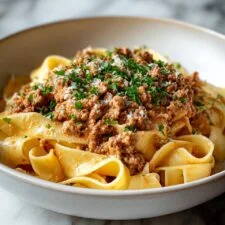
This white Bolognese is a slow-simmered pork sauce with pancetta, aromatic vegetables, herbs, white wine and milk. Make it when you want a rich, gently creamy alternative to a tomato-based ragù for serving with pasta.
Ingredients
- 113 g (4 oz)pancetta, diced
- 907 g (2 lb)ground pork
- 2carrots, diced
- 2celery stalks, diced
- 1onion, diced
- 4 clovesgarlic, minced
- 240 ml (1 cup)dry white wine
- 480 ml (2 cups)chicken broth
- 240 ml (1 cup)whole milk
- 2bay leaves
- 10 sprigsfresh thyme
- 2 sprigsfresh rosemary
- ¼ tspnutmeg
- to tastesalt
- 5 cm (2 inches)Parmesan rind
Instructions
- 1
Brown the pancetta
Heat a Dutch oven or large pot over medium-high heat and cook the diced pancetta for 5–10 minutes, until browned and crisp and its fat has rendered.
- 2
Set pancetta aside
Lift the pancetta out of the pot and set it aside to use later or as a garnish.
- 3
Soften the vegetables
Lower the heat to medium and add the carrots, celery and onion. Cook, stirring often, for 10–15 minutes, until softened and starting to caramelise.
- 4
Brown the pork
Raise the heat to medium-high and add the ground pork and garlic. Break up the meat with a spatula and cook for 5–8 minutes, until browned. Season lightly with salt.
- 5
Reduce the wine
Pour in the dry white wine, stirring and scraping up the browned bits from the bottom of the pot. Simmer for 5 minutes to reduce it slightly.
- 6
Add broth and herbs
Stir in the chicken broth, bay leaves, thyme, rosemary, nutmeg and Parmesan rind. Bring to a simmer, cover and cook over medium-low heat for 1 hour, stirring occasionally.
- 7
Stir in the milk
Add the whole milk and cover the pot again. Cook for a further 45–60 minutes, until the sauce thickens and turns creamy. Remove the lid towards the end if you want a thicker sauce.
- 8
Adjust the seasoning
Skim excess grease from the surface, stir the sauce and taste it. Add salt as needed.
- 9
Serve with pasta
Toss the sauce with cooked pappardelle, spaghetti or rigatoni, or spoon it generously over your chosen pasta.
- 10
Serve immediately
Serve the finished dish straight away.
What is white Bolognese?
White Bolognese is a meat-based Italian-style ragù made without tomatoes, with wine, broth and milk providing its savoury, mellow character. This version pairs ground pork with pancetta and a long, gentle simmer.
The pancetta lends depth, while the milk and Parmesan rind round out the sauce. It makes a hearty topping for broad pasta shapes as well as spaghetti or rigatoni.
Nutrition and macros by portion
The nutrition label shows one serving as written: 590 calories, 33g protein, 13g carbs, 44g fat.
| Portion | Adjustment | kcal | Protein | Carbs | Fat |
|---|---|---|---|---|---|
| Lighter | Use less pancetta | 413 kcal | 23g | 9g | 31g |
| This serving | As written | 590 kcal | 33g | 13g | 44g |
| Hungry | Add more pasta | 885 kcal | 50g | 20g | 66g |
The pork and pancetta provide most of the protein and fat, while the vegetables and milk contribute some carbohydrates; the wine also adds energy to the sauce. Pair a moderate serving with pasta and a generous portion of vegetables or salad to make a more balanced plate.
Build the flavour base
Pancetta: browning it first renders fat into the pot, which then helps cook the vegetables. Keep an eye on it so it turns crisp without scorching.
Vegetables: give the diced carrot, celery and onion their full 10–15 minutes. Softening and lightly caramelising them gives the sauce a savoury foundation.
Brown the pork well
Pork and garlic: break the meat into small pieces as it cooks, and let it take on colour before adding the wine. The recipe adds the garlic with the pork, so stir often to keep it from catching.
Wine: scrape the pot as you pour it in, lifting the browned bits into the sauce. The five-minute reduction lets some of the liquid cook off before the broth goes in.
Keep the simmer gentle
First simmer: once the broth and herbs are added, bring the pot just to a simmer, then cover it and cook over medium-low heat for an hour. Stir occasionally to check that the sauce is not sticking.
Milk finish: stir in the milk for the final 45–60 minutes. The sauce is ready when it has thickened and looks creamy; leave the pot uncovered towards the end if you want it thicker.
Check texture and seasoning
Consistency: the finished sauce should cling to pasta rather than look watery. If it still seems loose, uncover it towards the end of cooking as directed.
Salt: pancetta, broth and Parmesan can all contribute saltiness, so taste after skimming and add salt gradually. Remove the bay leaves and herb stems before serving if they remain in the pot.
Choose a pasta and serve
Pasta: pappardelle, spaghetti and rigatoni are all suggested options. Cook the pasta separately, then toss it with the sauce or spoon the sauce over it.
On the side: a simple green salad or cooked greens can balance the richness of the pork and milk. The reserved pancetta can be used as a garnish.
Recipe notes & tips
- Dice the vegetables evenly so they soften at a similar rate.
- Let the pancetta render slowly enough to brown without burning.
- Scrape the pot well when adding the wine to lift up the browned flavourful bits.
- Keep the sauce at a gentle simmer during both covered cooking stages.
- Taste for salt near the end, after the sauce has reduced.
- Serve the sauce with freshly cooked pasta while it is hot.
Variations
- Use another pasta: serve the sauce with pappardelle, spaghetti or rigatoni as suggested.
- Add black pepper: grind some over the sauce at the table for a sharper finish.
- Garnish with pancetta: scatter the reserved crisp pieces over the finished pasta.
- Add Parmesan: grate Parmesan over each serving for a more pronounced cheese flavour.
- Include greens: serve with sautéed greens or a green salad alongside.
Common mistakes to avoid
- Rushing the vegetables: they need 10–15 minutes to soften and begin to caramelise; keep the heat at medium.
- Skipping the scrape: stir and scrape the base of the pot as the wine goes in so browned bits loosen into the sauce.
- Boiling hard: a vigorous boil can make the sauce reduce too quickly; keep it at a gentle simmer.
- Adding too much salt early: broth and pancetta can be salty; season lightly at first and adjust at the end.
- Leaving the sauce too loose: uncover it towards the end of the milk simmer to help it thicken.
How to store
Cool the sauce and refrigerate it in a covered container for up to 3 days. Reheat gently in a saucepan, stirring occasionally; add a splash of water or broth if it has thickened too much. Store the sauce separately from the pasta when possible.
Frequently asked questions
Can I make this sauce ahead?
Yes. Cook the sauce, cool it and refrigerate it in a covered container for up to 3 days. Reheat it gently before serving.
Which pasta works best?
Pappardelle, spaghetti and rigatoni are all suitable. Choose the shape you prefer and toss it with the sauce or spoon the sauce over it.
How do I make the sauce thicker?
Leave the pot uncovered towards the end of the milk simmer, as the method suggests. Cook until the sauce reaches a consistency that clings to the pasta.
Can I skip the pancetta?
The sauce can be made without it, but pancetta contributes rendered fat and savoury flavour. If you omit it, the finished sauce will be less rich.
When should I add the reserved pancetta?
The recipe sets it aside for later use or garnish. Add it when serving if you want to keep its browned texture.
How can I tell when the sauce is ready?
After the final 45–60 minutes of cooking with milk, it should be thickened and creamy. If it remains too loose, uncover the pot towards the end.
Cook it from the original
This recipe comes from busyrecipe.com. Their page has the author’s own photos, notes and tips — the best place to cook it from.
Open the recipe on busyrecipe.com