
Steak beef tartare
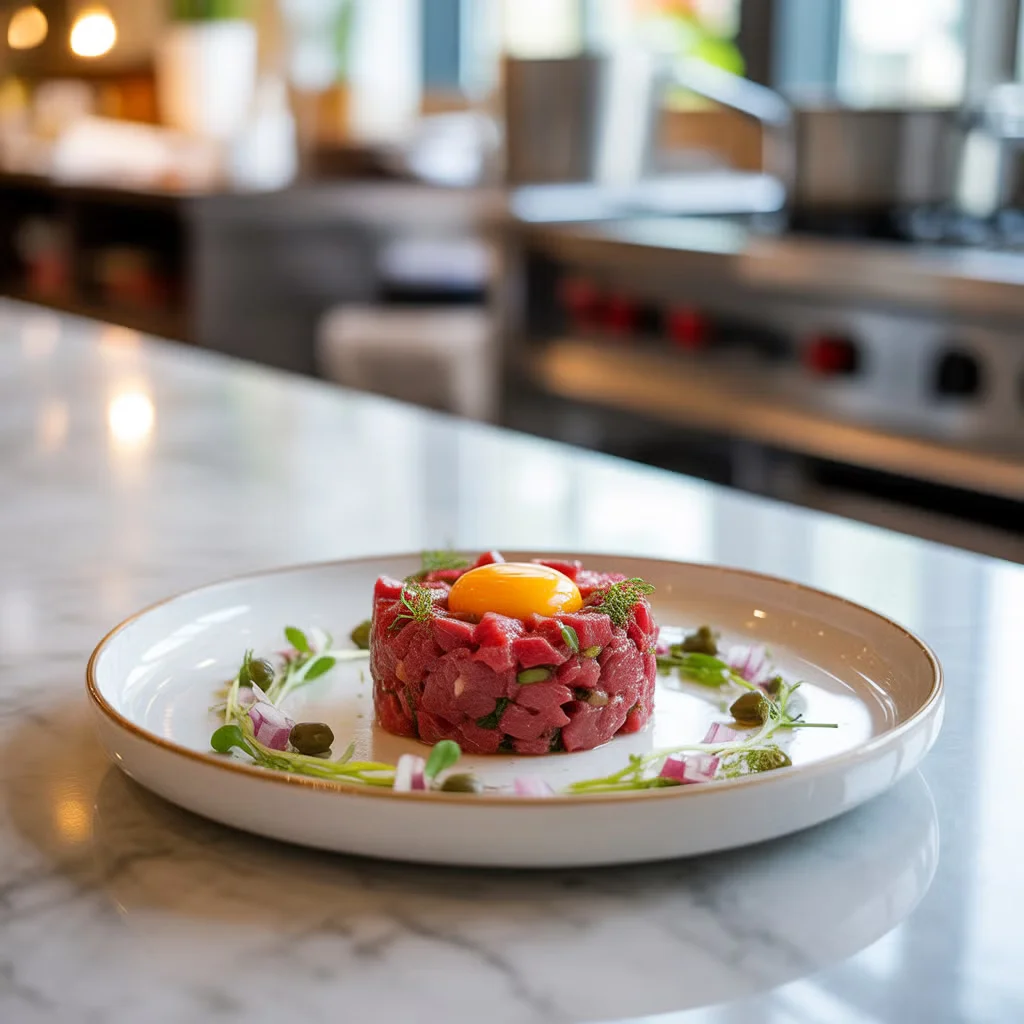
Beef tartare is finely chopped raw fillet steak seasoned with shallot, capers, parsley, mustard and hot sauce. It makes an elegant starter, with egg yolks added just before serving.
Ingredients
- 200 gfillet steak
- 1, choppedshallot
- 2 tsp, rinsed, drained and finely choppedcapers
- 2 tbsp, finely choppedparsley
- 1 tspDijon mustard
- 1 tsphot sauce
- to tastesalt
- to tasteblack pepper
- 2egg yolks
Instructions
- 1
Chop and season
Trim the fillet steak and chop it finely. Put it in a bowl with the shallot, capers and parsley. Stir in the Dijon mustard and hot sauce, then season with salt and black pepper.
- 2
Shape and serve
Combine the ingredients gently and divide between two small serving plates. Shape each portion into a round and make a hollow in the centre. Set an egg yolk in each hollow and serve immediately.
What is beef tartare?
Beef tartare is a dish of raw beef finely chopped or minced and served with seasonings. It is closely associated with French bistro cooking, where the quality of the meat and the balance of sharp, savoury flavours are central.
This version combines fillet with capers, shallot, parsley, mustard and hot sauce. The yolks add richness, while the small plates make it easy to present as a starter.
Nutrition and macros by portion
The nutrition label shows one serving as written: 415 calories, 48g protein, 5g carbs, 21g fat.
| Portion | Adjustment | kcal | Protein | Carbs | Fat |
|---|---|---|---|---|---|
| Lighter | Use one egg yolk | 291 kcal | 34g | 4g | 15g |
| This serving | As written | 415 kcal | 48g | 5g | 21g |
| Hungry | Add bread and potatoes | 623 kcal | 72g | 8g | 32g |
The steak and egg yolks provide most of the protein, while the yolks also contribute much of the fat. The steak supplies a little fat too, and the shallot and capers account for most of the small amount of carbohydrate. Serve with salad and a modest portion of potatoes or bread to make a more balanced plate.
Choosing and preparing the beef
Fillet steak: Use very fresh steak from a trusted source, and keep it chilled until you are ready to prepare it. Trim away any sinew, then chop it finely with a clean, sharp knife.
Hand chopping: Small, even pieces give the tartare a distinct texture. Avoid turning the beef into a paste.
Balancing the seasoning
Capers and shallot: Rinsing and draining the capers removes excess brine before they are chopped. Their salty tang works with the shallot’s gentle sharpness.
Mustard and hot sauce: These bring heat and savouriness, so taste the mixture before adding salt. Add the salt cautiously because the capers and mustard are already seasoned.
Mixing without losing texture
Gentle combining: Fold the seasonings through the chopped steak just until distributed. Overworking the mixture can make the meat dense and less pleasant to eat.
Fresh herbs: Chop the parsley finely so it mixes evenly rather than forming large leafy pieces.
Shaping and doneness cues
There is no cooking stage in this recipe: the steak is served raw. Keep the ingredients cold, prepare the dish shortly before eating, and serve it immediately.
Make a shallow indentation in each round so the yolk sits securely. The recipe specifies two plates and two yolks, although the serving count provided is one.
Serving the tartare
Serve the tartare as soon as it is shaped, with the yolks placed in the centre. Toast, crisp bread or a simple green salad can accompany it without overshadowing the beef.
For a fuller meal, add boiled or roasted potatoes and a lightly dressed salad. Keep any accompaniments separate until serving so the tartare retains its fresh texture.
Recipe notes & tips
- Chill the steak until just before you are ready to chop it.
- Use a clean, sharp knife to cut the meat into small, even pieces.
- Rinse and drain the capers well so their brine does not dominate.
- Season gradually, tasting before adding more salt.
- Prepare and plate the tartare just before serving.
- Use pasteurised egg yolks if you prefer that option.
Variations
- Add cornichons: Finely chop a few for extra tang and crunch.
- Change the herbs: Replace some of the parsley with finely chopped chives.
- Adjust the heat: Add hot sauce a little at a time to suit your preference.
- Add Worcestershire sauce: Use a small splash for a deeper savoury note.
- Serve with toast: Offer crisp toast on the side for scooping.
Common mistakes to avoid
- Using warm beef: Keep the steak chilled until preparation so it stays firm and easier to chop.
- Chopping too coarsely: Cut the steak into small pieces for a more cohesive tartare.
- Overmixing: Fold the seasonings through gently to avoid a dense texture.
- Adding too much salt: Taste first because capers and mustard already bring saltiness.
- Preparing it too early: Chop and season close to serving, then serve immediately.
- Skipping careful handling: Use clean utensils and a fresh, trusted cut of beef for a dish served raw.
How to store
Beef tartare is best eaten immediately and is not suitable for keeping as leftovers. Discard any portion left at room temperature rather than storing or reheating it.
Frequently asked questions
Can I prepare beef tartare ahead of time?
It is best prepared shortly before serving. Keep the beef chilled until then, and serve the finished tartare immediately.
How finely should I chop the steak?
Chop it into small, even pieces, but stop before it becomes a paste. A sharp knife helps keep the texture distinct.
Can I leave out the egg yolks?
Yes. The tartare will still have flavour from the mustard, capers and herbs, though it will be less rich.
Is this recipe for one or two people?
The serving count is listed as one, but the method divides the mixture between two plates and uses two yolks. Treat those as two small portions or adjust the plating to suit.
What should I serve with beef tartare?
Toast or crisp bread and a simple green salad are easy accompaniments. Potatoes can make the plate more substantial.
Cook it from the original
This recipe comes from finedininglovers.co.uk. Their page has the author’s own photos, notes and tips — the best place to cook it from.
Open the recipe on finedininglovers.co.uk