
Rustic sourdough bread with a crispy crust
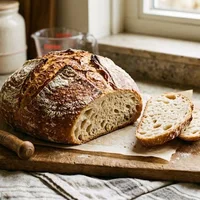
This rustic Dutch-style sourdough loaf has a crisp, deeply coloured crust and a soft, open crumb. Its long, cool final proof builds flavour while making it a satisfying loaf to share or enjoy over several days.
Ingredients
- 50 gactive sourdough starter (for the preferment)
- 200 mllukewarm water (for the preferment)
- 200 gwheat flour (for the preferment)
- 300 gactive sourdough starter (ripe and bubbly)
- 350 mllukewarm water
- 500 gwheat flour (type 550)
- 10 gfine sea salt
- for dustingrice flour
Instructions
- 1
Prepare the preferment
Stir 50 g active starter into 200 ml lukewarm water in a mixing bowl. Add 200 g wheat flour and mix briefly. Cover and leave at room temperature for 8 hours, or use an active starter that is already ready.
- 2
Mix the dough
Combine 300 g active sourdough starter with 350 ml lukewarm water in the stand mixer bowl. Add 500 g wheat flour (type 550) and 10 g salt.
- 3
Knead until elastic
Fit the dough hook and knead on medium speed for 8 to 10 minutes, until the dough is smooth and elastic and pulls away from the bowl.
- 4
Begin the rise
Spoon the dough out of the mixer bowl, shape it into a ball and place it in a lightly oiled mixing bowl. Cover with plastic wrap or a damp tea towel and leave at room temperature for 4 hours.
- 5
Fold the dough
Fold the dough once every hour: lift the bottom, stretch it out and fold it over the top. Turn the bowl a quarter turn and repeat four times. Do this a total of three times during the rise.
- 6
Shape the loaf
Lightly dust the work surface with flour. Remove the dough and gently shape it into a tight round or oval loaf. Put it in a proofing basket dusted with rice flour, or in a bowl lined with a tea towel.
- 7
Chill to proof
Cover the basket and refrigerate the dough for at least 8 hours and up to 16 hours for its final proof.
- 8
Heat the oven
Set a conventional oven to 250°C. Put a lidded cast-iron pot inside at the same time and let both heat thoroughly for at least 45 minutes.
- 9
Score the loaf
Remove the pot from the oven. Carefully turn the dough out of the basket onto parchment paper and score the top diagonally with a sharp knife or lame, making a cut about 1 cm deep. Lift the dough by the parchment and place it in the hot pot, then cover with the lid.
- 10
Bake until golden
Bake with the lid on for 20 minutes at 250°C. Remove the lid, reduce the oven to 220°C and bake for another 20 to 25 minutes, until the crust is deep golden brown.
- 11
Cool before slicing
Take the bread out of the pot and cool it on a rack for at least 1 hour before slicing.
What is rustic sourdough bread?
Sourdough is leavened with a culture of wild yeast and bacteria rather than relying on baker’s yeast alone. It has a long tradition across Europe, including the Netherlands, where everyday loaves are often made for a hearty table.
This version combines a wheat-flour dough with a slow, refrigerated final proof. Baking in a covered cast-iron pot helps create a crisp crust while the dough cooks through.
Nutrition and macros by portion
The nutrition label shows one serving as written: 3000 calories, 100g protein, 620g carbs, 12g fat.
| Portion | Adjustment | kcal | Protein | Carbs | Fat |
|---|---|---|---|---|---|
| Lighter | Thinner slices, vegetable toppings | 2100 kcal | 70g | 434g | 8g |
| This serving | As written | 3000 kcal | 100g | 620g | 12g |
| Hungry | Larger bread portion | 4500 kcal | 150g | 930g | 18g |
Most of the carbohydrates come from the wheat flour, while the starter contributes more flour and water to the dough. The flour and starter provide most of the protein; there is little added fat, and the sea salt is the main source of sodium. Serve a slice with a protein-rich topping and vegetables or soup for a more balanced plate.
The starter and flour
Ripe starter: use starter that is bubbly and active for the main dough, as specified in the recipe. The preferment is mixed separately and left for 8 hours, or the recipe allows an already-ready active starter to be used.
Type 550 flour: this wheat flour gives the loaf its sturdy structure and mild flavour. Rice flour is used on the basket to help the shaped dough release cleanly.
Build strength with folds
Hourly folds: lift and stretch the dough from the bottom, fold it over the top, then rotate the bowl and repeat four times. This gentle handling helps organise the dough without needing to knead it again by hand.
Keep to the schedule: the recipe calls for three folding sessions during the 4-hour room-temperature rise. Handle the dough gently so it retains the air developing inside.
Shape and chill
Tight shaping: make a round or oval loaf with a taut outer surface, but avoid pressing out the air. A well-shaped loaf is easier to transfer and tends to hold its form during baking.
Cold proof: refrigerate the covered loaf for at least 8 hours and up to 16 hours. The longer, cool rest develops flavour and prepares the dough for its final bake.
Create a crisp crust
Hot pot: preheat the cast-iron pot and its lid in the 250°C oven for at least 45 minutes. The pot is extremely hot, so use oven gloves and take care when loading the dough.
Covered bake: keep the lid on for the first 20 minutes, then remove it and lower the oven to 220°C. The uncovered time lets the crust deepen in colour; look for a deep golden-brown finish.
Let the crumb set
Cooling time: leave the loaf on a rack for at least 1 hour before cutting. Slicing sooner can compress the crumb and release steam before the inside has finished setting.
To serve: pair slices with soup, cheese or a spread, or use them for sandwiches. The substantial crust also makes the bread a good choice for toast.
Recipe notes & tips
- Use a kitchen scale to measure the flour, water and salt accurately.
- Check that the starter is ripe and bubbly before mixing the main dough.
- Keep the bowl covered during the rise to stop the dough surface drying out.
- Dust the proofing basket well with rice flour to help the dough release.
- Score the loaf just before it goes into the pot.
- Use oven gloves when handling the preheated cast-iron pot and lid.
Variations
- Seeded crust: scatter seeds over the loaf after scoring for a crunchy finish.
- Wholemeal flour: replace part of the wheat flour with wholemeal flour for a heartier loaf.
- Herb loaf: add dried herbs to the flour and salt before mixing.
- Olive version: fold chopped olives into the dough during a fold for savoury bursts.
- Cheese pairing: serve slices with a firm cheese for a simple snack.
Common mistakes to avoid
- Inactive starter: the dough may rise slowly; use starter that is ripe and bubbly.
- Skipping folds: the dough can lack strength; complete the three folding sessions during the rise.
- Loose shaping: the loaf may spread; shape it into a taut round or oval without pressing out the air.
- Underheating the pot: the crust may not develop as intended; preheat it for at least 45 minutes.
- Cutting too soon: the crumb can turn gummy; cool the loaf on a rack for at least 1 hour.
- Overbaking by colour alone: watch for a deep golden-brown crust during the final 20 to 25 minutes at 220°C.
How to store
Once completely cool, keep the loaf in a bread bag or wrapped in a clean tea towel at room temperature and use within a few days. Refresh slices in a toaster; for a larger piece, warm it briefly in the oven until the crust is crisp again.
Frequently asked questions
Can I use starter that is already ready instead of making the preferment?
The recipe allows an active starter that is already ready for the preferment stage. It also lists 300 g ripe, bubbly starter for the main dough.
How long should the final proof take?
Refrigerate the covered dough for at least 8 hours and up to 16 hours.
Do I need a banneton?
No. Use a proofing basket dusted with rice flour or a bowl lined with a tea towel.
Why bake the bread in a lidded pot?
The recipe uses the covered pot for the first part of baking, followed by an uncovered stage to brown the crust.
How do I know when it is ready?
After 20 minutes covered at 250°C, bake uncovered at 220°C for another 20 to 25 minutes, until the crust is deep golden brown.
How soon can I slice the loaf?
Cool it on a rack for at least 1 hour before slicing so the crumb has time to set.
Cook it from the original
This recipe comes from cookinglife.eu. Their page has the author’s own photos, notes and tips — the best place to cook it from.
Open the recipe on cookinglife.eu