
Rendang Daging
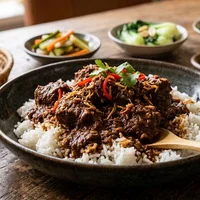
Rendang Daging is Indonesian beef slowly braised in coconut milk, toasted coconut and a fragrant spice paste. The multicooker makes the long, gentle cook convenient while the sauce reduces to a rich coating for tender beef.
Ingredients
- 1 kgbraising beef (such as chuck), cut into 4 cm cubes
- 2 cans (800 ml total)full-fat coconut milk
- 100 gtoasted grated coconut (kerisik)
- 2 tbsppalm sugar or brown sugar
- 1.5 tspsalt
- 2 tbspsunflower oil
- 4shallots, or 1 large onion, roughly chopped
- 5 clovesgarlic
- 3 cmfresh ginger, peeled
- 3 cmgalangal, peeled
- 4red Lombok chillies
- 2 tsp, or 2 cmturmeric powder, or fresh turmeric
- 3 stalkslemongrass, using the soft inner core for the paste and bruising the outer stalks for cooking
- 6kaffir lime leaves
Instructions
- 1
Make the paste
Put the shallots or onion, garlic, ginger, galangal, chillies, soft inner lemongrass and turmeric in a food processor or mortar. Blend or pound to a smooth paste.
- 2
Fry the paste
Set the multicooker to sauté, or heat a large pan over medium heat. Add the oil and fry the paste for 5–7 minutes, until fragrant and most of its moisture has evaporated.
- 3
Brown the beef
Add the beef and toss to coat all sides with the paste. Brown briefly for about 3 minutes.
- 4
Add the liquids
Stir in the coconut milk, bruised lemongrass stalks, kaffir lime leaves, toasted coconut, palm sugar and salt.
- 5
Slow-cook the rendang
Use the multicooker’s low slow-cook setting for 6–8 hours, or its stew or simmer setting. In a regular slow cooker, cook on low for 6–8 hours, until the beef falls apart easily and the sauce has mostly thickened.
- 6
Reduce the sauce
During the final 30–60 minutes, leave the lid partly open so more liquid can evaporate. Stir regularly to prevent sticking or burning; the rendang should be deeply coloured and fairly dry, not soupy.
- 7
Season and serve
Remove the lemongrass stalks and kaffir lime leaves, then taste and adjust the salt. Serve with steamed white rice and, if desired, atjar or boiled vegetables.
What is rendang daging?
Rendang daging is a rich Indonesian beef dish, associated especially with the Minangkabau people of West Sumatra. It is cooked slowly with coconut milk and an aromatic spice mixture until the beef is tender and the liquid has reduced.
Here, kerisik—grated coconut toasted until fragrant—helps give the sauce body and a nutty depth. The multicooker offers a steady, hands-off braise, while the final uncovered stage concentrates the flavours.
Nutrition and macros by portion
The nutrition label shows one serving as written: 1270 calories, 44g protein, 25g carbs, 108g fat.
| Portion | Adjustment | kcal | Protein | Carbs | Fat |
|---|---|---|---|---|---|
| Lighter | Serve with extra vegetables | 889 kcal | 31g | 18g | 76g |
| This serving | As written | 1270 kcal | 44g | 25g | 108g |
| Hungry | Add more steamed rice | 1905 kcal | 66g | 38g | 162g |
The beef supplies most of the protein, while coconut milk, toasted coconut and sunflower oil contribute much of the fat and energy. Sugar and the aromatics provide some carbohydrate; serve with a measured portion of rice and add vegetables to round out the plate.
Build the spice paste
Soft lemongrass: use the tender inner part in the paste, where it can blend smoothly with the shallots, garlic, ginger and galangal.
Chillies: four red Lombok chillies give the dish warmth; use fewer for a milder result or more if you prefer extra heat. Removing the seeds can also soften their impact.
Fry before braising
Cook the paste in oil for the full 5–7 minutes, stirring so it heats evenly. It is ready when it smells fragrant and looks less wet; this also helps the flavours carry through the long cook.
Coat the beef well and brown it briefly before adding the coconut milk. This step is about covering the cubes in paste and starting to colour them, rather than thoroughly searing every side.
Get the texture right
Tender beef: allow 6–8 hours on low, and use the fork test near the end. The meat should give easily and begin to fall apart.
Thick sauce: partially open the lid for the final 30–60 minutes and stir regularly. A finished rendang is deeply coloured and coated in reduced sauce rather than sitting in a pool of liquid.
Use the full cooking time
The recipe does not give a total time, but the slow-cook stage alone takes 6–8 hours, followed by a final 30–60 minutes with the lid partly open. Start early enough to allow the beef to become tender and the sauce to reduce.
Multicookers can differ in how they hold heat and release steam. If the beef is tender but the sauce is still loose, continue reducing it with the lid partly open, checking and stirring often.
Serve with rice and greens
Steamed white rice is a simple partner for the concentrated coconut and spice sauce. Atjar adds a tangy contrast, while boiled vegetables bring a fresh, mild accompaniment.
Remove the bruised lemongrass and lime leaves before serving. Their job is to perfume the braise, not to be eaten.
Recipe notes & tips
- Cut the beef into even 4 cm cubes so it cooks at a similar rate.
- Use the soft inner lemongrass for the paste and bruise the outer stalks before adding them to the pot.
- Stir the paste as it fries so it does not catch on the bottom of the multicooker.
- Keep the lid partly open only for the final 30–60 minutes, and stir regularly as the sauce thickens.
- Taste for salt after reducing, since the sauce becomes more concentrated as it cooks.
Variations
- Milder chillies: use fewer Lombok chillies for a gentler heat.
- More heat: add extra red Lombok chillies to the paste.
- Onion swap: use one large onion instead of the four shallots.
- Fresh turmeric: replace the turmeric powder with 2 cm fresh turmeric.
- Brown sugar: use it in place of palm sugar if that is what you have.
Common mistakes to avoid
- Skipping the paste-frying stage: cook it for 5–7 minutes until fragrant and less wet.
- Adding all the lemongrass to the paste: reserve the outer stalks to bruise and add during cooking.
- Stopping while the sauce is soupy: reduce it with the lid partly open for the final 30–60 minutes.
- Leaving the thickening sauce unstirred: stir regularly during the uncovered stage to prevent burning.
- Serving before the beef is tender: continue slow-cooking until it falls apart easily.
How to store
Cool leftovers promptly and keep them in an airtight container in the fridge for up to 3 days. Reheat gently in a saucepan until piping hot, adding a small splash of water if the sauce has become too thick.
Frequently asked questions
Can I make this in a regular slow cooker?
Yes. After frying the paste and briefly browning the beef, transfer everything to the slow cooker and cook on low for 6–8 hours. Reduce the sauce with the lid partly open for the final 30–60 minutes.
How do I know when the beef is ready?
It should be very tender and fall apart easily when pressed with a fork. If it is still firm, give it more time on the low setting.
Why should the sauce be fairly dry?
Rendang is meant to finish with concentrated, deeply coloured sauce coating the beef, rather than a thin stew-like liquid. The partly open lid allows excess moisture to evaporate.
Can I make the dish less spicy?
Use fewer than four chillies in the paste. You can also remove their seeds before blending or pounding.
What is kerisik?
Kerisik is toasted grated coconut. It adds a nutty flavour and helps thicken the rendang as it cooks.
What should I serve with rendang?
Serve it with steamed white rice. Atjar or boiled vegetables are optional sides that pair well with the rich sauce.
Cook it from the original
This recipe comes from cookinglife.eu. Their page has the author’s own photos, notes and tips — the best place to cook it from.
Open the recipe on cookinglife.eu