
Italian Ossobuco with Gremolata
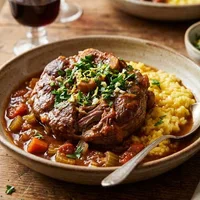
Italian ossobuco pairs veal shanks braised until tender with a bright parsley, lemon and garlic gremolata. It takes time, but most of the cooking is hands-off, making it a comforting meal for a relaxed dinner.
Ingredients
- 4, about 300–350 g eachveal shanks, membranes scored lightly around the edges
- to tastesalt and pepper
- 3 tbspflour
- 4 tbspolive oil
- 1 largeonion, finely chopped
- 2carrots, diced small
- 2 stalkscelery, diced small
- 4 clovesgarlic, finely chopped
- 2 tbsptomato paste
- 150 mldry white wine
- 400 gcanned peeled tomatoes
- 250 mlchicken stock
- 2 sprigsfresh thyme
- 1bay leaf
- 1 handfulfresh parsley, finely chopped, for the gremolata
- Zest of 1organic lemon, for the gremolata
- 1 clovegarlic, very finely chopped, for the gremolata
Instructions
- 1
Brown the shanks
Pat the veal shanks dry with kitchen paper and season generously with salt and pepper. Dust them lightly with flour and shake off any excess. Heat a multicooker on its sauté setting, or a large braising pan over medium-high heat. Add a drizzle of olive oil and brown the shanks for 3 to 4 minutes per side until golden. Lift them out and set aside.
- 2
Soften the vegetables
In the same pot, gently cook the onion, carrot, celery and garlic in olive oil over medium heat for about 5 minutes, until softened.
- 3
Cook the tomato paste
Stir in the tomato paste and cook for 1 minute, allowing it to begin to caramelise slightly.
- 4
Add the liquids
Pour in the white wine and let it reduce for 2 minutes. Add the canned tomatoes and chicken stock, then stir to combine.
- 5
Return the veal
Put the browned shanks back in the pot and add the thyme sprigs and bay leaf. Make sure the meat is mostly submerged in the sauce.
- 6
Braise until tender
Switch the multicooker to its stewing or slow-cook setting and simmer for at least 2.5 hours on low, or 1.5 hours on a higher steam setting. The meat should be tender and nearly falling off the bone. For a regular braising pan, cover and cook in the oven at 160°C for 2 hours on low heat.
- 7
Make gremolata
While the veal cooks, mix the finely chopped parsley, lemon zest and very finely chopped garlic in a small bowl. Set aside.
- 8
Season and serve
Remove the thyme and bay leaf. Taste the sauce and adjust the salt and pepper. Serve the ossobuco with risotto alla Milanese or polenta, spoon the sauce over it and scatter plenty of gremolata on each portion.
What is ossobuco?
Ossobuco is a northern Italian braise traditionally made with veal shanks cut across the bone. The name refers to the bone with its marrow-rich centre, which sits in the middle of each piece.
This version builds a savoury tomato and wine sauce around the slowly cooked veal, then finishes it with gremolata. That fresh lemon, parsley and garlic topping cuts through the richness just before serving.
Nutrition and macros by portion
The nutrition label shows one serving as written: 650 calories, 47g protein, 21g carbs, 38g fat.
| Portion | Adjustment | kcal | Protein | Carbs | Fat |
|---|---|---|---|---|---|
| Lighter | Less oil, extra vegetables | 455 kcal | 33g | 15g | 27g |
| This serving | As written | 650 kcal | 47g | 21g | 38g |
| Hungry | Larger shank portion | 975 kcal | 71g | 32g | 57g |
The veal provides most of the protein, while the flour, vegetables and tomatoes contribute carbohydrates. Olive oil carries much of the fat, with additional amounts coming from the veal. Serve it with a moderate portion of polenta or risotto and add vegetables alongside to round out the plate.
Getting the shanks ready
Scoring the membrane: Make light cuts around the edges of the shanks so they are less likely to curl as they brown and cook.
Drying and flouring: Pat the meat thoroughly dry before seasoning and dusting it lightly with flour. Shake away excess flour so it helps with browning without making the sauce pasty.
Building the braising sauce
Vegetable base: Give the onion, carrot, celery and garlic about 5 minutes to soften gently. This creates a sweet, aromatic foundation for the sauce.
Wine and tomato: Let the wine reduce for 2 minutes after deglazing, then stir in the tomatoes and stock. The tomato paste gets a minute of cooking first to develop its flavour.
How to tell when it is done
Tenderness: The shanks are ready when the meat is very soft and nearly falling off the bone. If they are still firm, continue the low braise until they reach that texture.
Sauce level: Keep the meat mostly submerged as it cooks. The covered oven method uses 160°C for 2 hours; the multicooker timings depend on the selected setting.
Why the gremolata goes on last
Fresh finish: Parsley, lemon zest and raw garlic are mixed together without cooking. Their bright, sharp flavour contrasts with the long-cooked meat and sauce.
Timing: Prepare the gremolata while the shanks braise, but keep it aside until serving. Scatter it over each portion at the end rather than stirring it into the pot.
What to serve with ossobuco
Classic pairing: Risotto alla Milanese is the suggested accompaniment, and its creamy texture works well with the braising sauce.
Another option: Polenta also makes a useful base for catching the sauce. Spoon the sauce over the veal and finish each serving with plenty of gremolata.
Recipe notes & tips
- Brown the shanks in batches if needed so they have room to colour rather than steam.
- Use a pot with a close-fitting lid for the oven braise.
- Keep the flour coating light and shake off the excess before browning.
- Check that the shanks remain mostly submerged in the sauce during cooking.
- Make the gremolata finely chopped so its ingredients are evenly distributed over each serving.
Variations
- Use polenta: Serve the shanks over polenta instead of risotto alla Milanese.
- Add orange zest: Replace some of the lemon zest with orange zest for a softer citrus note.
- Use beef shanks: Swap in beef shanks, allowing for a longer braise if they need more time to become tender.
- Change the herbs: Use a little extra parsley in the gremolata for a greener finish.
- Make it stovetop: Braise covered in a large pan over low heat until the meat is nearly falling off the bone.
Common mistakes to avoid
- Wet shanks: Pat them dry before seasoning so they brown properly.
- Too much flour: Shake off the excess to avoid a heavy coating and thick, pasty sauce.
- Crowded browning: Brown the shanks in batches if they do not fit in a single layer.
- Rushed braising: Keep cooking until the meat is tender rather than relying only on the clock.
- Cooking the gremolata: Add it at the end so the parsley and lemon stay fresh and aromatic.
How to store
Cool leftovers and refrigerate them in a covered container for up to 3 days. Reheat gently in a covered pan with the sauce until piping hot; keep any leftover gremolata separate and add it after reheating.
Frequently asked questions
Can I make ossobuco without a multicooker?
Yes. Use a regular braising pan, cover it and cook in the oven at 160°C for 2 hours on low heat, as described in the method.
How do I know the veal is tender enough?
The meat should be very tender and nearly falling off the bone. If it is still firm, continue cooking until it reaches that point.
Can I prepare the gremolata ahead?
You can chop and mix it while the shanks cook. Keep it aside and scatter it over the servings just before eating.
What can I serve instead of risotto alla Milanese?
Polenta is the other serving option given in the recipe and works well for catching the sauce.
Why score the membrane around the shanks?
Light scoring helps prevent the shanks from curling during cooking.
Cook it from the original
This recipe comes from cookinglife.eu. Their page has the author’s own photos, notes and tips — the best place to cook it from.
Open the recipe on cookinglife.eu