
Classic Draadjesvlees
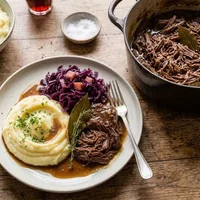
Classic draadjesvlees is Dutch beef slowly braised until it can be pulled into soft strands and stirred back into its savoury cooking liquid. It takes patience rather than complicated preparation, and makes a comforting meal with mashed potatoes and red cabbage.
Ingredients
- 1 kgbeef shank or braising beef
- 2 tbspsunflower oil
- 2onions, chopped
- 3garlic cloves, minced
- 150 mlred wine
- 400 mlbeef stock
- 2 tbspred wine vinegar
- 3bay leaves
- 4cloves
- 3 sprigsfresh thyme
- to tastesalt and freshly ground black pepper
Instructions
- 1
Brown the beef
Pat the beef dry with kitchen paper and season generously all over with salt and pepper. Heat a splash of sunflower oil in a multicooker or heavy casserole over high heat. Brown the beef on every side, about 2 to 3 minutes per side, then take it out of the pan and set it aside.
- 2
Cook the aromatics
Lower the heat and gently cook the chopped onion in the fat left in the pan until translucent and lightly golden, about 5 minutes. Add the minced garlic and cook for another minute.
- 3
Build the braise
Pour in the red wine and scrape up the browned bits from the base of the pan. Add the beef stock, red wine vinegar, bay leaves, cloves and thyme sprigs, then stir to combine.
- 4
Return the beef
Put the beef back into the pan, making sure it is at least halfway submerged in the liquid. Bring the liquid to a simmer.
- 5
Braise until tender
For a multicooker, select the slow-cook setting and cook on low for 6 to 8 hours. For a casserole on the hob, cover it and cook over the lowest possible heat for at least 3 to 4 hours, turning the meat occasionally.
- 6
Shred and serve
The beef is ready when two forks pull it apart effortlessly. Remove the bay leaves, cloves and thyme sprigs, then shred the meat with two forks and stir it into the braising liquid. Taste and add salt, pepper or a splash of vinegar if needed; serve straight away with mashed potatoes and red cabbage.
What is draadjesvlees?
Draadjesvlees is a Dutch slow-braised beef dish; its name refers to the threads the meat separates into after a long, gentle cook. It is home-style comfort food, usually served with familiar sides such as mashed potatoes and red cabbage.
This version combines beef, onion, garlic, wine, stock and vinegar in one pot. A slow braise gives the connective tissue time to soften, while the cooking liquid seasons the shredded meat.
Nutrition and macros by portion
The nutrition label shows one serving as written: 600 calories, 52g protein, 5g carbs, 39g fat.
| Portion | Adjustment | kcal | Protein | Carbs | Fat |
|---|---|---|---|---|---|
| Lighter | Trim visible beef fat | 420 kcal | 36g | 4g | 27g |
| This serving | As written | 600 kcal | 52g | 5g | 39g |
| Hungry | Serve with extra potatoes | 900 kcal | 78g | 8g | 59g |
The beef supplies most of the protein and a substantial share of the fat, while the sunflower oil adds further fat. The small amount of carbohydrate comes mainly from the onions, garlic and wine; serving the beef with mashed potatoes adds most of the plate’s starch. Balance the meal with red cabbage alongside the potatoes and beef.
Choose a braising cut
Beef shank: this cut has connective tissue that softens during prolonged cooking and helps give the braising liquid body.
Braising beef: this is a suitable alternative, but cuts can vary, so use the fork test rather than relying on the clock alone.
Build flavour before braising
Browning: dry the beef first and give each side time to develop colour. Those browned bits left in the pan become part of the sauce when the wine is added.
Aromatics: soften the onions before adding the garlic, which needs only a minute so it does not burn. Scrape the pan well as you pour in the wine.
Keep the heat gentle
Liquid level: the beef should be at least halfway submerged, not entirely covered. The covered pan traps heat and moisture as the meat cooks.
Low simmer: keep the casserole at the lowest possible heat, or use the multicooker’s low slow-cook setting. Turn the meat occasionally when cooking it on the hob.
Know when it is ready
Tenderness: test the thickest part with two forks. The meat should pull apart effortlessly; if it resists, continue cooking gently and test again.
Finish: remove the bay leaves, cloves and thyme sprigs before shredding. Stir the strands through the liquid and taste for salt, pepper and vinegar.
Serve it simply
Mashed potatoes: they make a natural partner for the rich cooking liquid and turn it into a satisfying plate.
Red cabbage: its sweet-sour flavour provides contrast to the savoury beef. Serve both alongside the meat, as suggested in the recipe.
Recipe notes & tips
- Dry the beef well before seasoning so it browns rather than steams.
- Brown the meat in batches if the pan is too crowded to colour it properly.
- Keep the casserole covered during the hob braise and use the lowest heat you can maintain.
- Turn the beef occasionally during the casserole method so it cooks evenly in the liquid.
- Remove all the whole spices and herb stems before shredding and serving.
Variations
- Use beef shank: its connective tissue softens during the long braise.
- Use braising beef: choose a suitable slow-cooking cut if shank is unavailable.
- Adjust the acidity: add a splash more red wine vinegar at the end if you want a sharper finish.
- Serve with mash: spoon the shredded beef and some braising liquid over mashed potatoes.
- Add red cabbage: serve it alongside for the classic combination suggested with the dish.
Common mistakes to avoid
- Wet beef: pat it dry before browning so the surface can colour well.
- Crowded pan: the meat may steam instead of brown; work in batches if needed.
- High braising heat: a strong boil can toughen the meat; keep the liquid at a gentle simmer.
- Rushing the cook: continue braising if the beef does not pull apart easily with two forks.
- Leaving whole seasonings in: remove the bay leaves, cloves and thyme sprigs before shredding.
How to store
Refrigerate leftover beef and braising liquid in a covered container and use within 3 days. Reheat gently in a covered pan until piping hot, adding a little water if the liquid has thickened too much.
Frequently asked questions
Can I make draadjesvlees in a multicooker?
Yes. Use the slow-cook setting on low for 6 to 8 hours, as specified in the method.
How long does it take in a casserole on the hob?
Allow at least 3 to 4 hours over the lowest possible heat. The beef is done when it pulls apart effortlessly with two forks.
Should the beef be fully covered by liquid?
No. The recipe calls for the meat to be at least halfway submerged.
Can I use a different cut of beef?
The recipe allows either beef shank or braising beef. Whichever you use, cook it until it is easy to pull apart.
What should I serve with draadjesvlees?
Serve it with mashed potatoes and red cabbage, as suggested in the recipe.
Cook it from the original
This recipe comes from cookinglife.eu. Their page has the author’s own photos, notes and tips — the best place to cook it from.
Open the recipe on cookinglife.eu