
German Steak
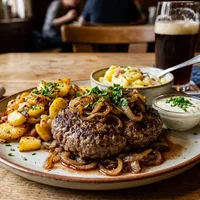
German steak is a pan-fried minced-beef patty, browned until crisp and served with a quick onion and beef-stock sauce. It is a straightforward, comforting meal that pairs well with mashed potatoes or braised red cabbage.
Ingredients
- 600 gminced beef
- 1egg
- 2 tbspbreadcrumbs
- 1 tspstrong mustard
- 1 tspWorcestershire sauce
- to tastesalt and freshly ground black pepper
- 1 largeonion, finely chopped
- 150 mlbeef stock
- 30 g, plus extra for fryingcold butter
Instructions
- 1
Mix the patties
Combine the minced beef, egg, breadcrumbs, mustard, Worcestershire sauce, salt and pepper in a bowl. Knead until evenly mixed, then divide into 4 equal portions. With damp hands, shape each portion into a flat oval patty about 2 cm thick.
- 2
Brown the patties
Heat a frying pan over medium heat and add a knob of butter. When it begins to sizzle gently, add the patties. Fry for 4 to 5 minutes on the first side until golden brown, then turn carefully and cook for another 4 minutes. Remove the patties and keep them covered with aluminium foil.
- 3
Cook the onion
In the same pan and fat, cook the chopped onion over low heat for about 5 to 6 minutes, stirring regularly, until translucent.
- 4
Make the sauce
Add the beef stock and simmer gently for 3 minutes. Stir in the cold butter until the sauce looks glossy, then season with salt and pepper.
- 5
Warm and serve
Return the patties to the pan and warm them through in the sauce for 2 minutes. Serve immediately with mashed potatoes or braised red cabbage.
What is German steak?
German steak is a minced-meat patty, rather than a whole cut of steak, cooked in a frying pan and often served with a savoury sauce. It belongs to the family of German minced-meat dishes, with familiar variations such as Frikadellen.
This version keeps the mixture simple and adds a quick pan sauce made from onion, beef stock and butter. The patties brown in the pan before they are briefly warmed in the sauce.
Nutrition and macros by portion
The nutrition label shows one serving as written: 425 calories, 30g protein, 6g carbs, 32g fat.
| Portion | Adjustment | kcal | Protein | Carbs | Fat |
|---|---|---|---|---|---|
| Lighter | Use less butter | 298 kcal | 21g | 4g | 22g |
| This serving | As written | 425 kcal | 30g | 6g | 32g |
| Hungry | Add extra potatoes | 638 kcal | 45g | 9g | 48g |
The beef supplies most of the protein and much of the fat, while butter adds further fat. Breadcrumbs and the small amount of onion contribute most of the carbohydrates. For a more balanced plate, pair one patty with vegetables and a moderate serving of mashed potatoes or red cabbage.
What goes into the mixture?
Beef: minced beef gives the patties their savoury flavour and substantial texture. The exact fat content can affect how much the patties shrink and how much fat remains in the pan.
Binder and seasoning: egg and breadcrumbs help the mixture hold together, while mustard and Worcestershire sauce add a little sharpness and depth. Salt and pepper bring the flavours into balance.
Shape evenly for even cooking
Patty size: divide the mixture into 4 equal portions and shape them to about 2 cm thick. Even thickness helps the patties cook at a similar rate.
Damp hands: wet your hands before shaping to make the mixture less sticky. Handle it enough to form the patties, but avoid packing it too firmly.
Build a golden crust
Hot butter: wait until the butter sizzles lightly before adding the patties. This gives the meat a chance to brown rather than sit in a cool pan.
First side: leave the patties to cook for 4 to 5 minutes before turning. A golden-brown surface is the cue to turn them carefully; cook the second side for another 4 minutes.
Keep the sauce smooth
Onion: cook it slowly over low heat for 5 to 6 minutes, stirring regularly, until translucent. Gentle cooking softens it without rushing the sauce.
Cold butter: stir it in after the stock has simmered for 3 minutes. It gives the sauce a glossy finish; avoid boiling it hard after adding the butter.
Timing and doneness
The recipe gives cooking times for both sides of the patties, followed by a short 2-minute warm-through in the sauce. Keep the onion stage gentle and allow it the full 5 to 6 minutes to soften.
Patties should be cooked through before serving. If unsure, check the centre of the thickest patty with a food thermometer and follow the safe temperature guidance for minced beef in your area.
What to serve alongside
Classic sides: mashed potatoes are a natural match for the onion and beef-stock sauce, while braised red cabbage brings a sweet-tart contrast. Spoon the sauce over the patties and any potatoes.
A simple green vegetable or a crisp salad can add freshness to the plate. Serve the patties as soon as they have warmed through in the sauce.
Recipe notes & tips
- Use damp hands when shaping the patties to reduce sticking.
- Make the patties evenly thick so they cook at a similar pace.
- Wait for the butter to sizzle gently before adding the meat.
- Turn the patties carefully to help keep them intact.
- Stir the onion regularly while it softens over low heat.
- Add the cold butter after the stock has simmered, then avoid a vigorous boil.
Variations
- Herb finish: stir chopped parsley into the sauce just before serving.
- More mustard: add a little extra strong mustard to the meat mixture for a sharper flavour.
- Mushroom sauce: cook sliced mushrooms with the onion until softened.
- Peppery sauce: add extra freshly ground black pepper to the finished sauce.
- Lighter side: serve with braised red cabbage and steamed vegetables instead of mashed potatoes.
Common mistakes to avoid
- Crowding the pan: the patties may brown unevenly; cook in batches if they do not fit with space between them.
- Turning too soon: the crust may tear; wait until the first side is well browned before turning.
- Cooking the onion too quickly: it can brown before softening; keep the heat low and stir regularly.
- Boiling the sauce hard: the butter may not blend in smoothly; keep the stock at a gentle simmer.
- Packing the patties tightly: they can become dense; shape them gently until they hold together.
How to store
Refrigerate leftover patties and sauce in a covered container for up to 3 days. Reheat gently in a pan with the sauce until piping hot throughout, adding a splash of stock or water if it has thickened.
Frequently asked questions
Can I make the patties ahead?
You can shape them ahead and keep them covered in the refrigerator until ready to cook. Cook and sauce them just before serving for the best crust.
How do I know when the patties are cooked?
Use the stated pan times as a guide, then check that the centres are cooked through. A food thermometer can help; follow the safe temperature guidance for minced beef where you live.
Can I use a different type of mince?
The recipe is written for minced beef. Other mince may cook and brown differently, so adjust the cooking as needed and make sure the patties are cooked through.
Why are my patties falling apart?
The mixture may need more even mixing, or the patties may have been turned before a crust formed. Mix until uniform, shape gently and wait for the first side to brown before turning.
Can I freeze German steak?
Cooked patties can be frozen with the sauce in a freezer-safe container. Thaw in the refrigerator and reheat gently until piping hot throughout.
What can I serve instead of mashed potatoes?
Braised red cabbage is suggested in the recipe. Steamed vegetables or a salad also work well alongside the patties and sauce.
Cook it from the original
This recipe comes from cookinglife.eu. Their page has the author’s own photos, notes and tips — the best place to cook it from.
Open the recipe on cookinglife.eu