
Thai vegetable wok with curry sauce
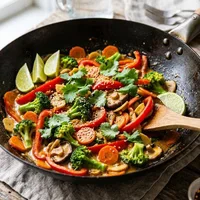
This Thai-inspired vegetable wok pairs crisp vegetables with a creamy coconut curry sauce, served over jasmine rice. It is a quick way to make a colourful, filling meal with a bright finish of lime and fresh coriander.
Ingredients
- 2 tbspred curry paste
- 400 mlcoconut milk (full-fat can)
- 1red pepper
- 150 gbroccoli florets
- 1 largecarrot
- 100 gshiitake mushrooms
- 3 clovesgarlic
- 2 cmfresh ginger
- 2 tbspsoy sauce
- 1 tbspfish sauce (or extra soy sauce for a vegetarian version)
- Juice of 1lime
- 1 tbspcoconut oil
- 300 gjasmine rice
- 1 handfulfresh coriander
- 1 tbsptoasted sesame seeds
- To serveextra lime wedges
Instructions
- 1
Prepare vegetables
Slice the pepper into strips, divide the broccoli into small florets, cut the carrot into thin diagonal slices and quarter the shiitake mushrooms. Finely chop the garlic and ginger.
- 2
Cook rice
Cook the jasmine rice according to the packet instructions and keep it warm.
- 3
Heat the wok
Set a wok over high heat. Add 1 tablespoon of coconut oil and wait until it is very hot.
- 4
Fry aromatics
Add the garlic and ginger and stir-fry for 30 seconds. Add the curry paste and fry for a further minute, until fragrant.
- 5
Cook firm vegetables
Add the carrot and broccoli and stir-fry over high heat for 3 minutes, stirring continuously so they cook evenly.
- 6
Add remaining vegetables
Add the pepper and shiitake mushrooms and stir-fry for another 2 minutes.
- 7
Make the sauce
Pour in the coconut milk and stir well. Mix in the soy sauce, fish sauce and lime juice, then simmer gently for 2 to 3 minutes until the sauce thickens slightly.
- 8
Adjust seasoning
Taste the sauce and add more fish sauce or lime juice if needed.
- 9
Serve the wok
Serve the stir-fry straight away over the jasmine rice. Finish with fresh coriander, toasted sesame seeds and lime wedges.
What is a Thai vegetable wok?
This is a quick stir-fry served with rice, combining vegetables with a curry-paste and coconut-milk sauce. It draws on flavours common in Thai cooking, including chilli-rich curry paste, fish sauce and lime.
Here, carrots and broccoli go into the wok first, while the pepper and shiitake follow later. That order helps the vegetables cook through while keeping some bite.
Nutrition and macros by portion
The nutrition label shows one serving as written: 590 calories, 12g protein, 73g carbs, 25g fat.
| Portion | Adjustment | kcal | Protein | Carbs | Fat |
|---|---|---|---|---|---|
| Lighter | Use less coconut milk | 413 kcal | 8g | 51g | 18g |
| This serving | As written | 590 kcal | 12g | 73g | 25g |
| Hungry | Add more jasmine rice | 885 kcal | 18g | 110g | 38g |
The jasmine rice supplies most of the carbohydrates, while coconut milk and coconut oil contribute much of the fat. The vegetables and rice provide some protein, with smaller amounts from the sauces and sesame seeds. For a balanced plate, serve a generous share of the vegetables alongside the rice, or add a source of protein such as tofu.
Build flavour in the wok
Aromatics: garlic and ginger get a brief fry before the curry paste goes in. Keep them moving and add the paste as soon as they smell fragrant, rather than letting the garlic brown.
Hot pan: heat the wok and oil well before adding the vegetables. A hot surface helps them stir-fry rather than sit and soften in their own moisture.
Choose and prepare the vegetables
Even cuts: thin carrot slices and small broccoli florets cook quickly, while strips of pepper and quartered mushrooms retain a distinct shape.
Flexible choices: shiitake bring a savoury, earthy note, but the key is to cut any substitutes to a similar size so they cook at roughly the same pace.
Get the sauce right
Coconut milk: full-fat coconut milk gives the sauce its rich, creamy body. Once it is added, keep the heat gentle so the sauce simmers without boiling hard.
Balance: curry paste brings spice, soy and fish sauce add savouriness, and lime lifts the richness. Taste at the end and adjust with a little extra fish sauce or lime juice.
Keep the vegetables crisp
Stirring: keep the vegetables moving over high heat, especially during the first few minutes. This promotes even cooking and helps preserve their texture.
Doneness: the broccoli and carrot should be tender enough to eat but still offer a little resistance. The pepper and mushrooms need only their stated 2 minutes before the sauce goes in.
Serve with rice and toppings
Jasmine rice: cook it separately according to its packet, then keep it warm while the wok comes together. Spoon the saucy vegetables over the rice so it can catch the coconut curry.
Fresh finish: coriander, sesame seeds and lime wedges add contrasting freshness, nuttiness and acidity. Add them just before serving.
Recipe notes & tips
- Prepare and cut all the vegetables before heating the wok, as the cooking moves quickly.
- Use a large wok so the vegetables have room to stir-fry rather than steam.
- Stir the curry paste constantly for its minute in the pan to bring out its aroma without scorching it.
- Keep the coconut milk at a gentle simmer so the sauce thickens without boiling vigorously.
- Taste after the sauce has simmered, then adjust with lime or fish sauce in small additions.
- Toast the sesame seeds ahead of time so they are ready to scatter over the finished dish.
Variations
- Make it vegetarian: replace the fish sauce with the same amount of extra soy sauce.
- Change the vegetables: use another quick-cooking vegetable in place of the pepper or shiitake.
- Add tofu: stir in cubes of browned tofu with the coconut milk for a more substantial version.
- Increase the heat: add a little extra red curry paste, tasting as you go.
- Use brown rice: serve with cooked brown rice instead of jasmine rice, following its packet timings.
Common mistakes to avoid
- Crowding the wok: the vegetables may steam instead of stir-fry; use a roomy wok and keep them moving.
- Burning the garlic: it can turn bitter quickly; stir constantly and add the curry paste after 30 seconds.
- Overcooking the vegetables: they lose their bite; follow the staged cooking times and simmer briefly.
- Boiling the sauce hard: it can become uneven; lower the heat and keep it at a gentle simmer.
- Adding too much seasoning at once: curry pastes and sauces vary; taste first and adjust gradually.
How to store
Cool leftovers promptly and refrigerate in a covered container for up to 3 days. Reheat until piping hot in a pan over a gentle heat, adding a splash of water if the sauce has thickened; rice should also be reheated until piping hot.
Frequently asked questions
Can I make this without fish sauce?
Yes. Use an extra tablespoon of soy sauce in place of the fish sauce, as suggested in the ingredient list.
How spicy is the curry sauce?
Its heat depends on the red curry paste you use. Start with the stated amount and taste the sauce before adding any more.
Can I use light coconut milk?
You can, though the sauce will be less rich and may be thinner. Simmer it gently until it reaches the consistency you like.
Can I prepare the vegetables in advance?
Yes. Cut them ahead and keep them covered in the fridge, then cook the wok shortly before serving for the best texture.
What should I serve with the vegetable wok?
Jasmine rice is the suggested accompaniment. Finish with coriander, toasted sesame seeds and lime wedges.
Cook it from the original
This recipe comes from cookinglife.eu. Their page has the author’s own photos, notes and tips — the best place to cook it from.
Open the recipe on cookinglife.eu