
Lemon Pistachio Cake with Milk Soak and Cream Cheese Frosting Recipe
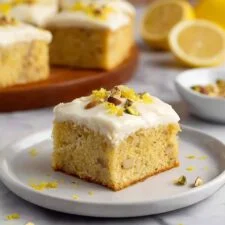
A soft lemon cake with finely chopped pistachios is soaked in a sweet, tangy milk mixture and finished with cream cheese frosting. It makes a celebratory centrepiece, but is just as suited to an afternoon slice with tea or coffee.
Ingredients
- 140 g (1 cup)shelled pistachios
- 281 g (2¼ cups)plain flour, spooned and levelled
- 1½ tspbaking powder
- ¼ tspbicarbonate of soda
- ½ tspsalt
- 300 g (1½ cups)granulated white sugar
- 30 g (3 tbsp), about 3 large lemonslemon zest
- 140 g (10 tbsp), softenedunsalted butter
- 3, at room temperatureeggs
- 15 ml (1 tbsp)vanilla extract
- 240 ml (1 cup), at room temperaturebuttermilk
- 120 ml (½ cup)pistachio milk
- 150 g (½ cup)sweetened condensed milk
- 5 g (½ tbsp), about ½ a large lemonlemon zest
- ½ tspvanilla extract
- 70 g (½ cup)shelled pistachios
- 224 g (1 cup), softenedunsalted butter
- 226 g (8 oz), coldcream cheese
- 260 g (2 cups)icing sugar
- To taste, optionallemon curd, for swirling into the frosting
Instructions
- 1
Chop the pistachios
Pulse 140 g of shelled pistachios in a food processor until finely chopped but not powdered, then set aside. Keep 70 g aside for the frosting.
- 2
Make the batter
Whisk the flour, baking powder, bicarbonate of soda and salt together in a bowl. In a separate large bowl, beat 140 g softened butter with the sugar and 30 g lemon zest until light and fluffy. Beat in the eggs one at a time, then stir in 15 ml vanilla extract. Add the flour mixture and buttermilk alternately, starting and finishing with the flour mixture. Gently fold in the chopped pistachios.
- 3
Bake the cake
Heat the oven to 175°C (350°F). Pour the batter into a greased and lined 23 cm (9-inch) round cake tin. Bake for 40–45 minutes, until a skewer inserted in the centre comes out clean. Leave the cake in the tin for 10 minutes, then transfer it to a wire rack.
- 4
Mix the milk soak
Whisk the pistachio milk, condensed milk, 5 g lemon zest and ½ tsp vanilla extract in a small bowl. Once the cake has cooled slightly but is still warm, pierce it all over with a skewer or fork. Slowly pour the soak over the cake and let it absorb.
- 5
Make the frosting
If using pistachios in the frosting, finely chop the reserved 70 g in a food processor. Beat 224 g softened butter with the cold cream cheese until smooth and creamy. Gradually beat in the icing sugar until fluffy, then fold in the chopped pistachios. If desired, gently swirl in lemon curd.
- 6
Frost and serve
When the cake is fully cooled and has absorbed the soak, spread the frosting evenly over the top and sides. Garnish with extra chopped pistachios or a little lemon zest if desired. Chill briefly to set the frosting before serving.
What is lemon pistachio cake?
This American-style cake pairs citrus zest with the rich, gently sweet flavour of pistachios. A milk soak adds extra moisture, while cream cheese frosting brings a tangy finish.
The recipe combines familiar cake-making techniques with a soaked-cake finish. Buttermilk gives the batter a tender crumb, and the chopped nuts add texture throughout.
Nutrition and macros by portion
The nutrition label shows one serving as written: 650 calories, 10g protein, 69g carbs, 39g fat.
| Portion | Adjustment | kcal | Protein | Carbs | Fat |
|---|---|---|---|---|---|
| Lighter | Smaller frosted slice | 455 kcal | 7g | 48g | 27g |
| This serving | As written | 650 kcal | 10g | 69g | 39g |
| Hungry | Larger cake slice | 975 kcal | 15g | 104g | 59g |
Flour and sugar provide most of the carbohydrates, while butter, cream cheese and pistachios contribute much of the fat; eggs, dairy and pistachios provide some protein. Balance a slice with fresh fruit, or serve a smaller piece after a meal with a source of protein.
The flavour starts with zest
Lemon zest: Rub it into the sugar with the butter as directed; this distributes the citrus flavour through the cake batter.
Pistachios: Chop them finely enough to mix through the crumb, but stop before they become a paste. The separate portion can be chopped for the frosting or kept for garnish.
Getting a tender crumb
Creaming: Beat the butter, sugar and zest until light and fluffy before adding the eggs. Add the eggs one at a time and beat each in well.
Alternating additions: Add the flour mixture and buttermilk in turns, beginning and ending with flour. Fold the chopped pistachios in gently so the batter stays light.
How to soak the cake
Warm, not hot: Let the cake cool slightly after baking, while it is still warm, before piercing it and adding the milk mixture. This gives the soak access to the crumb without pouring it over a freshly baked cake.
Slow pouring: Add the soak gradually and allow it to absorb. The cake is ready for frosting only after it has cooled fully.
Checking the bake
Timing: Begin checking at 40 minutes, the start of the recipe’s 40–45-minute baking window. The cake is done when a skewer inserted in the centre comes out clean.
Cooling: Leave it in the tin for 10 minutes before moving it to a wire rack. Handle the warm cake carefully, especially once it has been pierced and soaked.
Frosting and serving
Cream cheese frosting: Beat the butter and cold cream cheese until smooth, then add the icing sugar gradually. Fold in the optional chopped pistachios and swirl in lemon curd if you want more lemon flavour.
Serving: A short chill helps the frosting set before slicing. Serve as it is, or alongside tea, coffee or fresh berries.
Recipe notes & tips
- Measure flour by spooning it into the measuring cup and levelling the top, rather than packing it down.
- Bring the eggs and buttermilk to room temperature before mixing the batter.
- Pulse the pistachios in short bursts to avoid turning them into a paste.
- Pour the milk soak slowly so it has time to absorb into the pierced cake.
- Let the cake cool completely before spreading on the frosting.
- Chill the frosted cake briefly before cutting for neater slices.
Variations
- More lemon: Swirl lemon curd into the frosting for an extra citrus note.
- Pistachio garnish: Sprinkle chopped pistachios over the frosted cake just before serving.
- Plain frosting: Leave the pistachios out of the frosting and use them only in the cake.
- Citrus finish: Add a little extra lemon zest on top as the recipe suggests.
- Simple topping: Frost just the top of the cake if you prefer less frosting on each slice.
Common mistakes to avoid
- Overprocessing pistachios: Stop when they are finely chopped so they do not turn into a paste.
- Adding eggs all at once: Beat them in one at a time to help the batter combine evenly.
- Overmixing the batter: Fold in the nuts gently and stop once they are distributed.
- Soaking a cold cake: Add the milk mixture when the cake has cooled slightly but is still warm.
- Frosting too soon: Wait until the soaked cake is fully cooled so the frosting does not soften.
- Skipping the skewer check: Test the centre at 40 minutes and bake for up to 45 minutes if needed.
How to store
Keep the frosted cake covered in the refrigerator and eat within 3 days. Let slices sit briefly at room temperature before serving; avoid warming the frosted cake, as the frosting may soften.
Frequently asked questions
Can I make the cake ahead?
Yes. Bake and soak it, then let it cool fully before covering and refrigerating. Add the frosting when convenient, and chill briefly before serving.
Can I leave out the pistachios in the frosting?
Yes. The recipe makes the frosting pistachios optional; fold them in for extra texture or leave them out.
When should I pour on the milk soak?
Pour it over the cake after it has cooled slightly but is still warm. Pierce the cake all over first so the soak can spread through the crumb.
How do I know when the cake is baked?
Bake for 40–45 minutes at 175°C and insert a skewer into the centre. It should come out clean.
Does the cake need chilling?
Yes, briefly chill it after frosting to help the frosting set. Store leftovers covered in the refrigerator.
Can I skip the lemon curd?
Yes. Lemon curd is optional, so the cake can be finished with the cream cheese frosting without it.
Cook it from the original
This recipe comes from busyrecipe.com. Their page has the author’s own photos, notes and tips — the best place to cook it from.
Open the recipe on busyrecipe.com