
Schweinshaxe met wheat beer
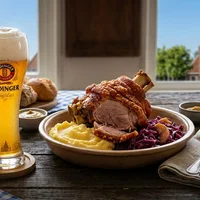
Schweinshaxe is a Bavarian-style roasted pork knuckle, cooked slowly until the meat is tender and finished at high heat for crisp, crackling skin. Wheat beer, vegetables and stock make a savoury jus to serve alongside.
Ingredients
- 2 (about 1 kg each)pork knuckles, with skin
- 2 tsp, plus extra for the skincoarse sea salt
- 1 tspfreshly ground black pepper
- 1 tspcaraway seeds
- 3garlic cloves, finely chopped
- 1 largeonion, coarsely chopped
- 1carrot, diced
- 2celery stalks, chopped
- 300 mlwheat beer
- 200 mlchicken stock
- 1 tbspsunflower or peanut oil
Instructions
- 1
Season the knuckles
Score the skin in a diamond pattern, cutting through to the fat without cutting into the meat. Rub the knuckles all over with the salt, pepper, caraway and garlic, then leave them at room temperature for 1 hour.
- 2
Prepare the roasting dish
Preheat the oven to 160°C. Put the onion, carrot and celery in the bottom of a deep roasting dish, then pour over 300 ml wheat beer and 200 ml chicken stock.
- 3
Brown the pork
Heat a splash of oil in a large frying pan over high heat. Brown the knuckles all over, including the sides, until golden; this takes about 8 minutes.
- 4
Roast the knuckles
Set the knuckles on the vegetables in the roasting dish and cook in the oven for 2.5 hours. Baste them with the pan juices every 30 minutes.
- 5
Crisp the skin
After 2.5 hours, raise the oven temperature to 220°C. Brush a thin layer of salt over the skin and return the dish to the oven for 20 to 25 minutes, until the skin is completely crisp and golden. Watch it closely.
- 6
Rest and make jus
Take the knuckles out of the oven and transfer them to a cutting board. Rest for 10 minutes. Meanwhile, strain the roasting juices into a saucepan and reduce over medium heat to a light jus; season with salt and pepper.
- 7
Serve the pork
Serve the Schweinshaxe on a large plate with the beer jus on the side. It goes well with potato knödel or sauerkraut; serve with cold wheat beer.
What is Schweinshaxe?
Schweinshaxe is a German roasted pork knuckle, especially associated with Bavarian cooking and beer-hall meals. It is prized for the contrast between tender meat and deeply browned, crisp skin.
This version builds flavour with caraway, garlic and a bed of vegetables, while wheat beer and stock become a simple roasting jus. A slow roast followed by a hot finish helps deliver both tenderness and crackling.
Nutrition and macros by portion
The nutrition label shows one serving as written: 1200 calories, 95g protein, 15g carbs, 80g fat.
| Portion | Adjustment | kcal | Protein | Carbs | Fat |
|---|---|---|---|---|---|
| Lighter | Serve with extra sauerkraut | 840 kcal | 67g | 11g | 56g |
| This serving | As written | 1200 kcal | 95g | 15g | 80g |
| Hungry | Add potato knödel | 1800 kcal | 143g | 23g | 120g |
The pork knuckles provide most of the protein and fat, while the vegetables and beer contribute a smaller amount of carbohydrate. The jus also carries flavour and some fat from the roasting pan. Serve with sauerkraut and a measured portion of potato knödel to balance the plate with vegetables and a starchy side.
Seasoning the pork
Score the skin: cut a diamond pattern through the skin to the fat, stopping before the meat. This gives the fat room to render and helps the skin crisp evenly.
Caraway and garlic: rub them over the whole knuckle with the salt and pepper. Allowing the pork to sit at room temperature for 1 hour gives the seasoning time to settle in and takes the chill off before roasting.
Building the beer jus
Vegetable bed: onion, carrot and celery sit beneath the pork, where they flavour the cooking liquid as it roasts. Chop them as directed so they are ready to go into the pan.
Beer and stock: wheat beer lends the juices a malty note, while chicken stock provides a savoury base. Straining and reducing the liquid after cooking concentrates it into a light jus.
Getting crisp skin
Brown first: searing the knuckles all over, including the sides, adds colour before the long oven cook. Work over high heat and allow about 8 minutes for this step.
Finish hot: the final 20 to 25 minutes at 220°C are for the skin, not another long cook. Keep an eye on it, as the surface can go from golden to too dark quickly.
Checking the finish
Tenderness: after 2.5 hours at 160°C, the meat should be tender; baste every 30 minutes with the pan juices during this stage. The recipe gives time rather than a separate internal-temperature target.
Crackling: look for skin that is completely crisp and golden before taking the dish out. Rest the knuckles for 10 minutes before carving so they are easier to handle.
Serving the knuckle
Serve the pork with the strained beer jus on the side, so the crisp skin does not sit in the liquid. Potato knödel make a hearty partner and can soak up the sauce.
Sauerkraut offers a tangy contrast to the rich pork. Cold wheat beer is the suggested drink alongside the dish.
Recipe notes & tips
- Use a sharp knife to score the skin, and avoid cutting into the meat.
- Bring the knuckles to room temperature for the full 1 hour before cooking.
- Brown the sides as well as the broad surfaces for even colour.
- Baste every 30 minutes during the 2.5-hour roast.
- Keep watch during the final high-heat stage to prevent the skin from burning.
- Strain the roasting liquid before reducing it for a smoother jus.
Variations
- Add herbs: include a sprig of thyme in the roasting dish for a herbal note.
- Use a darker beer: swap the wheat beer for a malty dark beer for a deeper-tasting jus.
- Include mustard: serve the pork with mustard on the side for a sharp, savoury accent.
- Change the side: serve with boiled potatoes instead of potato knödel.
- Add cabbage: offer braised red cabbage alongside the knuckle and jus.
Common mistakes to avoid
- Cutting into the meat: score only through the skin and fat so the meat stays protected.
- Skipping the browning: colour the pork all over in the pan before roasting.
- Forgetting to baste: spoon the pan juices over the knuckles every 30 minutes during the long roast.
- Crowding the finish: watch the skin closely at 220°C and take the pork out when it is crisp and golden.
- Serving immediately: rest the knuckles for 10 minutes before carving.
- Leaving the vegetables in the jus: strain the roasting liquid before reducing it.
How to store
Refrigerate leftover pork and jus in separate airtight containers for up to 3 days. Reheat the meat in the oven until piping hot; a brief hot finish can help the skin crisp again, though it may not be as crackly as freshly cooked.
Frequently asked questions
Can I prepare the knuckles ahead?
You can score and season them ahead, then keep them covered in the fridge. Bring them to room temperature for 1 hour before roasting, as directed.
How do I know when the skin is crisp?
It should be golden and crisp across the surface after the final 20 to 25 minutes at 220°C. Keep watching during this stage.
Can I use another beer?
Yes. A different beer will change the flavour of the jus; choose one you enjoy drinking and keep the amount at 300 ml.
What can I serve with Schweinshaxe?
The recipe suggests potato knödel or sauerkraut. You can serve either, or offer both with the jus on the side.
Can I make the jus thicker?
Reduce the strained roasting juices for longer over medium heat. The method is intended to produce a light jus rather than a thick gravy.
Cook it from the original
This recipe comes from cookinglife.eu. Their page has the author’s own photos, notes and tips — the best place to cook it from.
Open the recipe on cookinglife.eu