
Sushi Roll
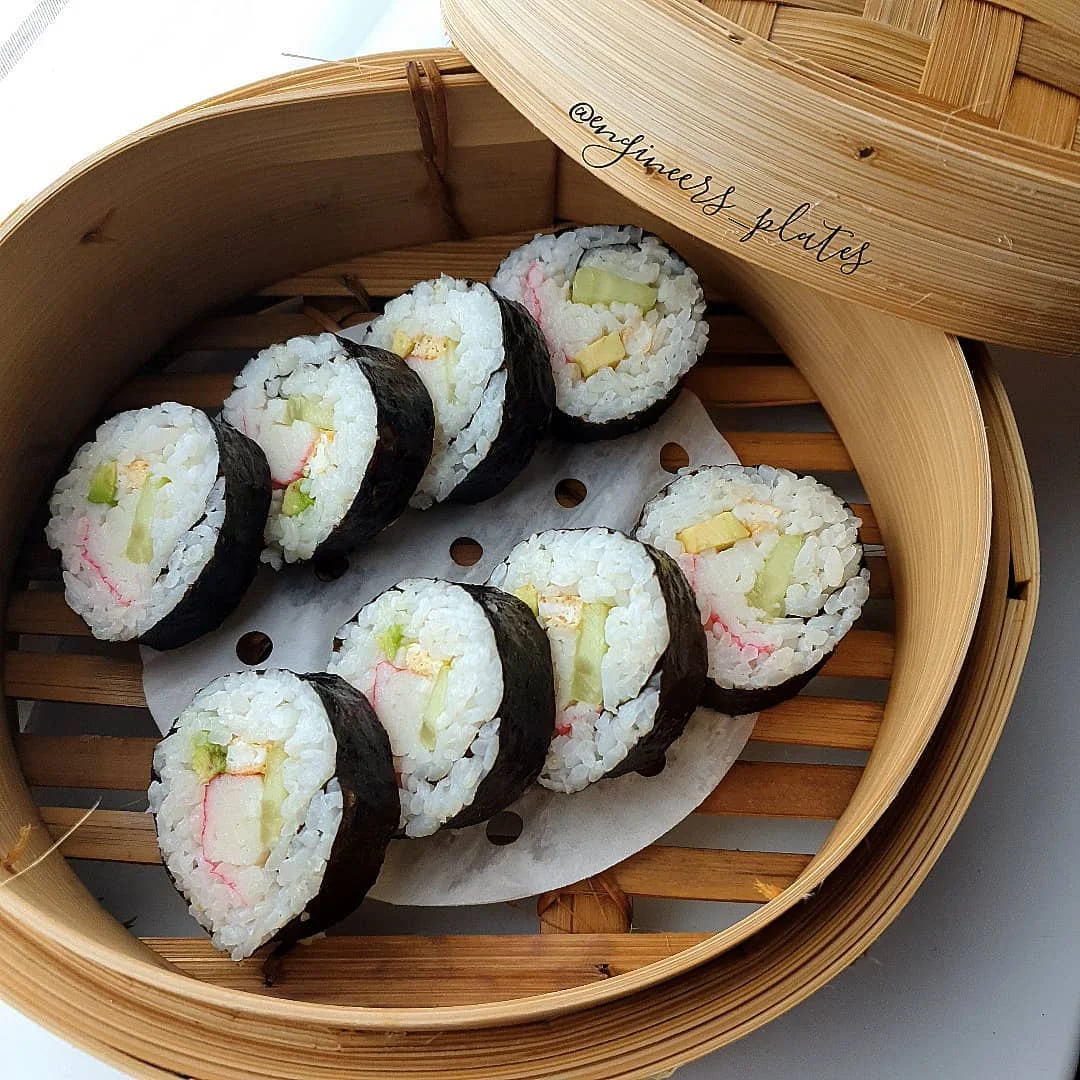
Sushi rolls wrap seasoned rice, crab sticks, omelette and crisp vegetables in sheets of seaweed. They make a handy meal to slice and share, with the fillings easy to adjust to what you have.
Ingredients
- 400 g (2 cups)cooked sushi rice
- Some piecesseaweed sheets
- Unspecifiedcrab sticks
- 2 eggsomelette, cut into long strips
- Unspecifiedcucumber, cut into long strips
- Unspecified (optional)avocado, cut into long strips
- 45 ml (3 tbsp)white vinegar
- 45 ml (3 tbsp)water
- 25 g (2 tbsp)sugar
- 7.5 g (1 1/2 tsp)salt
Instructions
- 1
Season the rice
Add the white vinegar, water, sugar and salt to the cooked rice, then mix thoroughly. Cover the rice with a cloth to stop it drying out.
- 2
Lay out seaweed
Place a sheet of seaweed on your work surface with its rough side facing upwards.
- 3
Spread the rice
Take a handful of seasoned rice and spread it evenly over the seaweed, leaving a 1 cm strip clear along one edge.
- 4
Add the fillings
Arrange the crab sticks, omelette, cucumber and optional avocado on top of the rice.
- 5
Roll the sushi
Carefully roll the seaweed around the fillings, pressing gently as you go. Continue rolling to the end of the sheet.
- 6
Slice and serve
Oil the blade of a knife to help prevent sticking, then slice the roll carefully. Serve with soy sauce.
What is a sushi roll?
Sushi rolls, often called makizushi in Japan, are made by wrapping seasoned rice and fillings in a sheet of seaweed, then cutting the roll into pieces. This version combines crab sticks and omelette with cucumber and optional avocado.
The key is to spread the rice evenly and roll gently, so the filling stays in place without squeezing the rice into a dense layer.
Nutrition and macros by portion
The nutrition label shows one serving as written: 220 calories, 7g protein, 43g carbs, 2g fat.
| Portion | Adjustment | kcal | Protein | Carbs | Fat |
|---|---|---|---|---|---|
| Lighter | Use less rice | 154 kcal | 5g | 30g | 1g |
| This serving | As written | 220 kcal | 7g | 43g | 2g |
| Hungry | Serve more rolls | 330 kcal | 11g | 65g | 3g |
Most of the carbohydrates come from the rice and sugar in the seasoning, while the eggs and crab sticks contribute protein. Fat is likely to come mainly from the eggs, with more if you include avocado. For a more balanced plate, serve the rolls with extra vegetables.
The rice and seasoning
Rice: Sushi rice is the stated choice, and its stickiness helps the roll hold together. The recipe also suggests soaking the rice for 30–60 minutes before cooking to help it become softer.
Seasoning: White vinegar, water, sugar and salt give the rice its flavour. Vinegar acidity varies, so the recipe allows for adjusting the vinegar-to-water balance to suit your taste.
Prepare the fillings
Crab sticks: The recipe calls for boiling them for 1 minute before adding them to the roll. Cut or arrange them so they sit neatly alongside the other fillings.
Vegetables and omelette: Long strips are easier to line up and roll than short pieces. Avocado is optional, while the cucumber adds a fresh contrast to the rice.
Rolling without squeezing
Rice layer: Spread the rice in an even layer, leaving 1 cm of seaweed uncovered at one edge. That bare strip helps the roll close at the end.
Gentle pressure: Roll carefully and press only lightly. Too much pressure can squash the rice and push the fillings out of position.
Slicing and serving
Knife: A lightly oiled blade is the method’s suggested way to reduce sticking. Slice carefully once the roll is complete.
Serving: Soy sauce is the suggested accompaniment. The rolls can be served as a shared plate or alongside other dishes.
Timing and make-ahead notes
The total preparation time is not specified, and the rice needs to be cooked before assembly. If following the soaking suggestion, allow an extra 30–60 minutes before cooking the rice.
Keep the cooked rice covered with a cloth while you assemble the rolls so it does not dry out.
Recipe notes & tips
- Keep the rice covered with a cloth while you work so it does not dry out.
- Leave a 1 cm strip of seaweed bare at one edge to help close the roll.
- Arrange the fillings in long, even lines for easier rolling.
- Use gentle pressure so the rice stays light rather than compacted.
- Oil the knife blade lightly before slicing to reduce sticking.
- Adjust the vinegar and water balance if the vinegar tastes too sharp.
Variations
- Skip the avocado: Leave it out for the version described as optional.
- Use jasmine rice: The recipe suggests jasmine rice or glutinous rice as alternatives, with a 3:1 ratio.
- Adjust the acidity: Use 30 ml vinegar and 60 ml water if you want a milder seasoning.
- Change the vegetables: Use different long-cut vegetables in place of the cucumber.
- Serve with soy sauce: Set it alongside the sliced rolls for dipping.
Common mistakes to avoid
- Dry rice: Keep it covered with a cloth while assembling the rolls.
- Uneven rice layer: Spread the rice evenly so the roll is more consistent.
- Covered seaweed edge: Leave 1 cm rice-free to help the roll close.
- Overfilled roll: Arrange the fillings in a line and avoid packing them too tightly.
- Too much pressure: Press gently while rolling to avoid squashing the rice.
- Sticking knife: Lightly oil the blade before slicing.
How to store
The recipe does not specify storage instructions. For best texture, serve the rolls soon after making them; if you need to keep leftovers, refrigerate them in a covered container and eat within a day. Chilled sushi rice can firm up, so avoid prolonged storage.
Frequently asked questions
Can I use rice other than sushi rice?
The recipe suggests jasmine rice or glutinous rice as substitutes, with a 3:1 ratio. It does not specify what the ratio refers to, so treat this as a source note rather than a precise conversion.
Should I soak the rice first?
The recipe suggests soaking it for about 30–60 minutes to make it softer. The rice should be cooked before you season and roll it.
How can I make the seasoning less sour?
The recipe suggests changing the balance to 30 ml vinegar and 60 ml water if your vinegar tastes too sharp. Adjust the acidity to your preference.
Do I have to use avocado?
No. Avocado is marked as optional, so you can leave it out.
Why oil the knife before cutting?
The recipe recommends oiling the blade to help stop rice sticking to it while you slice the roll.
Cook it from the original
This recipe comes from fooooods.com. Their page has the author’s own photos, notes and tips — the best place to cook it from.
Open the recipe on fooooods.com