
Pasta with creamy lemon-ricotta sauce and spinach
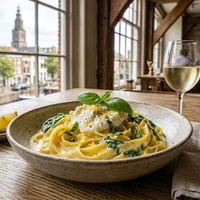
Pasta is coated in a soft, creamy ricotta sauce brightened with lemon, wilted spinach and Parmesan. It comes together quickly in one pan and makes a fresh-tasting weekday meal that is easy to serve straight away.
Ingredients
- 400 gpasta, such as linguine or pappardelle
- 250 gricotta
- 200 gfresh spinach
- 2 clovesgarlic, finely chopped
- 1organic lemon, zest and juice
- 50 gParmesan, grated
- 2 tbspolive oil
- to tastesalt, pepper and nutmeg
- 1 handfulfresh basil
Instructions
- 1
Cook the pasta
Bring a large pot of salted water to the boil and cook the pasta according to the packet instructions until al dente. Before draining, reserve a cup of the cooking water.
- 2
Soften the garlic
Heat a drizzle of olive oil in a wide frying pan over medium heat. Cook the garlic for 1 minute, taking care not to let it brown.
- 3
Wilt the spinach
Add the spinach and cook for about 2 minutes, just until wilted. Season with salt, pepper and a pinch of nutmeg.
- 4
Make the sauce
Turn the heat to low and stir in the ricotta, lemon zest and lemon juice. Add a few tablespoons of the reserved pasta water and mix until the sauce is smooth and creamy.
- 5
Toss the pasta
Drain the pasta and add it straight to the pan. Toss until evenly coated, adding more cooking water if the sauce seems too dry.
- 6
Finish and serve
Divide the pasta among deep plates. Grate over some more Parmesan, scatter with fresh basil and finish with a drizzle of olive oil. Serve immediately.
What is lemon ricotta pasta?
Ricotta pasta is a simple Italian-style dish in which soft cheese forms a quick sauce rather than being cooked for a long time. This version pairs it with lemon and spinach for a creamy but bright finish.
Pasta water helps the ricotta cling to the noodles, while Parmesan adds a savoury edge. It is best made just before serving, when the sauce is at its smoothest.
Nutrition and macros by portion
The nutrition label shows one serving as written: 602 calories, 26g protein, 78g carbs, 18g fat.
| Portion | Adjustment | kcal | Protein | Carbs | Fat |
|---|---|---|---|---|---|
| Lighter | More spinach, less pasta | 421 kcal | 18g | 55g | 13g |
| This serving | As written | 602 kcal | 26g | 78g | 18g |
| Hungry | Larger pasta portion | 903 kcal | 39g | 117g | 27g |
Most of the carbohydrates come from the pasta, while ricotta and Parmesan contribute protein as well as fat. Olive oil and the cheeses account for much of the fat; balance the plate with a leafy salad or extra vegetables.
Choosing the ingredients
Pasta shape: Linguine and pappardelle both provide plenty of surface for the sauce to coat. Cook whichever you choose until al dente, following its packet timing.
Ricotta: A fresh, soft ricotta blends readily with the lemon and starchy cooking water. If it looks thick, loosen it gradually rather than adding all the water at once.
Lemon: Zest brings fragrant citrus oils, while the juice supplies a sharper note. Zest the lemon before cutting and juicing it.
Getting a smooth sauce
Low heat: Add the ricotta after turning the pan down. Gentle heat helps it warm through without making the sauce seem grainy or dry.
Pasta water: Stir in a few tablespoons first, then add more only as needed. The starchy water helps the cheese coat the pasta and keeps the mixture fluid.
Keeping the spinach tender
Quick cooking: Spinach needs only about 2 minutes in the hot pan to wilt. Cooking it briefly keeps it tender and avoids letting it release too much liquid into the sauce.
Seasoning: Add salt, pepper and a pinch of nutmeg as the spinach wilts. Taste again after adding Parmesan, which also brings saltiness.
Timing the pasta and sauce
Pasta water: Reserve a cup before draining, as it is difficult to recreate the sauce's silky texture without it. Keep the water nearby while tossing in case the pasta absorbs the sauce quickly.
Serve promptly: The ricotta sauce thickens as it sits. Bring the pasta and sauce together at the end, then plate and serve straight away.
What to serve alongside
A crisp green salad or simply dressed leaves make a fresh contrast to the creamy pasta. Crusty bread can help mop up any sauce left on the plate.
For a more substantial meal, serve a modest portion alongside roasted vegetables. Keep additional Parmesan and olive oil for finishing rather than mixing in large amounts at the table.
Recipe notes & tips
- Salt the pasta water so the noodles are seasoned throughout.
- Reserve the pasta water before you drain the pot.
- Keep the garlic pale; browned garlic can taste bitter in this delicate sauce.
- Add the lemon juice gradually and taste so the sauce suits your preference.
- Use the cooking water a little at a time to control the sauce consistency.
- Grate the Parmesan just before serving for the best texture.
Variations
- Add peas: Stir in a handful with the spinach for extra sweetness.
- Use another green: Replace some or all of the spinach with tender kale, cooking it until soft.
- Bring the heat: Add a pinch of chilli flakes while cooking the garlic.
- Add toasted nuts: Scatter toasted pine nuts over the plated pasta for crunch.
- Try another herb: Use chopped parsley in place of the basil for a different fresh finish.
Common mistakes to avoid
- Browning the garlic: It can turn bitter; cook it gently for 1 minute and keep it pale.
- Overcooking the spinach: It can become watery; stop as soon as the leaves wilt, after about 2 minutes.
- Adding all the pasta water: The sauce may become thin; stir in a few tablespoons first and add more only if needed.
- Heating the ricotta too hard: The sauce may lose its smooth texture; turn the pan to low before mixing it in.
- Draining without saving water: The sauce will be harder to loosen; reserve a cup before draining the pasta.
How to store
Refrigerate leftovers in an airtight container for up to 2 days. Reheat gently in a pan with a splash of water, stirring until warmed through; the sauce may be thicker after chilling.
Frequently asked questions
Can I use a different pasta shape?
Yes. Use a shape that holds sauce well, such as fettuccine, penne or fusilli, and cook it according to its packet instructions.
Can I use frozen spinach?
Yes, but thaw it first and squeeze out excess liquid so it does not make the sauce watery.
How do I stop the ricotta sauce from becoming too thick?
Mix in reserved pasta water a tablespoon or two at a time until the sauce coats the pasta smoothly.
Can I make the sauce ahead?
It is best mixed with the pasta just before serving, as it thickens as it stands. You can prepare the lemon, garlic and spinach in advance.
What can I use instead of basil?
Fresh parsley works well as a finishing herb. You can also leave the basil out if you prefer the lemon and spinach to stand out.
Cook it from the original
This recipe comes from cookinglife.eu. Their page has the author’s own photos, notes and tips — the best place to cook it from.
Open the recipe on cookinglife.eu