
Pad Thai (Thai Stir Fry)
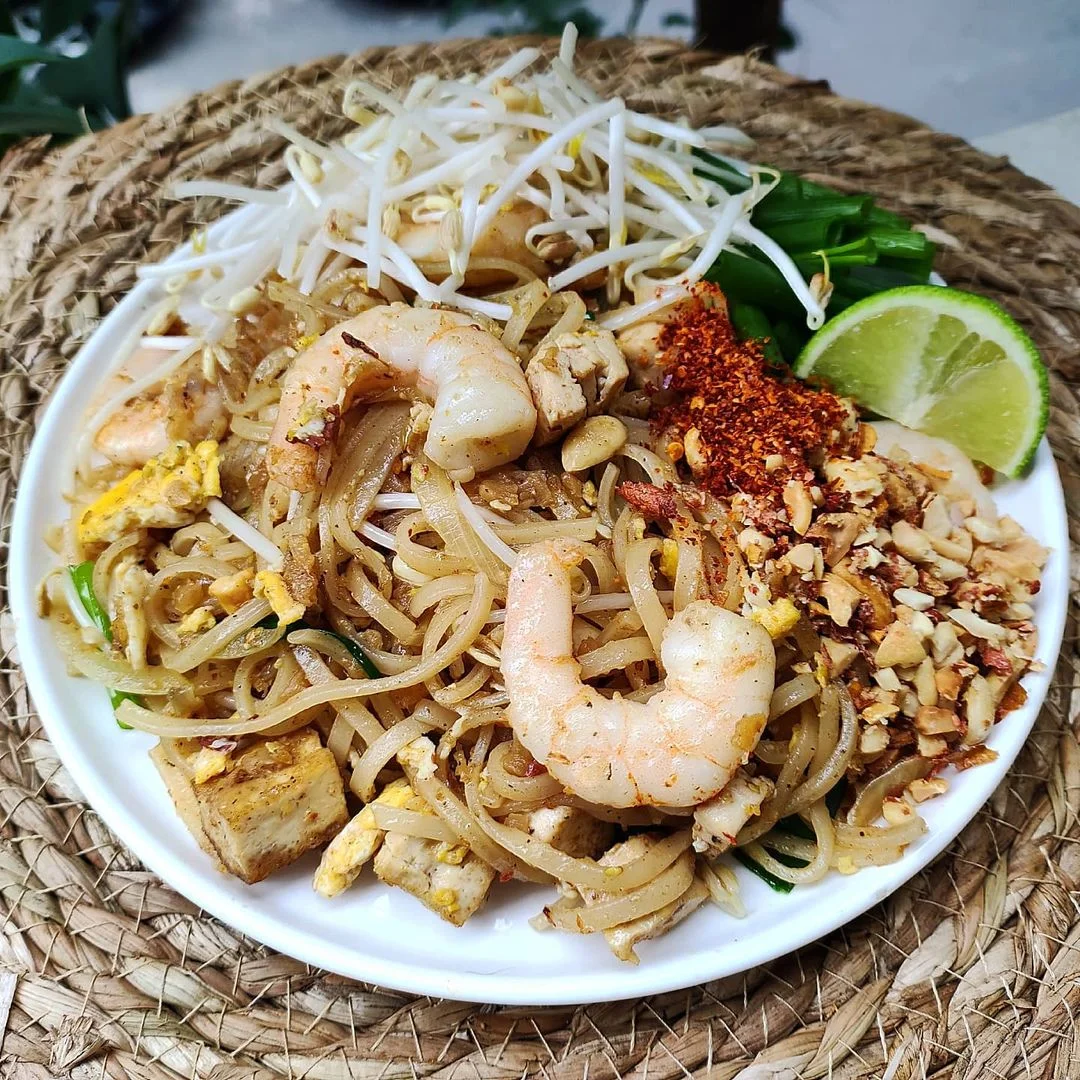
Pad Thai is a wok-fried noodle dish with a sweet, tangy sauce, tofu, eggs and prawns, finished with crunchy peanuts and fresh bean sprouts. This version is made in stages so the noodles take up the sauce before the eggs and prawns are folded through.
Ingredients
- 38 g (3 tbsp)palm sugar or brown sugar
- 45 ml (3 tbsp)water
- 60 ml (4 tbsp)tamarind sauce
- 30 ml (2 tbsp)fish sauce or soy sauce
- 150 gdried rice noodles, soaked in room-temperature water for 1 hour
- 2 tbspdried shrimp, roughly chopped
- 3 clovesgarlic, minced
- 1 largeonion, sliced
- 125 g (½ cup)firm tofu, cut into 2 cm cubes
- 3 tbsppreserved daikon radish or Japanese yellow sweet daikon pickle, minced
- 2 tsp, dividedchilli flakes
- 60 ml (4 tbsp), dividedvegetable oil
- 300 g (2 cups)prawns or another protein of choice
- 2eggs
- 200 g (2 cups), dividedbean sprouts
- 30 g (1 cup), dividedgarlic chives or spring onions, cut into 3 cm pieces
- 70 g (½ cup), dividedroasted peanuts
Instructions
- 1
Make the sauce
Put the sugar and water in a small pan and stir over medium heat until the sugar dissolves. Add the fish sauce and tamarind sauce, bring to a simmer, then take the pan off the heat.
- 2
Prepare the noodles
Drain the soaked noodles and use scissors to cut them in half.
- 3
Mix the aromatics
In a bowl, combine the tofu, garlic, onion, preserved radish, dried shrimp and chilli flakes. Set aside.
- 4
Sear the prawns
Heat a wok or large non-stick pan over high heat and add 1 tablespoon of oil. Sear the prawns, or your chosen protein, for 8 minutes, then remove and set aside.
- 5
Cook the tofu mixture
In the same wok over medium heat, add 2 tablespoons of oil and the tofu mixture. Sauté for 5 minutes, until the onion is translucent.
- 6
Cook the noodles
Turn the heat up to high and add the noodles and sauce. Toss and cook for 8 minutes, or until the sauce has been absorbed and the noodles are al dente.
- 7
Add the eggs
Push the noodles to one side of the wok. Add the remaining 1 tablespoon of oil to the empty space, then add the eggs.
- 8
Mix in the eggs
Break the yolks, cover the eggs with the noodles and cook for 1 minute. Toss to mix the eggs through the noodles.
- 9
Add the toppings
Add the cooked protein, 1 cup of bean sprouts, half the chives and half the peanuts.
- 10
Finish the dish
Turn off the heat and toss everything together until well mixed.
- 11
Serve straight away
Divide the noodles equally between 4 plates. Serve with lime wedges and the remaining peanuts, bean sprouts, chives and chilli flakes.
What is Pad Thai?
Pad Thai is a Thai stir-fried noodle dish, commonly made with rice noodles, a tangy-sweet sauce, eggs and a mix of proteins and garnishes. Its balance of tamarind, savoury fish sauce and sugar is central to its character.
This version combines prawns with tofu, preserved radish and dried shrimp. The noodles are cooked in the sauce in the wok, then finished with fresh sprouts, chives and peanuts for contrasting textures.
Nutrition and macros by portion
The nutrition label shows one serving as written: 650 calories, 29g protein, 76g carbs, 26g fat.
| Portion | Adjustment | kcal | Protein | Carbs | Fat |
|---|---|---|---|---|---|
| Lighter | Use less oil and peanuts | 455 kcal | 20g | 53g | 18g |
| This serving | As written | 650 kcal | 29g | 76g | 26g |
| Hungry | Serve a larger portion | 975 kcal | 44g | 114g | 39g |
Rice noodles and sugar supply much of the carbohydrates, while the vegetable oil and peanuts contribute much of the fat. Prawns, tofu and eggs provide protein. Serve with extra fresh bean sprouts or another vegetable side to add freshness and volume to the plate.
Build a balanced sauce
Sweetness: dissolving the palm sugar in water first helps it blend evenly into the sauce. Brown sugar is offered as an alternative.
Tang and savouriness: tamarind sauce gives the mixture its sharp edge, while fish sauce brings savoury depth. Soy sauce is the stated alternative if you prefer not to use fish sauce.
Prepare the noodles well
Soaking: the recipe calls for soaking the dried rice noodles in room-temperature water for 1 hour. Drain them before they go into the wok.
Length: cutting the drained noodles in half makes them easier to toss and serve. Have the sauce and other prepared ingredients close to hand before you start cooking.
Cook in stages
Prawns first: searing them over high heat for 8 minutes gives them time to cook before they are set aside. Return them only after the noodles and eggs are cooked.
Tofu mixture next: cooking it over medium heat for 5 minutes softens the onion and warms the tofu, radish and dried shrimp. The method uses the same wok, keeping the flavours together.
Check noodle doneness
Sauce absorption: toss the noodles with the sauce over high heat for 8 minutes, watching for the sauce to be absorbed. The noodles should be al dente rather than soft.
Eggs: push the noodles aside so the eggs can start cooking in the pan, then cover them with noodles for 1 minute before tossing. This helps distribute the egg through the dish.
Finish with fresh texture
Stir-ins: add only 1 cup of the bean sprouts, half the chives and half the peanuts to the wok. Toss them with the cooked prawns and noodles after the heat is turned off.
To serve: divide the remaining sprouts, chives, peanuts and chilli flakes between the 4 plates. Lime wedges are also mentioned as a garnish in the method.
What to serve alongside
Pad Thai can be served on its own, with the reserved crunchy garnishes providing a fresh contrast to the hot noodles. Offer the lime wedges alongside for diners to squeeze over their portion.
If you are serving other dishes, choose something light and fresh so the noodles remain the main event.
Recipe notes & tips
- Soak the noodles for the full 1 hour specified, then drain them thoroughly.
- Cut the noodles in half after draining, as directed, to make them easier to toss.
- Measure out the sauce and prepare the bowl of tofu mixture before heating the wok.
- Keep the heat high when adding the noodles so they cook in the sauce rather than sit in it.
- Reserve the specified half of the garnishes for serving so the finished plates have fresh crunch.
Variations
- Swap the protein: use another protein of your choice in place of the prawns, as the recipe allows.
- Use soy sauce: replace the fish sauce with soy sauce for the stated alternative.
- Change the sugar: use brown sugar instead of palm sugar if preferred.
- Switch the pickle: use minced Japanese yellow sweet daikon pickle in place of preserved daikon radish.
- Choose the greens: use spring onions instead of garlic chives, cut into 3 cm pieces.
Common mistakes to avoid
- Undersoak the noodles: soak them in room-temperature water for the full 1 hour before draining.
- Skip draining: drain the noodles before cutting and adding them so excess soaking water does not dilute the sauce.
- Crowd the cooking stages: sear the prawns first and set them aside, then cook the tofu mixture and noodles as directed.
- Overcook the noodles: stop when the sauce is absorbed and the noodles are al dente.
- Add all the garnishes to the wok: reserve half of the sprouts, chives and peanuts for serving as directed.
How to store
Refrigerate leftovers in a covered container and use within 2 days. Reheat in a frying pan until piping hot, adding a small splash of water if the noodles have dried out; keep any fresh garnishes separate until serving.
Frequently asked questions
How long should I soak the rice noodles?
Soak them in room-temperature water for 1 hour, then drain before cutting them in half.
Can I use a different protein?
Yes. The recipe allows another protein of your choice in place of the prawns; sear it for 8 minutes, then set it aside before cooking the other ingredients.
Can I use soy sauce instead of fish sauce?
Yes, soy sauce is listed as an alternative. Use the same amount: 2 tablespoons.
How do I know when the noodles are ready?
After about 8 minutes of tossing with the sauce, the sauce should be absorbed and the noodles should be al dente.
When should I add the bean sprouts and chives?
Toss 1 cup of bean sprouts and half the chives into the noodles with the cooked protein after adding the eggs. Reserve the rest for serving.
Can I make the sauce ahead?
The sauce can be prepared before the stir-fry and set aside after it has simmered. Have it ready to add when the noodles go into the wok.
Cook it from the original
This recipe comes from fooooods.com. Their page has the author’s own photos, notes and tips — the best place to cook it from.
Open the recipe on fooooods.com