
Chicken Stir Fry with Coconut Aminos Recipe
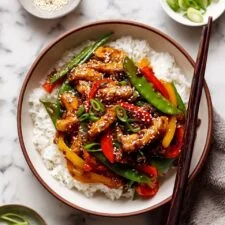
This quick chicken stir-fry pairs tender strips of chicken with crisp peppers and snap peas in a savoury-sweet coconut aminos sauce. It makes a colourful weeknight dinner, served over rice with sesame seeds for a little crunch.
Ingredients
- 454 g (1 lb)boneless, skinless chicken breasts, cut into thin strips
- 2bell peppers (1 red and 1 yellow), thinly sliced
- 100 g (1 cup)snap peas or mangetout
- 3spring onions, ends trimmed and sliced, white and green parts separated
- 30 ml (2 tablespoons), dividedolive oil or avocado oil
- 120 ml (½ cup)coconut aminos
- 30 ml (2 tablespoons)toasted sesame oil
- 30 g (2 tablespoons)tomato paste
- 15 ml (1 tablespoon)pure honey
- 2 clovesgarlic, minced
- 1 teaspoonfresh ginger, grated (or ½ teaspoon ground ginger)
- ¼ teaspooncrushed red pepper flakes
- ¼ teaspoonblack pepper
- ¼ teaspoonfine salt
- To tastecooked rice
- To tastesesame seeds
Instructions
- 1
Mix the sauce
Whisk the coconut aminos, tomato paste, honey, garlic, fresh ginger, red pepper flakes, black pepper and salt together in a small bowl until smooth. Set aside.
- 2
Cook the chicken
Heat 15 ml (1 tablespoon) of the olive or avocado oil in a large frying pan or wok over medium-high heat. Add the chicken in a single layer and cook, stirring occasionally, for about 5–6 minutes, until browned and cooked through. Remove from the pan and set aside.
- 3
Stir-fry vegetables
Add the remaining 15 ml (1 tablespoon) of oil to the same pan. Add the white parts of the spring onions, peppers and snap peas, then stir-fry for about 3–4 minutes, until crisp-tender.
- 4
Add sauce
Return the chicken to the pan and pour in the prepared sauce. Stir to coat the chicken and vegetables evenly, then cook for another 2–3 minutes, until the sauce thickens slightly.
- 5
Finish the stir-fry
Drizzle over the toasted sesame oil and toss to combine. Scatter the green parts of the spring onions over the top.
- 6
Serve with rice
Serve hot over cooked rice if desired, with a sprinkle of sesame seeds.
What is chicken stir-fry with coconut aminos?
Stir-frying is a quick cooking method associated with Chinese cooking, in which ingredients are cooked over high heat while being moved around the pan. This version brings together chicken, crisp vegetables and a glossy sauce for an easy, Asian-inspired meal.
Coconut aminos, made from fermented coconut sap, give the sauce a savoury-sweet flavour. Tomato paste, honey, garlic and ginger add depth, while sesame oil provides a toasted finish.
Nutrition and macros by portion
The nutrition label shows one serving as written: 600 calories, 40g protein, 62g carbs, 19g fat.
| Portion | Adjustment | kcal | Protein | Carbs | Fat |
|---|---|---|---|---|---|
| Lighter | More vegetables, less rice | 420 kcal | 28g | 43g | 13g |
| This serving | As written | 600 kcal | 40g | 62g | 19g |
| Hungry | Add an extra portion of rice | 900 kcal | 60g | 93g | 29g |
Chicken supplies most of the protein, while rice and the vegetables provide most of the carbohydrates. The cooking oils and sesame oil account for much of the fat; serve with a generous portion of vegetables alongside and adjust the rice portion to balance the plate.
The sauce ingredients
Coconut aminos: their salty-sweet flavour forms the base of the sauce. Whisk them thoroughly with the tomato paste and other seasonings so the mixture is smooth before it goes into the pan.
Honey and tomato paste: these balance the coconut aminos and help the sauce cling to the chicken and vegetables as it cooks. Garlic, ginger and chilli bring savoury warmth and a little heat.
Keep the chicken in a single layer
Chicken strips: spreading them out in the pan helps them brown rather than steam. If they do not fit in a single layer, cook them in batches, then return them to the pan with the vegetables.
Doneness: the recipe allows about 5–6 minutes, but the exact time depends on the thickness of the strips. Check that the chicken is cooked through before setting it aside.
Aim for crisp-tender vegetables
Peppers and snap peas: the 3–4-minute stir-fry keeps these vegetables colourful and gives them a little bite. Cook them longer only if you prefer them softer.
Spring onions: add the white parts with the vegetables so they soften in the pan. Keep the green parts for the finish to give the dish a fresh onion flavour.
Let the sauce thicken briefly
Coating: return the cooked chicken before adding the sauce, then stir constantly so it covers the chicken and vegetables evenly. The 2–3-minute final cook gives the sauce time to thicken slightly.
Sesame oil: add it after the sauce has cooked, as directed, and toss to distribute its toasted aroma through the dish.
Serving the stir-fry
Rice: serve the stir-fry over cooked rice if you want a more substantial meal. The amount is left to preference, so you can portion it to suit your table.
Sesame seeds: scatter them on just before serving for a nutty finish and a little extra texture.
Recipe notes & tips
- Slice the chicken into strips of a similar thickness so they cook at roughly the same rate.
- Prepare and measure the sauce ingredients before heating the pan, as the stir-fry steps move quickly.
- Use a large frying pan or wok so the chicken and vegetables have room to brown and stir-fry.
- Keep the pan over medium-high heat while cooking the chicken and vegetables.
- If using ground ginger instead of fresh, use the specified ½ teaspoon.
- Add the green parts of the spring onions at the end to preserve their freshness.
Variations
- Use mangetout: swap them for the snap peas while keeping the same quantity.
- Adjust the heat: use less or more of the crushed red pepper flakes to suit your preference.
- Choose avocado oil: use it in place of olive oil for cooking the chicken and vegetables.
- Use ground ginger: replace the fresh ginger with ½ teaspoon of ground ginger.
- Serve without rice: dish up the stir-fry on its own if you prefer to skip the rice.
Common mistakes to avoid
- Crowding the chicken: it can cook without browning; use a single layer or cook it in batches.
- Overcooking the vegetables: they can lose their crisp bite; check them after 3 minutes.
- Skipping the sauce whisk: tomato paste can stay lumpy; whisk until the mixture is smooth.
- Adding the sauce too early: it can cook down before the chicken and vegetables are coated; add it after returning the chicken to the pan.
- Leaving out the sesame oil finish: the toasted flavour is part of the dish; drizzle it over after the sauce has thickened.
How to store
Refrigerate leftovers in an airtight container and eat within 3 days. Reheat until piping hot in a frying pan or microwave; add a small splash of water if the sauce has thickened too much. Store rice separately if possible.
Frequently asked questions
Can I use ground ginger instead of fresh?
Yes. Use ½ teaspoon of ground ginger in place of the 1 teaspoon of grated fresh ginger.
Can I use mangetout instead of snap peas?
Yes, the recipe gives mangetout as an alternative. Use the same quantity and stir-fry until crisp-tender.
How can I tell when the chicken is cooked?
The strips should be browned and cooked through after about 5–6 minutes. Thicker pieces may need longer, so check the thickest strip before removing the chicken from the pan.
Is the cooked rice included in the ingredient quantities?
No quantity is specified. Serve the stir-fry over as much cooked rice as you like, or enjoy it without rice.
Can I make the stir-fry less spicy?
Yes. Reduce or leave out the crushed red pepper flakes to suit your taste.
Cook it from the original
This recipe comes from busyrecipe.com. Their page has the author’s own photos, notes and tips — the best place to cook it from.
Open the recipe on busyrecipe.com