
Hummus
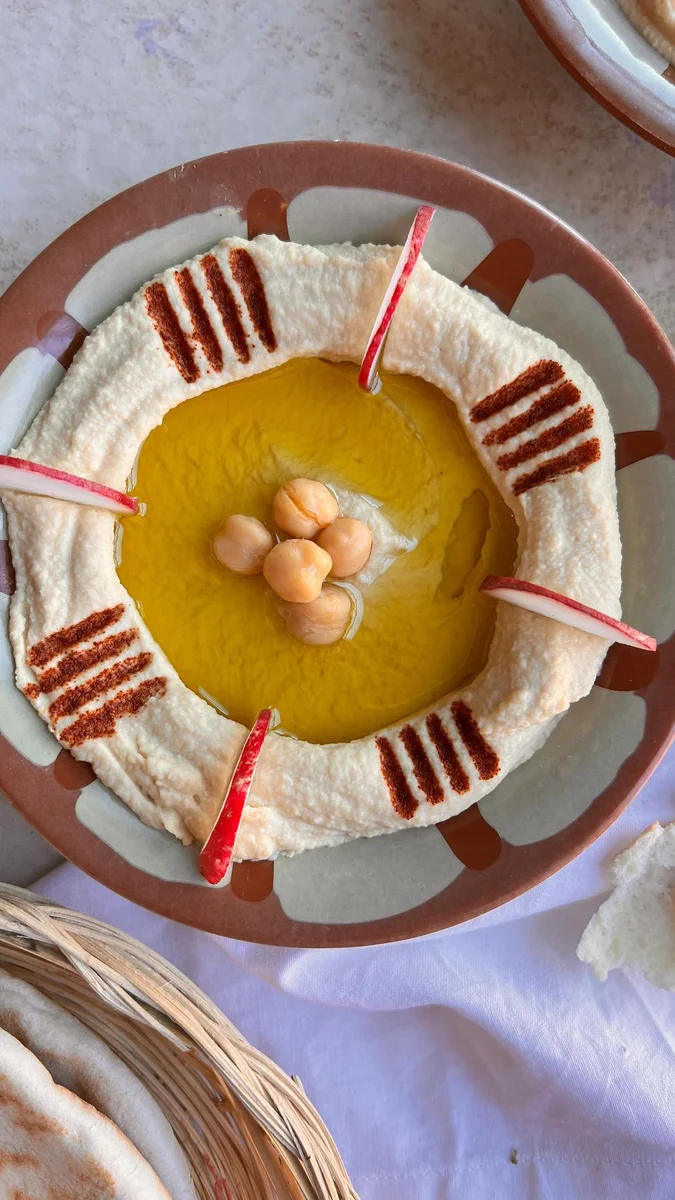
This hummus blends chickpeas with tahini, lemon and olive oil into a creamy dip. It comes together quickly and works well with pita, vegetables or as part of a mezze spread.
Ingredients
- 1 large canchickpeas, drained and boiled
- 80 ml (⅓ cup)tahini
- 1 clove, minced (optional)garlic
- 30–45 ml (2–3 tbsp)chickpea water, or a few ice cubes
- 15–30 ml (1–2 tbsp), or to tastelemon juice
- to tastesalt
- 30 ml (2 tbsp), plus more for garnisholive oil
- to tastepaprika and radishes, to garnish
Instructions
- 1
Blend the ingredients
Put the chickpeas, tahini, garlic if using, chickpea water or ice, lemon juice, salt and 30 ml (2 tbsp) olive oil in a blender. Blend until the hummus reaches your preferred consistency.
- 2
Garnish and serve
Spoon the hummus onto a plate, garnish with paprika, radishes and more olive oil, and serve with pita.
What is hummus?
Hummus is a dip made from chickpeas and tahini, popular across the Middle East and the eastern Mediterranean. Its name comes from the Arabic word for chickpeas.
This version keeps the ingredient list short and uses a blender for convenience. A little chickpea water or ice helps loosen the mixture as it blends.
Nutrition and macros by portion
The nutrition label shows one serving as written: 270 calories, 9g protein, 20g carbs, 20g fat.
| Portion | Adjustment | kcal | Protein | Carbs | Fat |
|---|---|---|---|---|---|
| Lighter | Use less olive oil | 189 kcal | 6g | 14g | 14g |
| This serving | As written | 270 kcal | 9g | 20g | 20g |
| Hungry | Serve a larger scoop | 405 kcal | 13g | 30g | 30g |
Chickpeas provide most of the carbohydrates and some protein, while tahini and olive oil contribute much of the fat. Serve a modest scoop with plenty of raw vegetables and pita to make a more balanced snack or part of a meal.
Choosing the key ingredients
Chickpeas: Use the drained, boiled chickpeas specified in the recipe. If they are still warm, let them cool before blending for a fresher-tasting dip.
Tahini: Stir it well before measuring, as the sesame paste can separate in its jar. Its consistency affects how thick the finished hummus feels.
Getting a creamy texture
Liquid: Add the chickpea water gradually, blending between additions so you can stop when the dip is as thick or loose as you like.
Ice: The recipe offers a few ice cubes as an alternative. Add them to the blender with the other ingredients and blend until smooth.
Balancing the flavour
Lemon: Start with 15 ml (1 tbsp), then taste and add more if you want a brighter, sharper flavour. The recipe allows up to 30 ml (2 tbsp).
Garlic: The clove is optional, so leave it out for a gentler dip or include it for a more pronounced savoury note. Season with salt a little at a time.
Blending and doneness
Texture: Blend until the chickpeas and tahini are evenly combined, stopping to check the consistency. Add more liquid if the mixture is too thick to blend smoothly.
Finish: The hummus is ready when it is smooth enough to spoon onto a plate. A little olive oil, paprika and sliced radishes provide the final garnish.
How to serve it
Pita: Serve the hummus with pita, as suggested in the recipe. It also fits naturally alongside other dips or a selection of fresh vegetables.
Presentation: Spread the dip onto a plate before adding the garnish. This gives the extra olive oil, paprika and radishes room to sit on top.
Recipe notes & tips
- Drain the chickpeas well so excess liquid does not make the dip unexpectedly thin.
- Add the chickpea water gradually and check the texture as you blend.
- Taste before adding all the lemon juice, since the preferred sharpness varies.
- Stir the tahini in its container before measuring it.
- If the blender struggles, pause and scrape down the sides before continuing.
Variations
- Extra lemon: Add more lemon juice a little at a time for a sharper dip.
- Garlic-free: Leave out the optional garlic for a milder flavour.
- More paprika: Dust the top more generously for a stronger paprika note.
- Herb garnish: Add chopped parsley alongside the radishes.
- Vegetable platter: Serve with sliced cucumber, carrots and other crisp vegetables.
Common mistakes to avoid
- Adding all the liquid at once: The hummus may become too loose; blend in the chickpea water gradually.
- Using separated tahini without stirring: The measured portion can be uneven; mix the paste before measuring.
- Overdoing the lemon: Too much can dominate the dip; begin with 15 ml (1 tbsp) and taste.
- Skipping a texture check: The mixture may remain thick; stop blending and add a little more liquid if needed.
- Adding salt without tasting: Season in small amounts and check the flavour as you go.
How to store
Store leftover hummus in a covered container in the fridge and use within 3–4 days. Stir before serving; it is usually best served cold or at room temperature rather than reheated.
Frequently asked questions
Can I use ice instead of chickpea water?
Yes. The recipe suggests a few ice cubes as an alternative for a creamier texture and lighter colour. Blend until the ice is fully incorporated.
How much lemon juice should I use?
Use 15–30 ml (1–2 tbsp), adjusting to taste. Start with the smaller amount and add more if you want a brighter flavour.
Do I have to add garlic?
No. Garlic is optional in this recipe, so you can leave it out.
What can I serve with hummus?
Pita is the suggested accompaniment. Fresh vegetables also make an easy option for dipping.
How can I make the hummus thinner?
Blend in a little more chickpea water, checking the consistency as you go. Avoid adding too much at once.
Cook it from the original
This recipe comes from fooooods.com. Their page has the author’s own photos, notes and tips — the best place to cook it from.
Open the recipe on fooooods.com