
Hummus authentic recipe
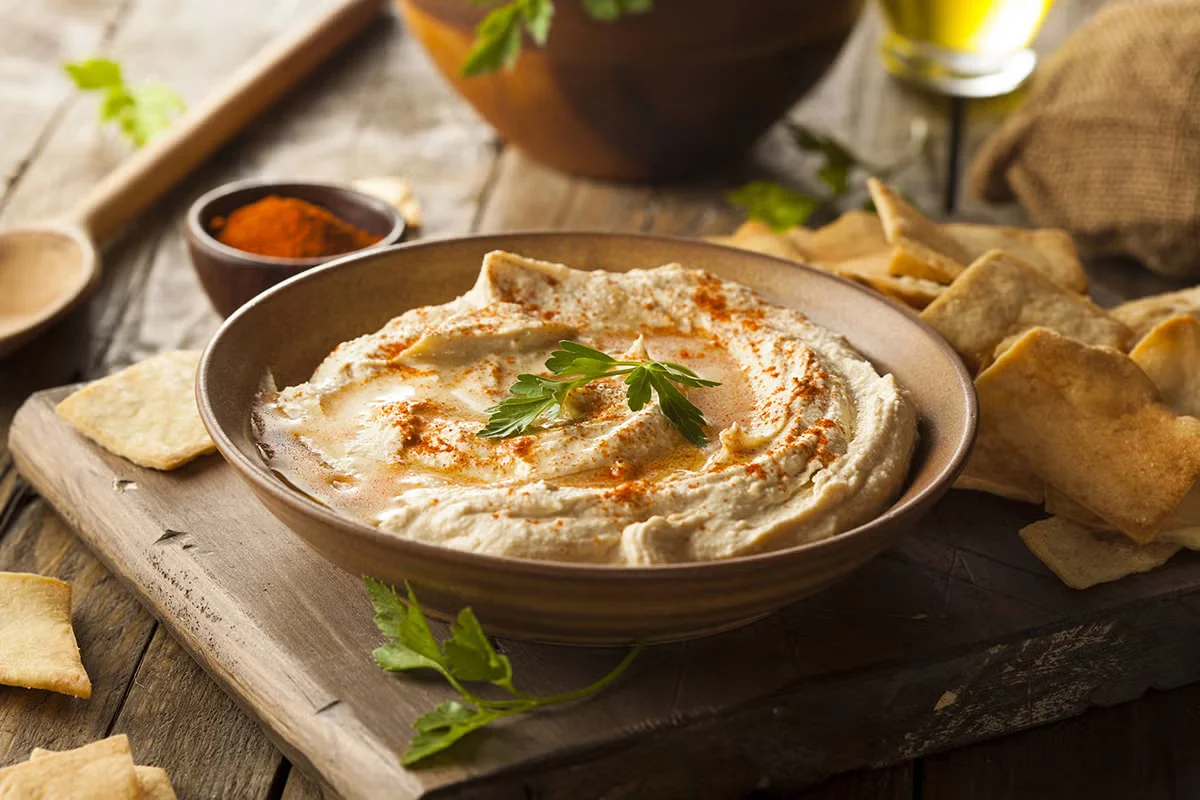
This smooth hummus blends chickpeas with tahini, olive oil, lemon and garlic for a quick Middle Eastern-inspired dip. It takes about 10 minutes and needs only a blender.
Ingredients
- 425 g (15 oz), drained and rinsedChickpeas
- 15 ml (1 tbsp)Tahini
- 30 ml (2 tbsp)Extra virgin olive oil
- 30 ml (2 tbsp)Fresh lemon juice
- 1Garlic clove
- To tasteSea salt
- As neededWater
- To garnishPaprika
Instructions
- 1
Blend the hummus
Put the drained and rinsed chickpeas, tahini, olive oil, lemon juice, garlic and sea salt in a blender. Blend until very smooth, adding water as needed to reach your preferred consistency.
- 2
Garnish and serve
Transfer the hummus to a serving bowl and sprinkle with paprika. Add any remaining whole chickpeas on top for extra texture, if you like.
What is hummus?
Hummus is a chickpea and tahini dip associated with Middle Eastern cooking, with many regional and household variations. This version keeps the ingredient list short and uses a blender to make a smooth dip quickly.
Chickpeas give it body, while tahini, lemon and garlic bring the familiar nutty, bright and savoury flavours.
Nutrition and macros by portion
The nutrition label shows one serving as written: 1030 calories, 42g protein, 123g carbs, 47g fat.
| Portion | Adjustment | kcal | Protein | Carbs | Fat |
|---|---|---|---|---|---|
| Lighter | Use less olive oil | 721 kcal | 29g | 86g | 33g |
| This serving | As written | 1030 kcal | 42g | 123g | 47g |
| Hungry | Serve with extra pitta | 1545 kcal | 63g | 185g | 71g |
For the stated one serving, most of the carbohydrates and fibre come from the chickpeas; the chickpeas and tahini provide most of the protein. Olive oil and tahini supply much of the fat. Serve with plenty of vegetables and a protein-rich accompaniment to make a more balanced plate.
Why these ingredients work
Chickpeas: Draining and rinsing them removes the canning liquid and gives you a consistent starting point. Keep a few whole ones aside if you want the suggested topping.
Tahini and oil: Tahini adds a roasted sesame flavour, and olive oil contributes richness. Lemon juice and garlic balance those fuller notes.
Getting a smooth texture
Blending: Run the blender until the chickpeas are very smooth, stopping to scrape down the sides if needed. Add water a little at a time so you can control how thick the hummus becomes.
Consistency: The finished dip should be smooth and easy to scoop. Use less water for a thicker result or add a little more if it feels too dense.
Seasoning to taste
Salt: The recipe leaves the amount to your preference, so begin with a small pinch and taste after blending. Add more gradually if the flavours seem muted.
Lemon and garlic: Their strength can vary, so taste the blended hummus before serving. The recipe's quantities are a starting point; keep any adjustments modest.
Finishing the bowl
Paprika: A sprinkle gives the top a gentle, savoury finish. Add it just before serving so it stays visible on the surface.
Chickpeas: A few whole chickpeas make a simple textural contrast with the smooth dip. This optional garnish is especially useful if you have already set some aside.
What to serve with hummus
Serve it with flatbread, pitta or crisp vegetables for dipping. It also works as a spread in a sandwich or wrap.
For a more filling plate, pair the dip with vegetables and a source of protein such as grilled chicken or falafel.
Recipe notes & tips
- Drain and rinse the chickpeas well before blending.
- Add water gradually so the hummus does not become thinner than you want.
- Taste for salt after blending, then adjust little by little.
- Scrape down the blender sides if chickpeas remain unblended.
- Set aside a few chickpeas before blending if you want to use them as a garnish.
Variations
- More lemon: Add a little extra lemon juice for a brighter flavour.
- Extra garlic: Blend in another small amount of garlic for a stronger savoury note.
- Cumin: Add a pinch of ground cumin for a warm, earthy flavour.
- Herb topping: Scatter chopped parsley over the hummus just before serving.
- Chilli finish: Sprinkle chilli flakes over the top alongside the paprika.
Common mistakes to avoid
- Adding too much water: The dip can turn runny; add water in small amounts as you blend.
- Under-blending: A coarse texture can remain; blend until very smooth and scrape down the sides if needed.
- Over-salting: Salt can overwhelm the other flavours; start with a little and taste before adding more.
- Skipping the rinse: Excess canning liquid can affect the texture; drain and rinse the chickpeas first.
- Adding the garnish too early: Paprika can disappear into the dip; sprinkle it on just before serving.
How to store
Keep leftover hummus in an airtight container in the fridge and use within 3–4 days. Stir before serving; it is usually best served cold or at room temperature, so no reheating is needed.
Frequently asked questions
Can I make this without a blender?
A food processor can blend the ingredients instead. A fork or masher can work in a pinch, though the hummus will be less smooth.
How much water should I add?
The recipe does not specify a fixed amount. Add it gradually while blending until the hummus reaches the consistency you prefer.
Can I use dried chickpeas?
Yes, but cook them until tender first and measure out 425 g after cooking and draining to match the recipe's stated chickpea quantity.
Why is my hummus too thick?
It may need more liquid or additional blending. Add water a little at a time, blending between additions.
Can I make it ahead?
Yes. Blend it in advance, cover and refrigerate it, then stir before serving and add the paprika garnish at the end.
Cook it from the original
This recipe comes from finedininglovers.co.uk. Their page has the author’s own photos, notes and tips — the best place to cook it from.
Open the recipe on finedininglovers.co.uk