
Braised beef cheeks with red wine and winter vegetables
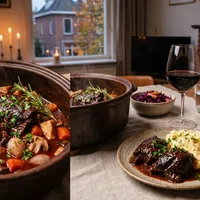
Beef cheeks are slowly braised in red wine with onions, carrots, celery and herbs until tender enough to yield to a fork. It is a comforting French-inspired centrepiece for a special dinner, with a rich sauce that pairs well with mash or polenta.
Ingredients
- 4 (about 250 g each)beef cheeks
- to tastesalt and freshly ground black pepper
- 30 mlolive oil
- 15 gunsalted butter
- 2onions, roughly chopped
- 4garlic cloves, crushed
- 2carrots, diced
- 3celery stalks, chopped
- 30 mltomato paste
- 375 mlfull-bodied red wine, such as Bordeaux or Merlot
- 500 mlbeef stock
- 3bay leaves
- 4 sprigsfresh thyme
- 3whole cloves
- 5 mlbalsamic vinegar
- to garnishfresh flat-leaf parsley
Instructions
- 1
Season the beef
Take the beef cheeks out of the fridge 30 minutes before cooking. Pat them dry with kitchen paper and season generously with salt and pepper.
- 2
Brown the cheeks
Heat a splash of olive oil in a braising pan over medium-high heat. Sear the cheeks for 2–3 minutes per side, until golden, then take them out and set aside.
- 3
Soften the vegetables
Add the butter to the same pan. Cook the onion, garlic, carrot and celery over medium heat for 5 minutes, until softened and lightly coloured.
- 4
Reduce the wine
Stir in the tomato paste and cook for 2 minutes. Pour in the red wine to deglaze the pan, then let it reduce for 3 minutes.
- 5
Add stock and herbs
Add the beef stock, bay leaves, thyme and cloves, then return the cheeks to the pan. The meat should be just submerged; add extra stock if needed.
- 6
Braise until tender
Cover the pan and place it in a conventional oven at 160°C (320°F). Braise for 3–3½ hours, until the cheeks are meltingly tender and give way with light pressure.
- 7
Reduce the sauce
Carefully lift the cheeks out of the pan. Remove the bay leaves, thyme sprigs and cloves, then boil the braising liquid over high heat for 10 minutes, until reduced to a rich sauce.
- 8
Season and serve
Taste the sauce and adjust with salt, pepper and, if desired, a small splash of balsamic vinegar. Return the cheeks to the sauce and warm through for 5 minutes. Serve with creamy mashed potatoes or polenta, spoon over some sauce and garnish with fresh flat-leaf parsley.
What are braised beef cheeks?
Beef cheeks are a hardworking cut that becomes tender with long, gentle cooking in liquid. Slow braising is common in French cooking, where wine, stock and aromatics build a deeply flavoured sauce.
This version combines red wine with familiar winter vegetables and herbs. Browning the meat first and reducing the cooking liquid at the end give the dish its savoury depth.
Nutrition and macros by portion
The nutrition label shows one serving as written: 760 calories, 58g protein, 16g carbs, 48g fat.
| Portion | Adjustment | kcal | Protein | Carbs | Fat |
|---|---|---|---|---|---|
| Lighter | Add greens, smaller mash | 532 kcal | 41g | 11g | 34g |
| This serving | As written | 760 kcal | 58g | 16g | 48g |
| Hungry | Larger portion of cheeks | 1140 kcal | 87g | 24g | 72g |
The beef cheeks provide most of the protein and much of the fat, while the wine, vegetables and tomato paste contribute carbohydrates. Stock and added salt can make the sauce a significant source of sodium; balance the plate with a generous serving of greens alongside the suggested mash or polenta.
Choosing the beef and wine
Beef cheeks: Ask for cheeks of similar size so they cook at roughly the same rate. Pat them thoroughly dry before searing to help them brown.
Red wine: Choose a full-bodied wine you enjoy drinking, such as Bordeaux or Merlot. The recipe reduces it before the stock goes in, concentrating its flavour.
Build flavour in stages
Searing: Brown the cheeks in batches if the pan is crowded. A golden surface adds flavour to the pan, which then carries through into the sauce.
Vegetables and paste: Give the onion, garlic, carrot and celery their full 5 minutes, then cook the tomato paste for 2 minutes. This softens the vegetables and lets the paste darken slightly before the wine is added.
The slow braise
Keep the pan covered in the 160°C oven for 3–3½ hours. The meat should sit just beneath the liquid; check the level before putting the pan in the oven and add stock if needed.
Start checking towards the shorter end of the cooking window. The cheeks are ready when a fork or gentle pressure easily separates the meat, rather than when the clock alone says so.
Finish the sauce
Remove the whole herbs and spices before reducing the liquid, so they do not overpower the sauce. Boil it for 10 minutes, watching the consistency as it concentrates.
Taste after reducing, then adjust the seasoning. A small splash of balsamic vinegar is optional; add it gradually so its acidity supports rather than dominates the wine.
What to serve alongside
Creamy mashed potatoes or polenta are suggested accompaniments and both catch the rich sauce. Spoon the sauce over the meat and garnish with parsley just before serving.
For a lighter plate, add a green vegetable such as steamed greens or green beans. Keep the side simply seasoned so the braise remains the focus.
Recipe notes & tips
- Bring the cheeks out of the fridge 30 minutes before cooking, as directed, so they are not very cold when they hit the pan.
- Dry the meat well before seasoning and searing for better browning.
- Use a pan that fits the cheeks without crowding them, or sear in batches.
- Check that the cheeks are just submerged before covering the pan.
- Let tenderness guide the braising time; some cheeks may need the full 3½ hours.
- Add balsamic vinegar a little at a time after tasting the reduced sauce.
Variations
- Use another red wine: Choose a similarly full-bodied wine in place of Bordeaux or Merlot.
- Add root vegetables: Include diced parsnip with the carrot for a sweeter winter flavour.
- Serve with polenta: Swap the suggested mashed potatoes for creamy polenta.
- Make it ahead: Cook the braise in advance, chill it safely and reheat gently in the sauce.
- Use fresh herbs: Add a little extra parsley at the table for a brighter finish.
Common mistakes to avoid
- Wet meat: Pat the cheeks dry before searing or they may steam rather than brown.
- Crowded pan: Sear in batches if needed so the cheeks develop colour.
- Insufficient liquid: Check that the meat is just submerged before the braise and add stock if necessary.
- Cooking by time alone: Continue braising if the cheeks resist a fork at the end of the stated window.
- Over-reducing the sauce: Keep an eye on it during the 10-minute boil and stop when it is rich and spoonable.
- Too much vinegar: Add the optional balsamic in a small splash and taste before adding more.
How to store
Cool leftovers promptly and refrigerate the cheeks with their sauce in a covered container for up to 3 days. Reheat gently in a covered pan until piping hot throughout, adding a little stock if the sauce has thickened too much.
Frequently asked questions
How do I know when beef cheeks are done?
They should be very tender and give way easily with light pressure. If they are still firm, continue braising and check again.
Can I cook this on the hob instead of in the oven?
The method specifies a covered pan in a conventional oven at 160°C. For hob cooking, keep the pan covered and the liquid at a very gentle simmer, checking regularly that it is not boiling hard.
Can I prepare the dish in advance?
Yes. Cook it through, cool and refrigerate the cheeks in their sauce, then reheat gently before serving.
What can I use instead of Bordeaux or Merlot?
Use another full-bodied red wine. The recipe calls for a wine in that style rather than one specific bottle.
Do I have to add the balsamic vinegar?
No, it is optional. Taste the reduced sauce first, then add a small splash if you want extra depth.
What should I serve with braised beef cheeks?
Creamy mashed potatoes or polenta are suggested in the recipe. A green vegetable also makes a good accompaniment.
Cook it from the original
This recipe comes from cookinglife.eu. Their page has the author’s own photos, notes and tips — the best place to cook it from.
Open the recipe on cookinglife.eu