
Veal piccata
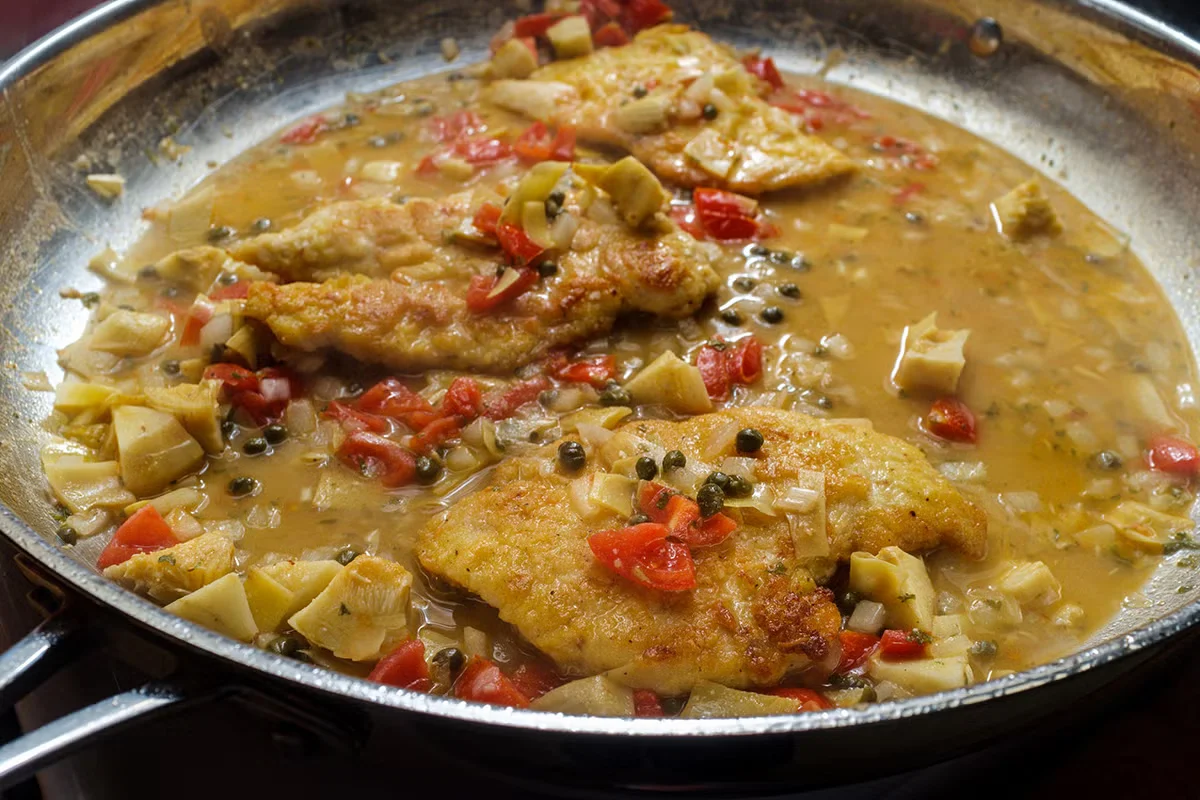
Veal piccata pairs lightly floured veal cutlets with a bright, buttery sauce of lemon, capers and sherry. It comes together quickly in one pan, making it a polished choice for dinner without a long cooking time.
Ingredients
- 119 gPlain flour
- to tasteSalt
- 2 tbspVegetable oil
- 57 g, pounded flatVeal cutlets
- 237 mlChicken stock
- 118 mlDry sherry
- 1 tbspLemon juice
- 2 tbspCapers
- 2 tbspUnsalted butter
- 2 tbspItalian parsley
- for garnishLemon slices
Instructions
- 1
Mix the flour
Combine the plain flour and salt on a plate.
- 2
Cook the veal
Warm the vegetable oil in a pan over a medium heat. While it heats, coat the veal cutlets in flour, then cook them one at a time for about 3 minutes on each side.
- 3
Reduce the sauce
Transfer the cooked cutlets to a plate and cover with foil. Add the chicken stock, dry sherry, lemon juice and capers to the pan, scraping up the browned residue from the bottom. Bring to the boil, lower the heat and simmer for a few minutes until the liquid has reduced.
- 4
Finish and serve
Take the pan off the heat and stir in the butter and Italian parsley. Plate the cutlets and spoon plenty of sauce over them. Serve with lemon slices on the side for extra juice.
What is veal piccata?
Piccata is an Italian-American preparation of thin, lightly coated meat served with a tangy pan sauce. Veal piccata brings together browned cutlets, lemon and capers, with butter lending the sauce a smooth finish.
This version adds dry sherry alongside chicken stock. The liquid picks up flavour from the pan as it reduces, so the quick-cooking veal gets a lively, savoury sauce.
Nutrition and macros by portion
The nutrition label shows one serving as written: 1050 calories, 18g protein, 100g carbs, 56g fat.
| Portion | Adjustment | kcal | Protein | Carbs | Fat |
|---|---|---|---|---|---|
| Lighter | Use less butter | 735 kcal | 13g | 70g | 39g |
| This serving | As written | 1050 kcal | 18g | 100g | 56g |
| Hungry | Add a larger side | 1575 kcal | 27g | 150g | 84g |
The flour supplies most of the carbohydrates, while the oil and butter contribute much of the fat; the veal provides protein. Stock and capers can add a substantial amount of sodium, so serve with vegetables or salad and taste before adding extra salt.
The flour coating
Flour and salt: mix them on a plate wide enough to coat the cutlets easily. Shake off any excess before the veal goes into the pan so the coating stays light rather than clumpy.
Cutlets: pounding them flat helps them cook quickly and evenly. If they are uneven in thickness, the thinner parts can dry out before the thicker parts are done.
Build flavour in the pan
Browning: cook the cutlets individually, as directed, so they have room to fry rather than steam. The browned bits left behind are useful flavour for the sauce.
Deglazing: add the stock, sherry, lemon juice and capers, then scrape the bottom of the pan. This loosens the residue and incorporates it into the simmering liquid.
Reduce, then enrich
Simmering: let the liquid bubble gently for a few minutes so it reduces. The recipe does not specify an exact reduction point; look for a slightly more concentrated sauce rather than a dry pan.
Butter and parsley: take the pan off the heat before stirring these in. This keeps the butter from being cooked hard and lets the herbs retain their fresh flavour.
Check the veal
Timing: cook the cutlets for about 3 minutes on each side, as stated in the method. The exact time can vary with their thickness and the heat of the pan.
Doneness: check that the centre is cooked through before serving. Keep the cooked cutlets covered with foil while you make the sauce, then serve them promptly.
Serving ideas
Lemon: serve the cutlets with the sauce and lemon slices, as directed, so everyone can add more citrus if they like. A crisp green vegetable or salad makes a fresh contrast to the buttery sauce.
Sides: pasta, potatoes or bread can help make the sauce part of the meal. Choose a modest portion if you want the veal and caper-lemon flavour to stay centre stage.
Recipe notes & tips
- Pat the cutlets dry before coating so the flour adheres in a thin layer.
- Shake excess flour from each cutlet before frying.
- Use a pan that gives each cutlet room to brown.
- Keep the heat at medium so the coating has time to colour without scorching.
- Scrape the pan well when adding the liquids to lift the browned residue.
- Stir in the butter off the heat for a smooth finish.
Variations
- Extra lemon: add a little more lemon juice to the sauce for a sharper finish.
- More herbs: scatter additional Italian parsley over the plated cutlets.
- Brined capers: rinse them first if you want to temper their salty flavour.
- Chicken option: use thin chicken cutlets and cook them through before making the sauce.
- Alcohol-free sauce: replace the sherry with additional chicken stock, then adjust the lemon to taste.
Common mistakes to avoid
- Crowding the pan: the cutlets may steam instead of brown; cook them individually as directed.
- Thick flour coating: excess flour can make the crust heavy; shake off what does not adhere.
- Skipping the pan scrape: the sauce loses browned flavour; loosen the residue with the stock and sherry.
- Boiling after adding butter: the sauce can turn greasy; stir the butter in after removing the pan from the heat.
- Overcooking the veal: thin cutlets can dry out quickly; check them as they approach the end of the stated cooking time.
How to store
Refrigerate leftovers in a covered container and use within 2 days. Reheat gently in a pan with a splash of stock or water, just until hot; prolonged heating can toughen the veal.
Frequently asked questions
Can I prepare the sauce ahead?
It is best made just after cooking the veal, so it can pick up the browned pan residue. If needed, prepare the stock, sherry, lemon juice and capers mixture ahead, then reduce it and finish with butter and parsley before serving.
How do I stop the veal from drying out?
Keep the cutlets evenly thin and avoid cooking them longer than needed. The method gives about 3 minutes per side, but check the centre because thickness and pan heat affect timing.
Can I use salted butter?
Yes, but taste the sauce before adding any extra salt, since the capers and stock may already be salty.
What can I use instead of dry sherry?
Use additional chicken stock for an alcohol-free version. Taste the sauce and adjust the lemon juice to suit.
What should I serve with veal piccata?
Pasta, potatoes, bread or a green vegetable all work well. A simple salad is another good option alongside the rich sauce.
Cook it from the original
This recipe comes from finedininglovers.co.uk. Their page has the author’s own photos, notes and tips — the best place to cook it from.
Open the recipe on finedininglovers.co.uk