
No-Stress Pizza Dough Without Kneading
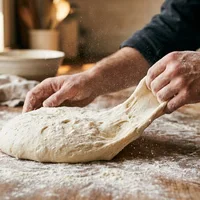
This Italian-style pizza dough comes together without kneading, then develops flavour during a long rise in the fridge. A brief rest and one fold are all the hands-on work before it is ready to shape.
Ingredients
- 500 gflour
- 325 mllukewarm water
- 7 gdried yeast
- 10 gsalt
- 1 tablespoonolive oil
Instructions
- 1
Mix the ingredients
Put all the ingredients in a bowl and mix until they form a rough, sticky mass. Do not knead.
- 2
Rest the dough
Cover the bowl and leave the dough to rest for 15 minutes.
- 3
Fold once
Fold the dough over itself once; simply fold it rather than kneading.
- 4
Chill the dough
Cover the bowl and refrigerate the dough for 12 to 18 hours.
- 5
Shape and warm
Divide the dough into 4 portions and shape each into a ball. Leave them at room temperature for 1 hour before use.
What is no-knead pizza dough?
Pizza dough is a simple Italian-style mixture of flour, water, yeast and salt, shaped into a base for toppings. This version skips the usual kneading and relies on a long, chilled rise instead.
The slow rest gives the flour time to absorb the water and the yeast time to work. A single fold adds a little structure without turning the recipe into a hands-on project.
Nutrition and macros by portion
The nutrition label shows one serving as written: 970 calories, 27g protein, 192g carbs, 10g fat.
| Portion | Adjustment | kcal | Protein | Carbs | Fat |
|---|---|---|---|---|---|
| Lighter | Less oil, lighter toppings | 679 kcal | 19g | 134g | 7g |
| This serving | As written | 970 kcal | 27g | 192g | 10g |
| Hungry | Larger dough portion | 1455 kcal | 41g | 288g | 15g |
Most of the carbohydrates and some protein come from the flour; the olive oil supplies most of the fat, while the salt contributes nearly all the sodium. Balance a portion with a generous salad or vegetables, and add a protein-rich topping if desired.
Why the ingredients matter
Flour: the recipe does not specify a type, so use plain or strong white flour according to the texture you prefer. Strong flour tends to give the dough more chew.
Water and yeast: lukewarm water helps the dried yeast disperse through the mixture. Avoid hot water, which can interfere with the yeast.
Salt and oil: salt seasons the dough, while olive oil adds a little richness and helps make the mixture easier to handle.
Mixing without kneading
Sticky dough: mix only until no dry flour remains and the ingredients form a rough mass. It will look less smooth than kneaded dough at this stage.
One fold: after the 15-minute rest, lift and fold the dough over itself once. There is no need to work it repeatedly or try to make it completely smooth.
The long fridge rise
Chilling: keep the bowl covered in the fridge for 12 to 18 hours. This makes the rise slow and gives you a wide window for preparing the dough ahead.
Room-temperature rest: after dividing and shaping, leave the balls out for 1 hour before use. They should be easier to stretch than when taken straight from the fridge.
Portioning and shaping
The method divides the dough into 4 balls, even though the recipe lists 2 servings. Keep that instruction if you want four smaller bases, or divide the dough differently to suit how you plan to use it.
Shape each piece into a ball with a smooth outer surface, handling it gently. The method does not specify a rolling or baking temperature, so follow the instructions for your chosen pizza recipe or oven.
What to serve with it
Use the dough as a base for your preferred pizza toppings, adding sauce and toppings just before baking. Keep toppings measured and avoid piling on too much moisture, which can make the centre harder to bake through.
For a meal, serve the pizza with a crisp salad or cooked vegetables. These add freshness alongside the dough's flour-based, filling base.
Recipe notes & tips
- Use a bowl large enough to leave room for the dough to rise during its long chill.
- Mix until the flour is hydrated, but do not knead the sticky dough.
- Cover the bowl well before refrigerating so the dough does not dry out.
- Plan the 12-to-18-hour fridge rest before you want to make pizza.
- Allow the shaped dough balls the full 1 hour at room temperature before using them.
Variations
- Wholemeal flour: replace part of the white flour with wholemeal flour, allowing for a firmer dough.
- Herb dough: mix dried herbs into the flour before adding the liquids.
- Garlic oil: use garlic-infused olive oil for a subtle savoury note.
- Small bases: keep the four portions for smaller pizzas that are easy to handle.
- Topping choice: finish the shaped bases with your preferred sauce, cheese and toppings before baking.
Common mistakes to avoid
- Kneading the mixture: stop once it forms a rough, sticky mass, as this recipe relies on resting instead.
- Using hot water: use lukewarm water so it does not interfere with the dried yeast.
- Skipping the fold: fold the dough once after its 15-minute rest to follow the method.
- Uncovered chilling: cover the bowl before refrigerating to prevent the surface from drying.
- Shaping straight from the fridge: let the dough balls stand at room temperature for 1 hour before use.
How to store
Keep the dough covered in the fridge during its stated 12-to-18-hour rise. Once shaped, use it after the 1-hour room-temperature rest; the recipe does not give a longer storage period or reheating instructions.
Frequently asked questions
Can I leave the dough in the fridge for less than 12 hours?
The method specifies a refrigerated rise of 12 to 18 hours. For the result described, allow it that full window.
Do I really not need to knead the dough?
Correct. Mix it into a rough, sticky mass, rest it for 15 minutes, then fold it once.
Why does the recipe say 2 servings but make 4 portions?
The listed serving count and the method do not match. The method directs you to divide the dough into 4 balls; choose the portion size that suits your pizzas.
Can I use plain flour?
The recipe only says flour, without specifying a type. Plain flour is a practical option; strong white flour generally gives a chewier base.
How do I know the dough is ready to use?
After the 12-to-18-hour chill, divide and shape it, then leave it at room temperature for 1 hour before use.
Cook it from the original
This recipe comes from cookinglife.eu. Their page has the author’s own photos, notes and tips — the best place to cook it from.
Open the recipe on cookinglife.eu