
Butter tarts by Jonny Lake
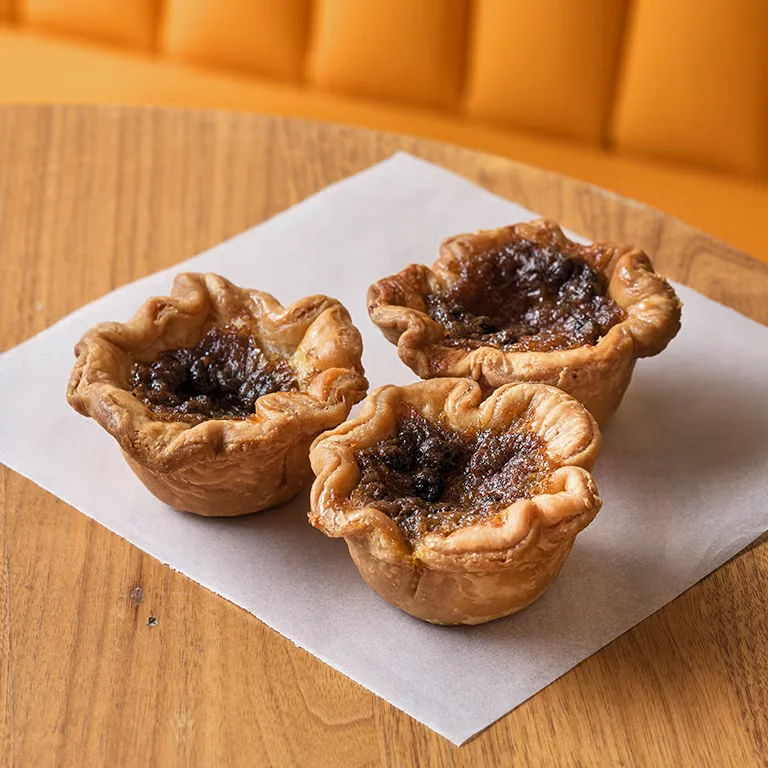
These Canadian butter tarts have crisp, rich pastry filled with a buttery maple and brown sugar mixture, with currants in every bite. They take a little chilling and shaping, but the filling comes together quickly and bakes in minutes.
Ingredients
- 200 gPlain flour
- 4.5 gFine salt
- 60 g, cubedCold unsalted butter
- 50 g, cubedCold lard or vegetable shortening
- 60 g, ice coldWater
- 1Egg yolk
- 5 mlWhite vinegar
- 35 gCurrants
- 120 gLight brown sugar
- 4.5 gSalt
- 105 gMaple syrup
- 60 g, meltedButter
- 5 gVanilla paste
- 1Egg
Instructions
- 1
Mix dry ingredients
Combine the flour and fine salt in a medium-sized bowl.
- 2
Rub in fats
Add the cubed butter and lard or shortening. Rub them into the flour with your fingertips until the pieces are about the size of peas.
- 3
Add liquid
In a small bowl, mix the water, egg yolk and vinegar, then add this to the flour mixture and stir with a fork.
- 4
Form the dough
Press the mixture together by hand a few times, just until it forms a dough.
- 5
Chill the dough
Shape the dough into a thick, flat rectangle, wrap it in cling film and refrigerate for at least 30 minutes.
- 6
Roll the pastry
Roll the dough into a large rectangle about 5 mm thick.
- 7
Cut pastry rounds
Cut out 12 rounds with an 11 cm cutter, rerolling the scraps as needed.
- 8
Line the tin
Press the pastry rounds gently into a lightly buttered 12-cup muffin tin, then chill in the fridge for 20 minutes.
- 9
Heat the oven
While making the filling, preheat the oven to 230°C, or 220°C fan.
- 10
Soak currants
Soak the currants in warm water for at least 30 minutes.
- 11
Mix the filling
In a medium bowl, stir together the sugar, salt, maple syrup, vanilla and melted butter with a wooden spoon. Beat in the egg.
- 12
Drain the currants
Drain the currants and place them in the chilled pastry shells.
- 13
Fill the shells
Divide the filling evenly between the 12 pastry shells, filling each about halfway.
- 14
Bake the tarts
Bake for 8 minutes, then reduce the oven to 200°C and continue baking for about 7 minutes, until the pastry is golden and the filling has puffed up.
- 15
Cool in the tin
Take the tin out of the oven and leave it on a cooling rack for 3 minutes.
- 16
Finish cooling
Ease the tarts out of the tin and place them on a wire rack until cool enough to eat.
What are butter tarts?
Butter tarts are a Canadian pastry, usually made with a small pastry shell and a sweet, buttery filling. This version includes currants, which add a little chew and a tart note against the maple and brown sugar.
The pastry uses both butter and lard or vegetable shortening for a rich, tender shell. Chilling the dough and lined shells helps the pastry hold its shape as it bakes.
Nutrition and macros by portion
The nutrition label shows one serving as written: 3020 calories, 35g protein, 330g carbs, 190g fat.
| Portion | Adjustment | kcal | Protein | Carbs | Fat |
|---|---|---|---|---|---|
| Lighter | Serve one tart with fruit | 2114 kcal | 25g | 231g | 133g |
| This serving | As written | 3020 kcal | 35g | 330g | 190g |
| Hungry | Serve two tarts | 4530 kcal | 53g | 495g | 285g |
For the full 12-tart batch, the flour and sugars provide most of the carbohydrates, while the butter and lard or shortening contribute most of the fat. The egg, flour and currants add some protein; pair a tart with fruit or yoghurt for a more balanced plate. The nutrition estimate below treats the supplied serving count of 1 as the whole batch.
The pastry fats
Cold fats: Rub the butter and lard or shortening into the flour only until the pieces are about pea-sized. Keeping some small pieces intact helps give the pastry a tender, flaky texture.
Cold liquid: Use ice-cold water and bring the dough together with a light hand. Stop as soon as it holds together rather than kneading it smooth.
Chilling and shaping
First chill: Refrigerate the wrapped dough for at least 30 minutes so it is easier to roll and handle. If it feels very firm afterwards, let it sit briefly until it can be rolled without cracking.
Second chill: Once the rounds are in the muffin tin, chill them for 20 minutes before filling. Press them gently into place without stretching the pastry.
Getting the filling right
Currants: Soak them in warm water for at least 30 minutes, then drain well before adding them to the shells. Excess water can thin the filling.
Filling level: Divide the mixture between all 12 shells and fill each about halfway. The filling puffs as it bakes, so avoid topping up the shells.
Bake and check
Two temperatures: Start at 230°C, or 220°C fan, for 8 minutes, then lower the oven to 200°C for about 7 minutes more. The hotter start helps the pastry and filling begin to set.
Doneness: Look for golden pastry and a filling that has puffed up. Let the tin stand for 3 minutes before lifting the tarts out, as the pastry is delicate while hot.
Serving the tarts
These tarts are rich and sweet, so a small tart alongside plain tea or coffee makes an easy serving. For a plated dessert, serve one with unsweetened yoghurt or fresh fruit to add a cooler, sharper contrast.
Let them cool enough to handle before eating, but they are also enjoyable while the filling is still slightly warm.
Recipe notes & tips
- Measure the water before chilling it so it is ready when you mix the dough.
- Keep the pastry scraps cool while rerolling them to cut the remaining rounds.
- Drain the soaked currants thoroughly before adding them to the shells.
- Butter the muffin tin lightly so the shells are easier to release.
- Use a cooling rack after removing the tarts from the tin to let the pastry cool evenly.
Variations
- Use shortening: Choose vegetable shortening instead of lard for the pastry.
- Skip the currants: Leave them out for a smoother filling.
- Add chopped pecans: Scatter a few into the shells with the currants for extra texture.
- Use golden syrup: Replace the maple syrup with golden syrup for a different flavour.
- Serve with fruit: Add sliced fresh fruit alongside the tarts for a bright contrast.
Common mistakes to avoid
- Overworking the dough: Stop mixing as soon as it comes together to keep the pastry tender.
- Using warm fats: Start with cold butter and lard or shortening so the dough stays easy to handle.
- Skipping the chills: Refrigerate the dough and lined shells for the stated times to help them keep their shape.
- Leaving currants wet: Drain them well after soaking so they do not add extra liquid to the filling.
- Overfilling the shells: Fill each pastry case only about halfway because the filling puffs during baking.
How to store
Once completely cool, store the tarts in an airtight container in the fridge for up to 3 days. Bring them to room temperature or warm briefly in a low oven before serving.
Frequently asked questions
How many tarts does this recipe make?
The method cuts 12 pastry rounds and uses a 12-cup muffin tin, so it makes 12 tarts.
Can I make the pastry ahead?
Yes. Wrap the dough and refrigerate it after shaping; allow it to soften slightly if it is too firm to roll.
Do I have to use lard?
No. The recipe allows vegetable shortening as an alternative.
Why soak the currants?
Soaking softens them so they are less dry in the baked filling. Drain them thoroughly before using.
How do I know when the tarts are baked?
The pastry should be golden and the filling puffed after the two-stage bake. The recipe gives about 7 minutes at 200°C after the initial 8 minutes.
Can I freeze butter tarts?
The recipe does not specify freezing. For best texture, store the cooled tarts in the fridge and eat them within 3 days.
Cook it from the original
This recipe comes from finedininglovers.co.uk. Their page has the author’s own photos, notes and tips — the best place to cook it from.
Open the recipe on finedininglovers.co.uk