
How to make pota chicharrón: traditional, homemade and delicious Peruvian recipe
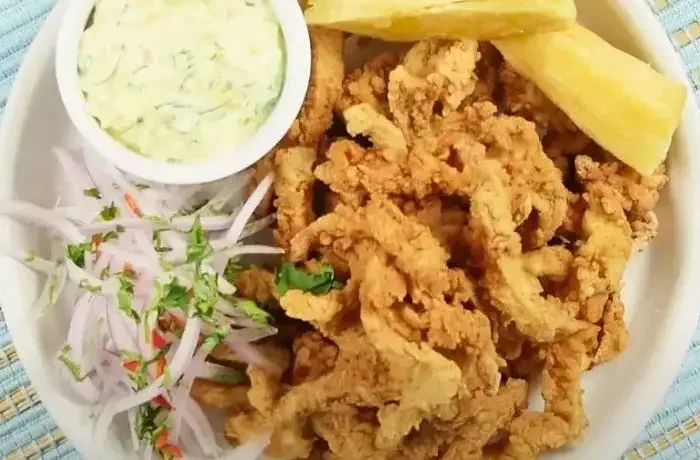
Pota chicharrón is a Peruvian dish of seasoned giant squid coated in flour and fried until crisp, usually served with fried yuca and lemon. It makes a generous, crunchy seafood meal using straightforward ingredients and a short cooking time.
Ingredients
- 500 ggiant squid (pota)
- 200 gwheat or maize flour
- 1 mediumyuca
- 1egg
- 1 tablespoonmustard
- 1 teaspoongarlic
- 1 teaspoonsalt
- 1lemon
- 1 litrevegetable oil
Instructions
- 1
Boil the yuca
Add the peeled yuca and a pinch of salt to a medium pan of water. After 15 minutes, lift it out with a colander and set aside. Dip the pota in boiling water for 20 seconds, then set it aside too. The method suggests adding a small celery stalk to the water for extra flavour.
- 2
Cut and season
Cut the squid into thin strips using a knife or scissors and put them in a medium bowl. Add the mustard, ground garlic, salt, pepper and soy sauce, then mix well.
- 3
Add egg and fry
Add the egg and mix until the ingredients come together. Refrigerate the mixture while you heat the oil in a medium pan over medium heat. Fry the yuca until golden.
- 4
Coat and fry
In a medium bowl, mix the flour and starch, then coat the pota strips in the mixture. Fry them in the same oil used for the yuca, over medium heat, until golden. Remove and drain on kitchen paper. Serve with the fried yuca, a slice of lemon and tartare sauce; the method also suggests chifles or salted canchita.
What is pota chicharrón?
Pota is giant squid, an affordable seafood ingredient commonly eaten in Peru. Chicharrón refers here to pieces coated and fried until crisp, rather than the pork dish familiar in other parts of Latin America.
This version pairs seasoned squid with fried yuca, lemon and tartare sauce. Briefly blanching the squid before coating it helps prepare it for the quick frying that follows.
Nutrition and macros by portion
The nutrition label shows one serving as written: 350 calories, 0g protein, 0g carbs, 0g fat.
| Portion | Adjustment | kcal | Protein | Carbs | Fat |
|---|---|---|---|---|---|
| Lighter | Less fried yuca | 245 kcal | 0g | 0g | 0g |
| This serving | As written | 350 kcal | 0g | 0g | 0g |
| Hungry | Extra yuca and pota | 525 kcal | 0g | 0g | 0g |
The yuca and flour provide most of the carbohydrates, while the frying oil contributes much of the fat. The pota and egg provide protein, although the supplied per-serving protein figure is 0 g. Serve with a crisp vegetable side to round out the plate.
Preparing the pota
Brief blanch: the method calls for dipping the pota in boiling water for 20 seconds, then setting it aside. Keep to that short time before cutting it into thin strips.
Thin strips: aim for pieces of similar thickness so they cook at roughly the same rate. The seasoning mixture includes mustard, garlic, salt, pepper and soy sauce, though pepper and soy sauce are not listed among the ingredients.
Getting the coating right
Dry coating: the method says to mix flour with starch, then coat the seasoned strips. Starch is not included in the ingredient list, so check what you have before starting; the listed flour quantity is 200 g.
Even coverage: let excess mixture fall away before frying. A light, even coating is easier to crisp than clumps of flour.
Frying the yuca and squid
Yuca first: fry the boiled yuca in the heated oil until golden, as directed. The method then uses the same oil for the pota.
Squid second: fry the coated strips over medium heat until golden, then drain them on kitchen paper. Avoid leaving them in the oil longer than needed to colour the coating.
Serving the plate
Accompaniments: serve the pota with fried yuca, a lemon slice and tartare sauce. Chifles or salted canchita are suggested as additional crunchy sides.
For a fresher contrast, serve alongside a simple salad or other crisp vegetables. Add lemon just before eating so its acidity brightens the fried coating.
Plan the timing
The stated total time is 50 minutes. The sequence includes boiling the yuca, briefly blanching the pota, seasoning and chilling it, then frying both components.
Prepare the serving accompaniments while the yuca cooks, and have the coating bowl and draining paper ready before heating the oil.
Recipe notes & tips
- Cut the pota into evenly sized thin strips for more consistent frying.
- Drain the yuca well before adding it to the hot oil.
- Keep the coated strips separate as they enter the oil so they do not stick together.
- Fry in batches if needed to keep the pieces easy to turn and remove.
- Drain the fried pota and yuca on kitchen paper before serving.
- Serve the lemon at the table so everyone can add it to taste.
Variations
- Choose maize flour: use it instead of wheat flour for a different coating.
- Add a fresh side: serve with crisp salad vegetables for contrast.
- Serve with chifles: add thin fried plantain chips as suggested in the method.
- Include canchita: offer salted toasted corn alongside the fried components.
- Adjust the seasoning: use the method's suggested pepper and soy sauce to season the pota.
Common mistakes to avoid
- Over-blanching the pota: keep it in boiling water for only the stated 20 seconds before setting it aside.
- Uneven strips: cut the pota to a similar thickness so the pieces fry consistently.
- Crowding the pan: fry in batches so the strips can colour without clumping.
- Skipping the drain: use a colander for the boiled yuca and kitchen paper for the fried pieces.
- Starting without starch: the method calls for starch in the coating, but it is absent from the ingredient list; check the recipe details before cooking.
How to store
For the best crisp texture, eat the pota and yuca soon after frying. Refrigerate leftovers in a covered container and use within 2 days; reheat in an oven or air fryer until hot, though the coating may soften.
Frequently asked questions
What is pota?
Pota is giant squid, a seafood ingredient used in Peruvian cooking. It is cut into strips for this fried dish.
Can I use wheat or maize flour?
The ingredient list gives either wheat or maize flour. The method also calls for starch, which is not listed, so check the original recipe details if you want to follow its coating exactly.
Why is the pota blanched first?
The method briefly dips it in boiling water for 20 seconds before cutting and seasoning. Follow that short timing rather than boiling it for longer.
How do I know when the pota is ready?
The method uses a golden coating as the cue. Remove the strips once they are golden and drain them on kitchen paper.
Can I prepare the dish ahead?
You can boil the yuca and season the pota ahead, keeping them refrigerated until needed. Fry the yuca and squid close to serving time for a crisper result.
What should I serve with pota chicharrón?
The method serves it with fried yuca, lemon and tartare sauce, and suggests chifles or salted canchita. A fresh salad is another useful contrast to the fried food.
Cook it from the original
This recipe comes from cocinaencasa.cl. Their page has the author’s own photos, notes and tips — the best place to cook it from.
Open the recipe on cocinaencasa.cl