
Hubby’s Kitchen - Steamed Fish
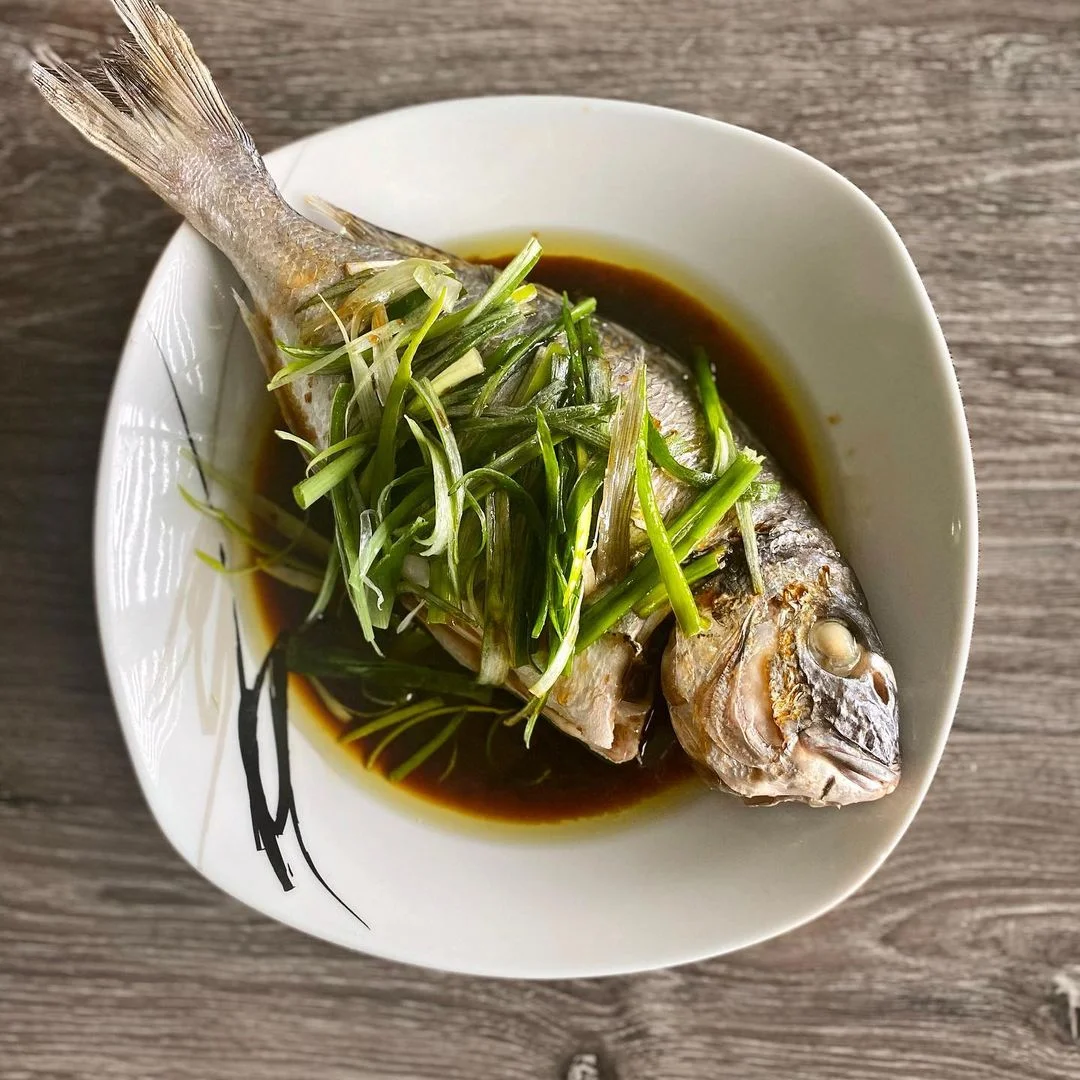
This simple steamed fish is finished with scallions, fish soy and hot oil for a fragrant, savoury dish. It is a quick way to cook a whole fish while keeping its flesh moist and tender.
Ingredients
- 1fish
- 3–4 thick slicesginger
- to tastesliced scallions
- to tastefish soy
- to tasteoil
Instructions
- 1
Prepare the fish
Remove the scales, then wash the fish and drain it until dry.
- 2
Steam the fish
Arrange the thick ginger slices on a plate and set the fish on top. Steam over high heat for 10 minutes; the cooking time will vary with the size of the fish. After steaming, pour away the liquid collected on the plate.
- 3
Finish and serve
Scatter the sliced scallions over the fish and pour on the fish soy. Bring the oil to a boil, then carefully pour it over the fish.
What is steamed fish?
Steamed fish is a simple preparation found in many cuisines, including Chinese home cooking. This version cooks a whole fish over ginger, then finishes it with scallions, savoury fish soy and hot oil.
The short ingredient list lets the fish remain the focus. Ginger perfumes it as it steams, while the final pour of hot oil brings out the aroma of the scallions.
Nutrition and macros by portion
The nutrition label shows one serving as written: 190 calories, 25g protein, 2g carbs, 9g fat.
| Portion | Adjustment | kcal | Protein | Carbs | Fat |
|---|---|---|---|---|---|
| Lighter | Use less finishing oil | 133 kcal | 18g | 1g | 6g |
| This serving | As written | 190 kcal | 25g | 2g | 9g |
| Hungry | Serve with extra rice | 285 kcal | 38g | 3g | 14g |
Most of the protein comes from the fish, while the oil supplies most of the fat and the fish soy contributes much of the sodium. Serve it with rice and vegetables for a more balanced plate; the nutrition estimate is approximate because the fish size and amounts of soy and oil are not specified.
Choosing the fish
Whole fish: choose one that fits comfortably on your steaming plate and in your steamer. The recipe does not specify a species or weight, so the timing will depend on the fish you use.
Preparation: ask your fishmonger to scale and clean it if you prefer, but still wash and drain it before cooking as directed.
Getting the steaming right
High heat: start with the steamer hot and let the fish cook for 10 minutes as a starting point. The source recipe notes that a larger fish needs a different cooking time.
Doneness: check the thickest part of the fish; the flesh should turn opaque and separate easily from the bone. If it is not ready, steam it a little longer and check again.
Why drain the plate?
Steaming releases liquid from the fish, which can dilute the seasoning. Pouring it away before adding the scallions and fish soy keeps the finishing flavours more concentrated.
Finishing with hot oil
Scallions and fish soy: add these after steaming so they sit on the cooked fish rather than losing their freshness during cooking. Use the soy sparingly at first, since its saltiness varies by brand.
Hot oil: heat it until very hot, then pour carefully over the fish and scallions. Keep your hands and face clear of splashes.
What to serve alongside
Serve the fish straight away with steamed rice to catch the savoury juices. A simple side of steamed greens or lightly cooked vegetables makes a useful contrast to the rich, salty finish.
Recipe notes & tips
- Use a plate that fits inside your steamer with room for steam to circulate.
- Drain the fish thoroughly before placing it on the ginger.
- Start checking the fish at 10 minutes, especially if it is small.
- Pour off the steaming liquid before adding the fish soy.
- Pour the hot oil slowly and carefully over the scallions.
Variations
- Add garlic: scatter thinly sliced garlic over the fish with the scallions.
- Use light soy: use light soy sauce if fish soy is unavailable, tasting as you go.
- Add coriander: finish with fresh coriander leaves alongside the scallions.
- Include chilli: add sliced fresh chilli with the scallions for extra heat.
- Steam with citrus: place a few thin slices of lemon on the fish for a brighter flavour.
Common mistakes to avoid
- Overcooking the fish: check at 10 minutes and continue steaming only until the thickest part is opaque and flakes easily.
- Leaving liquid on the plate: pour it away after steaming so it does not water down the seasoning.
- Adding soy too freely: start with a small amount and adjust to taste because brands vary in saltiness.
- Pouring oil carelessly: use a steady pour and keep your hands and face away from splashes.
- Using a crowded steamer: choose a plate that leaves space around it for steam to circulate.
How to store
Refrigerate leftovers in a covered container and eat within 1–2 days. Reheat gently until piping hot; the fish may be less tender after reheating.
Frequently asked questions
How long should I steam the fish?
The recipe gives 10 minutes over high heat, but the time varies with the fish’s size. Check the thickest part and steam longer if it is not opaque and easy to separate from the bone.
Do I need to scale the fish myself?
Yes, remove the scales before washing and draining it, or ask your fishmonger to do this for you.
What can I use instead of fish soy?
Light soy sauce is a practical substitute. Add it gradually because the saltiness can differ.
Why do I pour away the liquid after steaming?
The liquid released by the fish can dilute the soy and finishing flavours. Removing it helps keep the seasoning concentrated.
Can I prepare the fish ahead?
You can scale, wash and drain it ahead, then keep it covered in the fridge. Steam and finish it just before serving for the best texture.
Cook it from the original
This recipe comes from fooooods.com. Their page has the author’s own photos, notes and tips — the best place to cook it from.
Open the recipe on fooooods.com