
Homemade Labneh Balls
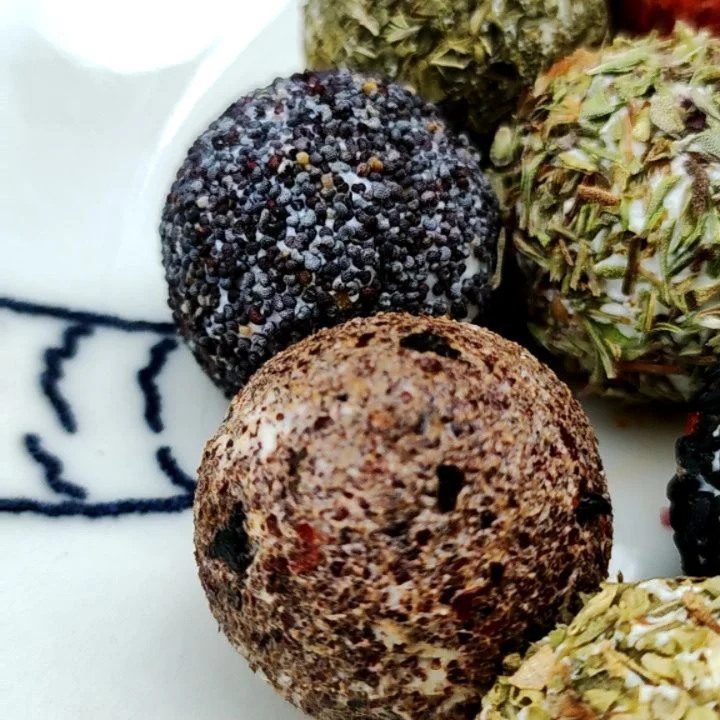
Homemade labneh balls are tangy, soft yoghurt cheese rolled in a choice of spices and seeds. They take little hands-on work and make a versatile addition to a mezze spread, salad or snack board.
Ingredients
- 900 gTurkish or Greek yoghurt (dairy or plant-based)
- 1 tspsalt
- to tasteoil, for your hands
- to tastesesame seeds, white or black
- to tasteblack cumin seeds (habbatus sauda)
- to tastepoppy seeds
- to tasteground sumac
- to tastefreshly ground black peppercorns
- to tasteground pistachio
- to tastedried thyme
- to tastedried mint
- to tastezaatar
- to tasteAleppo pepper
Instructions
- 1
Line the strainer
Line a mesh strainer with two layers of cheesecloth and set it over a large bowl.
- 2
Salt the yoghurt
Stir the salt into the yoghurt until evenly mixed, then pour it into the lined strainer.
- 3
Tie the parcel
Bring the corners of the cheesecloth together, twist them tightly around the yoghurt and tie the cloth into a parcel.
- 4
Drain the yoghurt
Set a small plate on top of the parcel to weigh it down, then refrigerate for 24–48 hours.
- 5
Check the consistency
When the labneh is as thick as you want it, remove the parcel from the strainer. Pour off the whey, reserving it for soups, and turn the labneh out of the cloth.
- 6
Roll into balls
Lightly oil your hands and roll the labneh into balls about 2.5 cm (1 inch) across.
- 7
Add the coatings
Roll each ball in your chosen coating. Serve with fresh crusty bread or crackers, on a cheese or mezze platter, or on top of a salad.
- 8
Store the labneh
Keep the balls in an airtight container in the fridge. They are best eaten within 24 hours; plain labneh will keep for about a week.
What are labneh balls?
Labneh is a Middle Eastern strained yoghurt cheese: draining removes whey and leaves a thick, pleasantly tangy result. Rolling it into balls makes it easy to serve and to coat with herbs, spices or seeds.
This version starts with salted Turkish or Greek yoghurt, which is already thick, then drains it in the fridge. The coating options let you mix savoury, peppery and nutty flavours to suit the meal.
Nutrition and macros by portion
The nutrition label shows one serving as written: 180 calories, 16g protein, 7g carbs, 10g fat.
| Portion | Adjustment | kcal | Protein | Carbs | Fat |
|---|---|---|---|---|---|
| Lighter | Serve with extra salad | 126 kcal | 11g | 5g | 7g |
| This serving | As written | 180 kcal | 16g | 7g | 10g |
| Hungry | Add more labneh balls | 270 kcal | 24g | 11g | 15g |
Most of the protein and fat come from the yoghurt, while the small amount of carbohydrate comes mainly from the yoghurt and any seed or spice coatings. Serve a few balls with salad vegetables and bread or crackers to make a more balanced plate.
Choose the yoghurt
Starting texture: Turkish or Greek yoghurt is a practical choice because it is thicker than ordinary yoghurt. Dairy and plant-based versions can both be used, though the final firmness may vary with the product.
Salt: stir it through before draining so it is distributed throughout the cheese. The recipe gives one teaspoon for the full batch.
Set up for draining
Cloth layers: line the strainer with two layers of cheesecloth to hold the yoghurt while allowing whey to drain into the bowl below. Make sure the strainer sits securely over the bowl.
Parcel: bring the corners together and twist them snugly around the yoghurt before tying. A small plate on top helps weigh the parcel down as it chills.
Let the texture guide you
Draining time: leave the parcel in the fridge for 24–48 hours, checking the consistency when you are ready to use it. A shorter drain gives softer labneh; a longer drain generally makes it firmer and easier to roll.
Whey: pour off the liquid once the labneh has reached your preferred thickness. Reserve it for adding to soups, as suggested in the method.
Roll and coat
Shaping: lightly oil your hands before rolling the labneh into balls about 2.5 cm across. This helps the soft cheese release from your fingers.
Coatings: use one topping per ball or make a selection from sesame, black cumin, poppy seeds, sumac, pepper, pistachio, thyme, mint, zaatar and Aleppo pepper. Roll gently so the coating adheres without flattening the balls.
Serve with a spread
For a simple snack, serve the balls with crusty bread or crackers. They also fit naturally on a cheese or mezze platter.
For a lighter-feeling plate, add fresh salad vegetables and a mix of herbs; the recipe also suggests serving the labneh on top of a salad.
Recipe notes & tips
- Use a bowl large enough to catch the whey without letting the strainer sit in the liquid.
- Check the labneh after 24 hours if you prefer a softer texture.
- Keep the parcel in the fridge throughout draining.
- Oil your hands lightly so the cheese is easier to shape.
- Set out several coatings in separate dishes to make rolling each ball easier.
- Reserve the drained whey for soup, as the method suggests.
Variations
- Sesame coating: roll the balls in white or black sesame seeds for a simple, nutty finish.
- Herb coating: use dried thyme, dried mint or zaatar for an aromatic outer layer.
- Peppery coating: add Aleppo pepper for warmth or freshly ground black pepper for a sharper bite.
- Sumac coating: roll the balls in ground sumac for a tangy, colourful finish.
- Pistachio coating: use ground pistachio for a nutty contrast to the tart cheese.
- Seed mix: combine black cumin and poppy seeds for a varied, savoury coating.
Common mistakes to avoid
- Skipping the cheesecloth: the yoghurt can escape through the strainer; use two layers as directed.
- Draining at room temperature: keep the parcel in the fridge for the full 24–48 hours.
- Stopping too early: if the labneh is too soft to roll, leave it to drain longer, checking its consistency.
- Using wet hands: the cheese can stick; lightly oil your hands before shaping.
- Pressing too hard while coating: firm handling can squash the balls; roll them gently through the toppings.
How to store
Keep the labneh balls in an airtight container in the fridge. They are best consumed within 24 hours, while plain labneh will keep for about a week.
Frequently asked questions
How long should I drain the yoghurt?
Drain it in the fridge for 24–48 hours. The exact time depends on how firm you want the labneh.
Can I use plant-based yoghurt?
Yes, the recipe allows dairy or plant-based yoghurt. The final texture may differ, so judge when it is ready by how thick it has become.
What can I do with the whey?
Pour it off after draining and reserve it to add to soups.
Do I have to make balls?
No. The drained labneh can be served as it is, or shaped into balls if you want to coat and portion it individually.
What can I use instead of cheesecloth?
This method specifies cheesecloth, so choose a clean, food-safe cloth that can hold the yoghurt while allowing liquid to drain through.
How should I serve labneh balls?
Serve them with fresh crusty bread or crackers, as part of a cheese or mezze platter, or on top of a salad.
Cook it from the original
This recipe comes from fooooods.com. Their page has the author’s own photos, notes and tips — the best place to cook it from.
Open the recipe on fooooods.com