
Healthy lunch: Lettuce sandwiches with fresh tuna salad
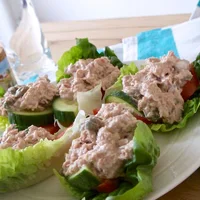
Crisp little gem leaves hold a creamy tuna salad with Greek yoghurt, capers and a little horseradish. This quick, fresh lunch needs no cooking and is easy to assemble just before serving.
Ingredients
- A fewlittle gem lettuce leaves
- 1 cantuna (the recipe uses line-caught tuna in olive oil)
- 30 ml (2 tbsp)Greek yoghurt
- 15 ml (1 tbsp)capers
- 1tomato
- A piececucumber
- 5 ml (1 tsp)prepared horseradish from a jar
- To tastesalt and pepper
Instructions
- 1
Wash and arrange
Wash the lettuce, tomato and cucumber. Arrange some lettuce leaves on a plate, cut the cucumber and tomato into pieces, and place them on the leaves.
- 2
Mix the tuna
Put the tuna in a small bowl and stir in the yoghurt, capers and horseradish. Season to taste with salt and pepper.
- 3
Fill the leaves
Spoon a generous dollop of tuna salad onto each lettuce leaf and serve.
What are lettuce sandwiches?
They are crisp lettuce leaves used in place of bread, filled here with tuna salad and fresh pieces of tomato and cucumber. This is a quick, informal lunch rather than a traditional sandwich.
The combination draws on familiar European-style tuna salad flavours. Little gem leaves make handy, sturdy scoops, while yoghurt, capers and horseradish bring creaminess, sharpness and gentle heat.
Nutrition and macros by portion
The nutrition label shows one serving as written: 220 calories, 27g protein, 9g carbs, 9g fat.
| Portion | Adjustment | kcal | Protein | Carbs | Fat |
|---|---|---|---|---|---|
| Lighter | Drain the tuna well | 154 kcal | 19g | 6g | 6g |
| This serving | As written | 220 kcal | 27g | 9g | 9g |
| Hungry | Add wholemeal bread | 330 kcal | 41g | 14g | 14g |
Tuna provides most of the protein, while the yoghurt and any oil retained from the tin contribute fat; the vegetables add a small amount of carbohydrate and fibre. For a more filling, balanced plate, serve the lettuce sandwiches with wholemeal bread or boiled potatoes.
Choosing the tuna
Oil-packed tuna gives the salad a fuller flavour and softer texture. Drain off excess oil if you prefer a less rich filling, but retain a little if the mixture seems dry.
Flake the tuna with a fork as you mix so it combines with the yoghurt without turning into a paste.
Balancing the dressing
Greek yoghurt binds the tuna and adds a tangy creaminess. Capers contribute a salty, briny note, so taste the mixture before adding much salt.
Horseradish can vary in strength between jars. Stir in the stated amount, taste, and keep the flavour balanced rather than letting it overwhelm the tuna.
Keeping the leaves crisp
Dry the washed lettuce well so water does not dilute the filling or collect in the leaves. Choose intact leaves that are large enough to hold a spoonful of salad.
Add the tuna salad shortly before eating. The leaves stay crispest when they are not left sitting under the moist filling.
Cutting the vegetables
Cut the tomato and cucumber into small pieces so they sit neatly on the leaves and are easy to eat. If the tomato is especially juicy, let excess liquid drain before assembling.
Keep the pieces fairly similar in size for an even bite, without chopping them so finely that they lose their fresh, distinct texture.
Serving the lunch
Serve the filled leaves straight away, with any extra tuna salad alongside. They work well as a light lunch or as part of a larger spread.
For a more substantial plate, add bread, boiled potatoes or a simple grain salad; for extra freshness, serve with additional cucumber or tomato.
Recipe notes & tips
- Dry the lettuce thoroughly after washing so the filling stays in place.
- Drain excess oil from the tuna if you want a less rich salad.
- Taste before adding salt because capers can be quite salty.
- Start with the stated horseradish amount and add more only if you like extra heat.
- Assemble the leaves just before serving to keep them crisp.
Variations
- Add fresh herbs: Stir chopped parsley or dill into the tuna for a green, aromatic note.
- Use lemon: Add a squeeze of lemon juice to sharpen the creamy filling.
- Choose another lettuce: Use crisp cos or iceberg leaves if little gem is unavailable.
- Add crunch: Mix finely diced celery into the tuna salad.
- Make it spicier: Stir in a little extra horseradish to taste.
Common mistakes to avoid
- Wet lettuce: Dry the leaves well after washing so the filling does not slide off.
- Too much salt: Taste the caper-seasoned mixture before adding salt.
- Overmixing the tuna: Fold it together gently so it stays flaky rather than becoming pasty.
- Filling too early: Spoon on the salad shortly before eating to keep the leaves crisp.
- Large vegetable pieces: Cut the tomato and cucumber small enough to sit comfortably on each leaf.
How to store
Keep the tuna salad covered in the fridge and use it within 1–2 days. Store the lettuce and chopped vegetables separately, then assemble just before serving; this dish is best eaten cold and does not need reheating.
Frequently asked questions
Can I make the tuna salad ahead?
Yes. Mix the tuna, yoghurt, capers and horseradish ahead and refrigerate it in a covered container. Keep the leaves and vegetables separate until serving.
Should I drain the tuna?
Drain off excess oil if you prefer a lighter, less rich filling. You can leave a little oil in for a softer texture and fuller flavour.
What can I use instead of little gem?
Crisp cos or iceberg leaves make suitable alternatives. Choose leaves that are sturdy enough to hold the filling.
How do I stop the lettuce sandwiches going soggy?
Dry the leaves thoroughly and add the tuna salad just before serving. If the tomato is very juicy, drain away excess liquid after cutting it.
Can I use tuna in spring water?
Yes. Drain it well and mix it with the yoghurt as directed; the result will be less rich than with tuna in olive oil.
Cook it from the original
This recipe comes from cookinglife.eu. Their page has the author’s own photos, notes and tips — the best place to cook it from.
Open the recipe on cookinglife.eu