
Dairy-Free Vegetable Risotto
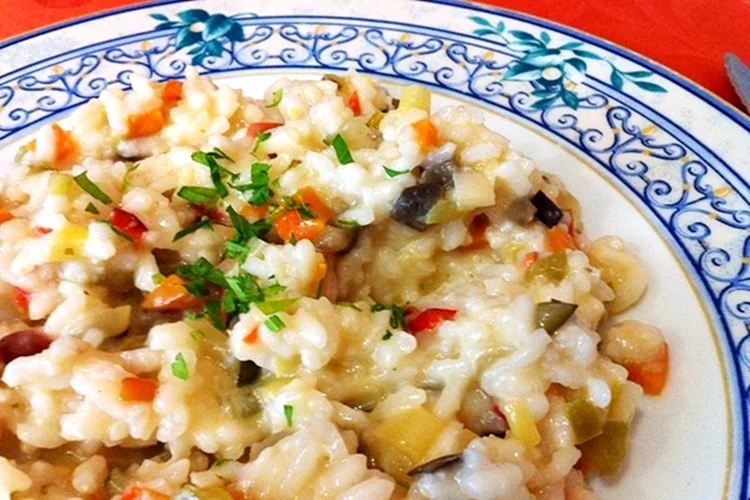
This dairy-free vegetable risotto combines creamy Arborio rice with bell pepper, mushrooms and sun-dried tomatoes. It is a comforting one-pan meal, with warm broth added gradually to create the risotto’s characteristic texture.
Ingredients
- 1.4 litres (6 cups)vegetable broth, warm
- 45 g (3 tablespoons), divideddairy-free buttery spread
- 15 ml (1 tablespoon)olive oil
- ¼white onion, diced
- 2 clovesgarlic, minced
- 400 g (2 cups)Arborio rice
- 240 ml (1 cup)white wine, warm
- 1bell pepper, diced
- 75 g (½ cup)mushrooms, diced
- 75 g (½ cup)sun-dried tomatoes, chopped
- 5 g (1 tablespoon)nutritional yeast
- 2.5 g (½ teaspoon), or to tastesalt
- to tasteground pepper
- 30 ml (2 tablespoons)basil, chopped
Instructions
- 1
Warm the broth
Keep the vegetable broth warm in a saucepan over a low heat.
- 2
Soften the aromatics
Heat the olive oil and 1 tablespoon of the dairy-free spread in a large pan over a medium-high heat. Add the onion and garlic and sauté until soft and translucent, about 3 minutes. Add the rice and stir constantly until it begins to cook.
- 3
Add wine and broth
Pour the wine into the rice and stir continuously while the liquid reduces. Add 120 ml (½ cup) of broth and keep stirring until it is mostly absorbed. Continue adding broth in 120 ml (½-cup) portions, stirring as you go, until about 360 ml (1½ cups) remains.
- 4
Cook the vegetables
Stir in the bell pepper and mushrooms. Add the remaining broth in 120 ml (½-cup) portions as needed, allowing it to absorb, until the rice is al dente.
- 5
Finish the risotto
Take the pan off the heat. Stir in the remaining 2 tablespoons of dairy-free spread, the sun-dried tomatoes and nutritional yeast. Season with salt and ground pepper.
- 6
Garnish and serve
Scatter the chopped basil over the risotto and serve.
What is vegetable risotto?
Risotto is an Italian rice dish made by cooking short-grain rice gradually with liquid, stirring as it absorbs. This version keeps the familiar creamy texture while using dairy-free spread and nutritional yeast instead of dairy.
Arborio rice releases starch as it cooks, helping the dish become cohesive without needing cream. Bell pepper, mushrooms and sun-dried tomatoes add colour and savoury, tangy notes.
Nutrition and macros by portion
The nutrition label shows one serving as written: 367 calories, 7g protein, 61g carbs, 7g fat.
| Portion | Adjustment | kcal | Protein | Carbs | Fat |
|---|---|---|---|---|---|
| Lighter | Use less buttery spread | 257 kcal | 5g | 43g | 5g |
| This serving | As written | 367 kcal | 7g | 61g | 7g |
| Hungry | Serve a larger portion | 551 kcal | 10g | 92g | 11g |
The rice supplies most of the carbohydrates, while the buttery spread and olive oil account for much of the fat. The vegetables and nutritional yeast contribute some protein, but this serving is not especially protein-rich; pair it with beans or another protein-rich side if you want a more balanced plate.
Why warm the broth?
Warm broth keeps the rice cooking steadily as you add it. Keep it over a low heat in a separate saucepan so it is ready to ladle into the risotto.
The gradual cooking method
Wine first: stir it into the rice and let it reduce before adding broth. This gives the rice time to absorb the wine rather than leaving a pool of liquid in the pan.
Small additions: add broth in 120 ml portions and stir continuously until each addition is mostly absorbed. The method uses the broth in stages, with the final amount added as needed for doneness.
How to judge the texture
The rice should be al dente: cooked through but still with a slight bite at the centre. The finished risotto should be creamy and spoonable, not dry or stiff.
Add broth gradually near the end and stop when the rice reaches that texture. You may not need every last portion.
When to add the vegetables
The bell pepper and mushrooms go in after the rice has taken up most of the broth. The remaining broth then cooks them alongside the rice.
Sun-dried tomatoes are stirred in off the heat, so they keep their concentrated flavour without being cooked throughout the full risotto-making process.
Serving ideas
Serve the risotto as a main course or alongside a crisp green salad. A simple side of steamed or roasted vegetables also works well if you want to make the meal more substantial.
Recipe notes & tips
- Keep the broth warm so it does not interrupt the rice’s cooking when added.
- Stir continuously as the wine reduces and while each broth addition is absorbed.
- Dice the vegetables before starting, so they are ready when the rice reaches that stage.
- Taste the rice near the end and stop adding broth once it is al dente.
- Season at the end, since broth and sun-dried tomatoes can already bring saltiness.
Variations
- Add peas: Stir them in with the bell pepper and mushrooms for another vegetable.
- Use fresh tomatoes: Replace the sun-dried tomatoes with chopped fresh tomatoes for a milder flavour.
- Change the herbs: Swap the basil garnish for chopped parsley.
- Boost the protein: Serve with cooked beans on the side.
- Choose another mushroom: Use your preferred diced mushrooms in the same quantity.
Common mistakes to avoid
- Cold broth: It can slow the cooking; keep the broth warm in a saucepan.
- Adding too much at once: The rice may not absorb the liquid evenly; add broth in 120 ml portions.
- Skipping the stirring: Rice can cook unevenly; stir continuously while the wine and broth reduce.
- Cooking past al dente: The grains can become too soft; check the rice as you approach the end.
- Adding all the broth automatically: You may not need every portion; stop when the rice is cooked and creamy.
How to store
Refrigerate leftovers in a covered container for up to 3 days. Reheat gently in a pan or microwave, adding a splash of water or broth to loosen the risotto as needed.
Frequently asked questions
Can I make this without wine?
The recipe uses warm white wine before the broth. If you leave it out, replace it with broth and continue adding the broth gradually.
Do I have to stir the risotto constantly?
The method calls for continuous stirring as the wine reduces and as broth is added. This helps the rice cook evenly and release starch.
How do I know when the rice is done?
Taste a grain: it should be cooked through but still have a slight bite at the centre. The risotto should be creamy and spoonable.
Will I need all the broth?
Not necessarily. Add it in portions and stop when the rice is al dente; the recipe also notes that the final broth is added as needed.
Can I make the risotto ahead?
It is best served after cooking, when its texture is creamiest. Leftovers can be refrigerated and reheated with a splash of water or broth.
How can I keep this recipe dairy-free?
Use a dairy-free buttery spread, as specified, and check that the vegetable broth and other packaged ingredients are labelled dairy-free.
Cook it from the original
This recipe comes from godairyfree.org. Their page has the author’s own photos, notes and tips — the best place to cook it from.
Open the recipe on godairyfree.org