
Vegan Protein Pesto
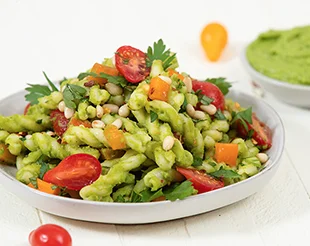
A quick, smooth vegan pesto-style dip made with cannellini beans, parsley, spring onions and olive oil. It comes together in a food processor in 10 minutes and works as a spread, sauce or dip.
Ingredients
- 255 g (1 1/2 cups)cannellini beans, drained and rinsed
- 30 g (1 1/2 cups)parsley
- 50 g (1/2 cup; about 4 medium stalks)spring onions, chopped
- 45 ml (3 tbsp)olive oil
- 30 ml (2 tbsp)red wine vinegar or lemon juice
- 1 clovegarlic
- 2.5 ml (1/2 tsp)sea salt or Himalayan salt
Instructions
- 1
Blend the ingredients
Put the beans, parsley, spring onions, olive oil, vinegar, garlic and salt into a food processor. Pulse until smooth.
What is vegan protein pesto?
Pesto is an Italian sauce traditionally associated with basil, garlic, olive oil, cheese and nuts. This vegan version takes a different route, using cannellini beans for body and parsley for a fresh, herby flavour.
The beans make it thick and spreadable, while vinegar or lemon juice lifts the flavour. With no cooking required, it is a handy option when you want a quick dip or sauce.
Nutrition and macros by portion
The nutrition label shows one serving as written: 189 calories, 6g protein, 17g carbs, 11g fat.
| Portion | Adjustment | kcal | Protein | Carbs | Fat |
|---|---|---|---|---|---|
| Lighter | Use less olive oil | 132 kcal | 4g | 12g | 8g |
| This serving | As written | 189 kcal | 6g | 17g | 11g |
| Hungry | Serve with pasta | 284 kcal | 9g | 26g | 17g |
The beans supply most of the carbohydrates and some protein, while olive oil contributes most of the fat. Serve a portion with vegetables and a source of additional protein, such as tofu, for a more substantial meal.
Choosing the ingredients
Cannellini beans: Drain and rinse them well so their canning liquid does not make the pesto watery or overly salty. They also give the mixture its creamy base.
Parsley and spring onions: Use fresh parsley and trim any tough ends from the spring onions. The greens bring a lively flavour that balances the mild beans.
Acid and oil: Red wine vinegar gives a sharper edge, while lemon juice tastes brighter. Olive oil helps the ingredients blend into a cohesive sauce.
Getting the texture right
Pulse the mixture rather than running the processor continuously from the start; this helps the ingredients combine evenly. Scrape down the sides if herbs or beans remain stuck above the blades.
For a completely smooth result, keep processing until no bean pieces remain. If you prefer a little texture, stop once the pesto is thick and evenly chopped.
Balancing the flavour
Salt: The beans may already contain some salt, so taste the pesto after blending before adding more. A small amount can make the parsley and garlic taste more distinct.
Acid: Vinegar or lemon juice keeps the bean base from tasting too heavy. Taste at the end and add a little more only if you want a sharper finish.
Ways to serve it
Pasta: Toss the pesto with warm pasta, loosening it with a splash of pasta cooking water if needed. It also makes a flavourful spread for sandwiches or wraps.
On the side: Serve it as a dip with raw vegetables, or spoon it over roasted vegetables and grain bowls. A crisp salad alongside makes a simple, balanced plate.
Timing and preparation
The recipe takes about 10 minutes from start to finish, with no hob or oven needed. Rinsing and draining the beans before blending helps keep that quick preparation straightforward.
The pesto can be made ahead and chilled, which gives the flavours time to mingle. Stir it before serving if it has thickened in the fridge.
Recipe notes & tips
- Drain and rinse the beans thoroughly before measuring them.
- Chop the spring onions roughly so they blend evenly.
- Use a small food processor if your full-size machine struggles with this quantity.
- Scrape down the sides of the processor to catch any stray herbs.
- Taste before serving and adjust the salt or chosen acid to suit your preference.
Variations
- Use lemon: Choose lemon juice instead of red wine vinegar for a brighter, citrusy note.
- Add basil: Replace some of the parsley with fresh basil for a more classic pesto-like flavour.
- Make it spicy: Blend in a pinch of chilli flakes for gentle heat.
- Add seeds: Stir in toasted pumpkin seeds after blending for extra crunch.
- Serve it warm: Toss the pesto with freshly cooked pasta and a little pasta water.
Common mistakes to avoid
- Skipping the rinse: Residual bean liquid can make the pesto loose; drain and rinse the beans well.
- Adding too much salt: Canned beans may already be seasoned; taste the blended pesto before adding more.
- Over-processing: Continuous blending can make the texture overly uniform; pulse and check as you go.
- Leaving ingredients on the sides: Herbs can cling above the blade; stop and scrape down the bowl.
- Using too little acid: The bean base can taste flat; taste and add a little more vinegar or lemon juice if needed.
How to store
Keep the pesto in an airtight container in the fridge for up to 3 days. Stir before serving; if using it with pasta, warm it gently with a splash of water rather than heating it for a long time.
Frequently asked questions
Can I make this without a food processor?
A blender can work, though you may need to stop and scrape down the sides. For a coarser result, mash the beans and finely chop the herbs and spring onions before mixing everything together.
Can I use dried cannellini beans?
Yes, but cook them until tender first, then drain and cool them before blending. The recipe uses beans that are already cooked.
How can I make the pesto thinner?
Blend in a little water, olive oil or pasta cooking water until it reaches the consistency you want. Add liquid gradually so it does not become too runny.
Can I make it ahead?
Yes. Blend it in advance and keep it covered in the fridge, then stir it before serving.
What can I use instead of parsley?
Try fresh basil, or use a mixture of parsley and basil. The flavour will change, but the beans will still give the pesto its creamy texture.
Cook it from the original
This recipe comes from goodcleaneats.com. Their page has the author’s own photos, notes and tips — the best place to cook it from.
Open the recipe on goodcleaneats.com